Fermentation Time Calculator
Determine Your Optimal Fermentation Time
Based on article science: Ideal temperature 25-30°C (77-86°F)
Estimated Fermentation Time
Why this matters: At 28°C, lactic acid bacteria multiply rapidly, creating the perfect sourness and air pockets for fluffy dosas.
Ever mixed your dosa batter, left it overnight, and woke up to a tangy, bubbly smell that made you wonder - why does dosa batter become sour? It’s not spoiled. It’s not broken. It’s working exactly as it should.
That sourness isn’t an accident. It’s the result of natural fermentation, the same process that gives sourdough its bite, kimchi its punch, and yogurt its creaminess. In dosa batter, fermentation transforms a simple mix of rice and urad dal into something light, fluffy, and full of flavor. But how does it happen? And what’s really going on in that bowl sitting on your counter?
The ingredients that start the process
Dosa batter starts with just two things: raw rice and black gram (urad dal). Sometimes a pinch of fenugreek seeds is added, but even without it, the magic still happens. The rice gives structure. The urad dal gives air. Together, they create the perfect environment for wild microbes to thrive.
Neither rice nor urad dal is naturally sour. In fact, when you first grind them together with water, the batter smells neutral - maybe a little earthy, maybe a bit grainy. But within hours, everything changes. The surface begins to bubble. The texture loosens. The smell shifts from mild to sharp, clean, and slightly tangy. That’s lactic acid bacteria at work.
How fermentation turns batter sour
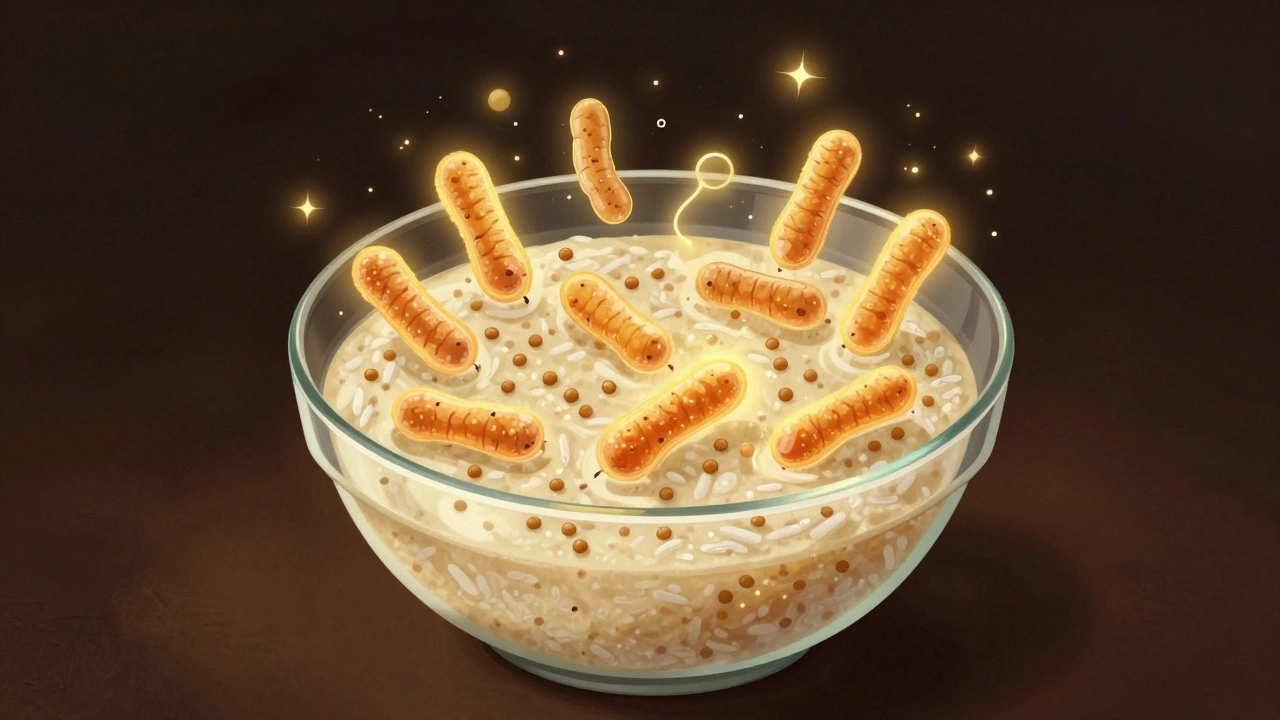
The sour taste comes from lactic acid, produced by bacteria that live naturally on the surface of rice and urad dal. These aren’t added. They’re already there - in the air, on the grains, even on your spoon. When you mix the batter and leave it warm, these microbes wake up.
They feed on the starches and sugars in the rice and dal. As they eat, they multiply. And as they multiply, they release lactic acid as a waste product. That’s the sourness. It’s not vinegar. It’s not lemon juice. It’s biological. The same thing happens in sauerkraut, in miso, in kombucha.
Urad dal is especially important here. It’s rich in proteins and enzymes that help break down the rice starches faster. That’s why dosa batter with more urad dal ferments quicker and gets tangier. A 3:1 rice-to-dal ratio will take longer to sour than a 4:1 ratio. That’s why traditional recipes often use more dal - not just for fluffiness, but for faster, stronger fermentation.
Temperature is the hidden switch
Ever notice your batter doesn’t sour in winter? Or that it ferments too fast in summer? Temperature controls the speed of fermentation.
Between 25°C and 30°C (77°F-86°F), the bacteria work at their sweet spot. Below 20°C (68°F), they slow down. Above 35°C (95°F), they can die off or produce off-flavors. That’s why in colder months, people put the batter near the stove, in an oven with the light on, or wrapped in a towel near a heater. In hot climates, it might ferment in just 6 hours.
If your batter doesn’t sour after 12 hours in warm weather, something’s off. Maybe the rice was too polished. Maybe the water was chlorinated. Maybe the container was dirty. Clean glass or ceramic bowls work best. Plastic can harbor old bacteria that compete with the good ones.
What sourness looks and smells like
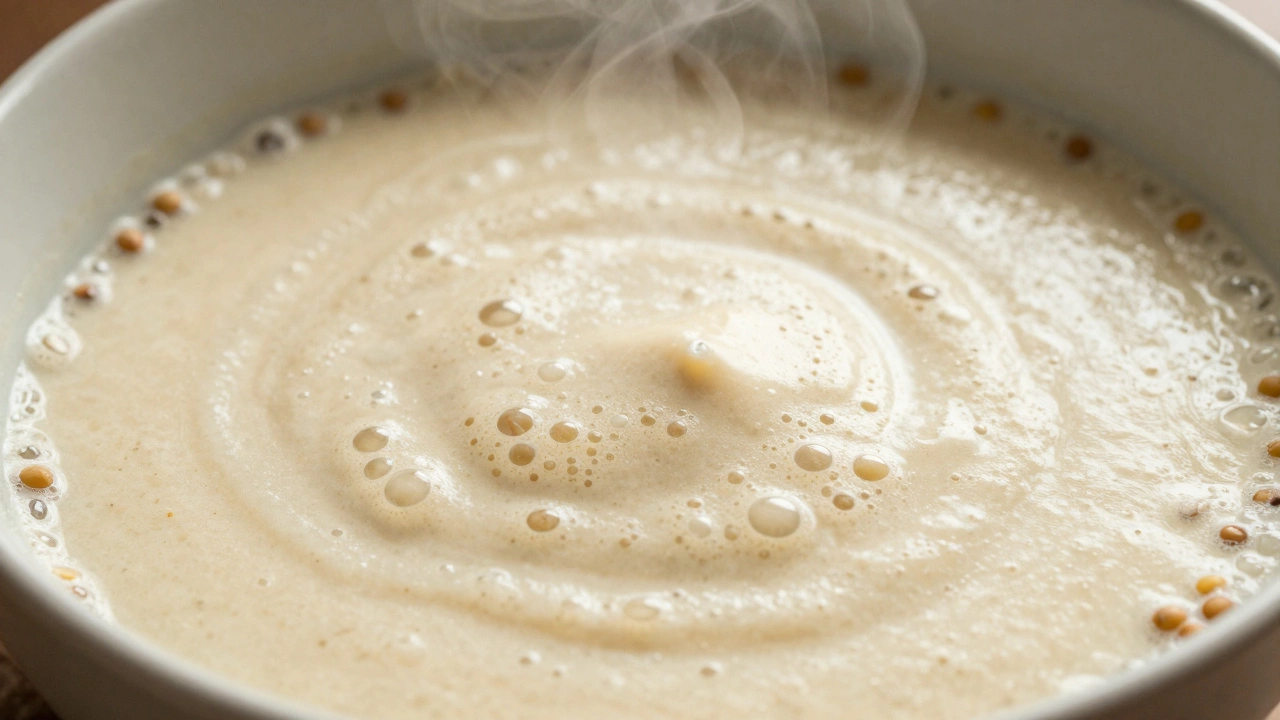
Not all sourness is the same. Good sourness is clean, bright, and slightly yeasty - like fresh bread dough. It should smell tangy but not rotten, sharp but not vinegary. The batter will rise visibly, often doubling in volume. Bubbles will form throughout, not just on top. When you stir it, it should feel lighter, airier, almost like whipped cream.
Bad sourness smells like ammonia, alcohol, or rotten eggs. That’s not lactic acid. That’s unwanted bacteria or yeast overgrowing. If your batter smells like that, toss it. It’s not just unpleasant - it could make you sick.
Some people think the sourer the batter, the better the dosa. That’s not true. Over-fermented batter turns too acidic. The dosas come out thin, brittle, and bitter. The ideal sourness is mild - enough to give flavor, not enough to overpower.
How to control the sourness
You don’t have to leave it to chance. If you want a milder taste, ferment for less time. If you want more tang, let it sit longer. Most home cooks get it right in 8-12 hours. In winter, 16 hours might be needed.
Here’s a simple trick: if your batter is souring too fast, put it in the fridge. Cold stops fermentation cold. You can refrigerate it after 6 hours of fermentation, then use it the next day. The sourness will mellow out, and the texture stays perfect.
Adding a pinch of fenugreek seeds before grinding helps too. They contain natural compounds that boost lactic acid production, making fermentation more reliable - especially in cooler climates.
What happens if you skip fermentation?
You can make dosa without fermenting - just mix the batter and cook. But it won’t be the same. The dosas will be dense, flat, and chewy. No air pockets. No crisp edges. No that signature lightness. Fermentation isn’t optional. It’s the soul of dosa.
Unfermented batter lacks the gases that make the batter rise. It also lacks the enzymes that break down complex starches into simple sugars. That’s why fermented dosa is easier to digest. The bacteria have already started the digestion process for you.
Myth: You need to add yeast or starter
Some recipes say to add a spoon of yogurt or a pinch of yeast to speed things up. That’s not traditional. In South India, people have made dosa for centuries without any added culture. The wild bacteria do the job just fine.
Adding yogurt or yeast might speed up fermentation, but it changes the flavor. Yogurt adds dairy tang. Yeast adds a bread-like aroma. Neither is wrong - but it’s not authentic. If you want real dosa, trust the grains. They’ve been doing this longer than you’ve been alive.
What to do if your batter doesn’t sour
If your batter stays flat and smell-free after 24 hours, here’s what to check:
- Water quality: Chlorinated tap water kills good bacteria. Use filtered or boiled-and-cooled water.
- Rice type: Use short-grain parboiled rice (like idli rice), not long-grain basmati. Basmati doesn’t ferment well.
- Grinding: The batter should be slightly coarse, not smooth. Over-grinding damages the microbes’ food source.
- Container: Use glass or ceramic. Avoid metal - it can react and inhibit fermentation.
- Temperature: Is your kitchen below 20°C? Try moving the bowl near a warm appliance.
If all else fails, add a tablespoon of leftover fermented batter from a previous batch. It’s like a starter culture - it jumpstarts the process.
How to tell when your batter is ready
You don’t need a timer. Look for these signs:
- The batter has doubled in volume.
- It’s full of bubbles - not just on top, but throughout.
- It smells pleasantly sour, not rotten.
- It’s loose and airy, not thick and gloopy.
- A spoonful dropped into water floats.
If it passes all five, you’re ready to cook. Stir it gently - don’t beat the air out. Pour, spread, and let the heat do the rest.
Why fermented dosa is healthier
Fermentation isn’t just about taste. It makes dosa better for you. The bacteria break down phytic acid - a compound in grains that blocks mineral absorption. That means your body gets more iron, zinc, and magnesium from the same batter.
Fermentation also pre-digests starches and proteins. That’s why people with mild gluten sensitivity or digestive issues often tolerate dosa better than bread. The sourness isn’t just flavor - it’s medicine.
Plus, fermented foods are packed with probiotics. Just a few dosas in the morning can support your gut microbiome. That’s why traditional South Indian families eat dosa daily - not just because it’s tasty, but because it’s good for you.
So next time your dosa batter smells sour, don’t panic. Don’t throw it out. Smile. You’re holding a living, breathing food that’s been feeding people for centuries. The sourness? That’s nature doing its job.