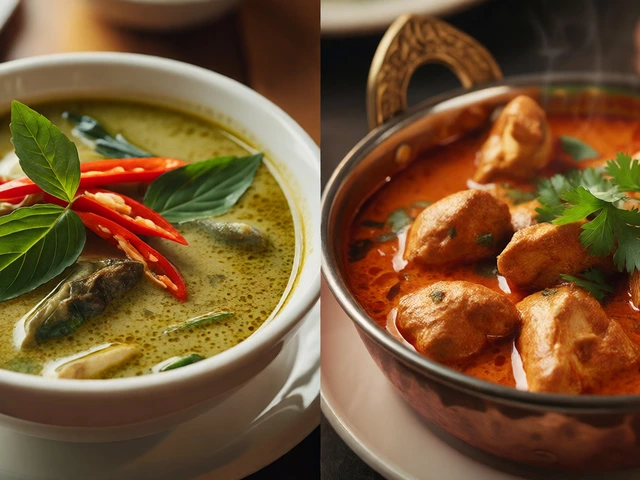
Indian Chicken Curry Regional Variations Explorer
Discover how chicken curry transforms across India while maintaining its comforting core. Select your region to see the authentic version prepared in that area.
Select a region to see the chicken curry variation
Basic Chicken Curry Recipe
This is the foundational version used across India:
- Heat 2 tbsp oil or ghee
- Add 1 chopped onion, cook until golden
- Stir in 1 tbsp each of cumin, coriander, turmeric
- Add 1 tbsp ginger-garlic paste
- Add 2 chopped tomatoes
- Stir in 500g chicken pieces
- Season with salt, 1 tsp chili powder
- Simmer covered for 25-30 minutes
- Finish with lemon and cilantro
Ask anyone who’s eaten Indian food how many curries they’ve tried, and they’ll name three or four. But ask them which one they eat most often at home, and the answer almost always comes back the same: chicken curry. It’s not the flashiest, it’s not always the spiciest, but it’s the one that shows up on dinner tables from Mumbai to Manipur, from Delhi slums to Kerala villas. If you want to understand Indian home cooking, start here.
Why Chicken Curry Dominates Indian Kitchens
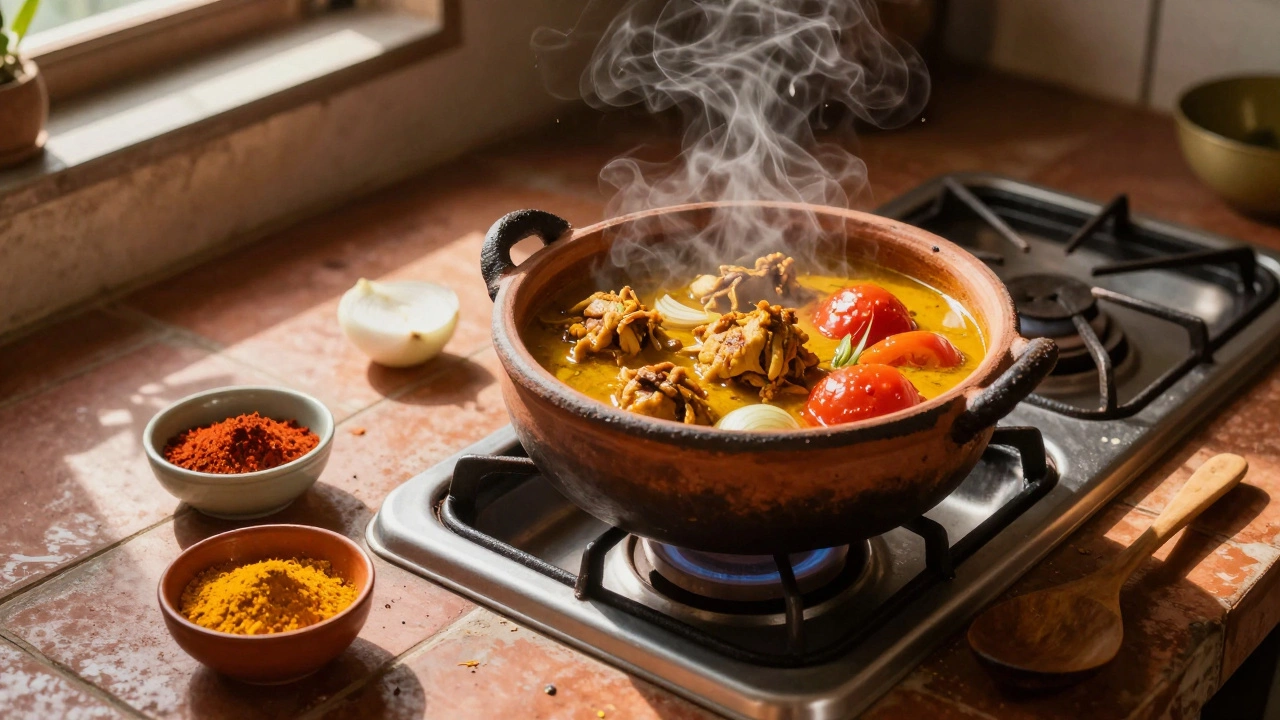
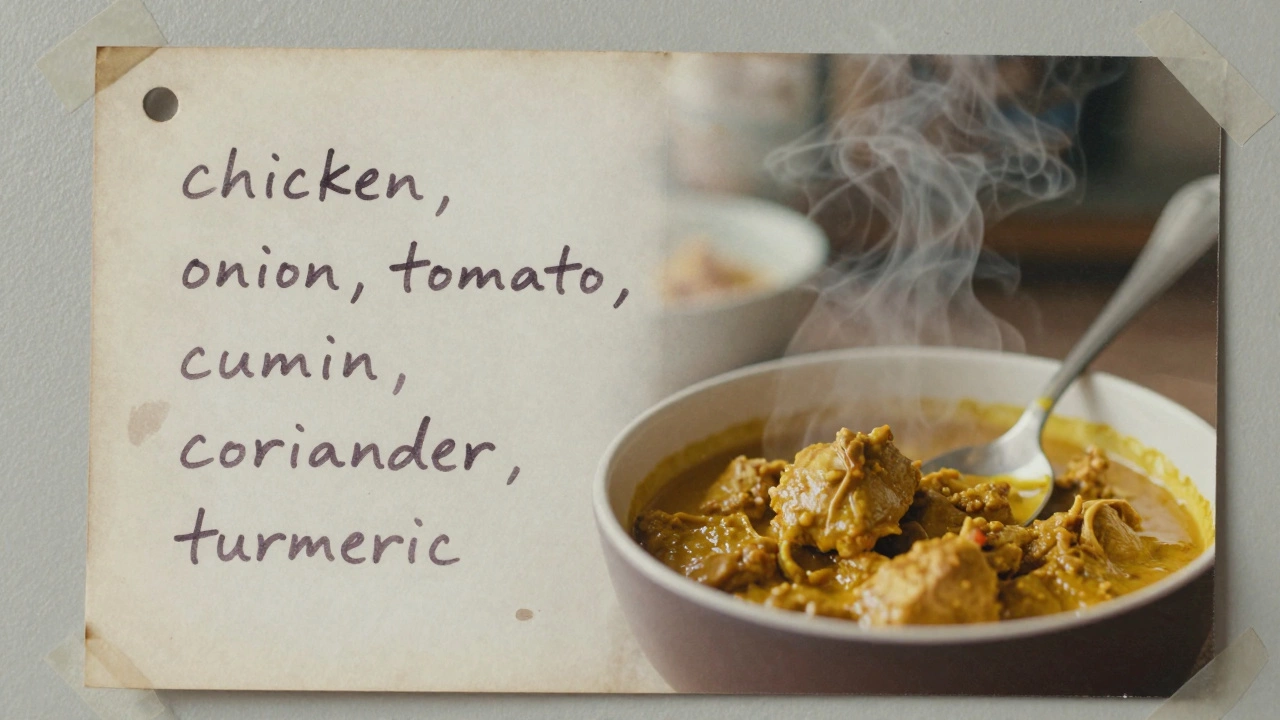
It’s not about fancy ingredients or complex techniques. Chicken curry is simple, forgiving, and adaptable. You don’t need a special spice blend or a slow-cooked base. Just chicken, onions, tomatoes, garlic, ginger, and a few common spices-cumin, coriander, turmeric, chili powder. Most households already have these. No one has to go shopping just for curry.
Chicken is also the most accessible meat across India. In rural areas, families raise their own chickens. In cities, it’s cheaper than goat or lamb. And unlike beef, which is avoided by many Hindus, or pork, which some Muslim communities avoid, chicken has no major religious restrictions. That alone makes it the universal choice.
According to a 2024 survey by the Indian Food Research Institute, over 78% of households in 15 major states report chicken curry as their weekly staple. That’s more than paneer tikka, fish curry, or even dal makhani. It’s not a restaurant dish-it’s a home dish. And that’s why it’s eaten more than any other curry.
It’s Not One Curry-It’s Hundreds of Versions
Don’t think there’s just one chicken curry. There are dozens, maybe hundreds. In Punjab, it’s rich with cream and butter, cooked with garam masala and finished with kasuri methi. In Tamil Nadu, it’s tamarind-heavy, with curry leaves and mustard seeds, simmered until the chicken falls off the bone. In Bengal, it’s mild, with yogurt and a hint of sugar. In Kerala, coconut milk replaces tomatoes.
Each region tweaks the base. Some add potatoes. Some use yogurt instead of onions. Some fry the chicken first. Some don’t fry at all. Some use store-bought curry powder. Others grind their own spices fresh every time. But the structure stays the same: brown onions, add spices, add tomatoes, add chicken, simmer.
This flexibility is key. A working mother in Hyderabad might make it in 25 minutes with pre-chopped garlic and a jar of tomato puree. A grandmother in Varanasi might spend three hours slow-cooking it with whole spices and hand-ground pepper. Both are chicken curry. Both are eaten daily.
How It Fits Into Daily Life
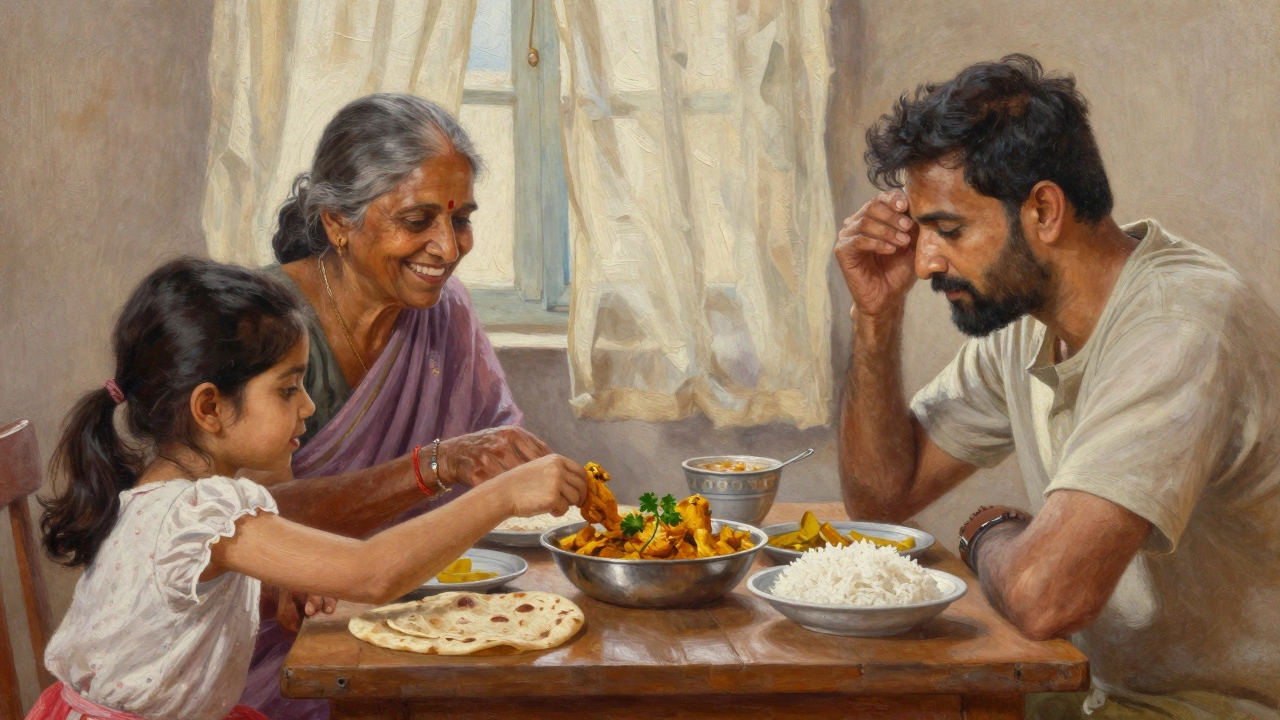
Most Indian families don’t eat curry for dinner only. Chicken curry often shows up at lunch too. Leftovers get mixed into rice the next day. Or chopped up into parathas. Or turned into a sandwich filling with onions and chutney. It’s the ingredient that lasts.
It’s also the first curry most Indian kids learn to cook. Not because it’s hard, but because it’s forgiving. Burn the onions a little? Still good. Add too much chili? Add more yogurt. Forget the ginger? You’ll live. That’s why it’s passed down-not as a recipe, but as a feeling.
There’s a reason why every Indian family has their own version. It’s not about tradition. It’s about survival. Chicken curry is what you make when you have five minutes, a half-used onion, and a few pieces of chicken left over. It’s what you make when you’re tired. When you’re broke. When you just need something warm and filling.
What Makes It Different From Restaurant Curries
Restaurant chicken curry? It’s usually made with heavy cream, butter, and extra spices to impress. Home versions? They’re leaner. Often made with skinless chicken thighs or drumsticks. Sometimes with just a tablespoon of oil. The color is often lighter-not orange, but golden. The texture? Thinner. Less thickened with cashew paste or flour. Just the natural release of the chicken juices and the tomatoes.
That’s why it doesn’t show up on menus as much. It’s not exotic. It’s not Instagrammable. But it’s the one people crave after a long day. The one they order when they’re homesick.
How to Make It (The Basic Version)
You don’t need a cookbook. Here’s the version most Indians use:
- Heat 2 tablespoons of oil or ghee in a pot.
- Add 1 chopped onion. Cook until golden brown.
- Add 1 tablespoon each of ground cumin, coriander, and turmeric. Stir for 30 seconds.
- Add 2 minced garlic cloves and 1 tablespoon grated ginger. Cook 1 minute.
- Add 2 chopped tomatoes. Cook until they break down into a thick paste.
- Add 500g chicken pieces (thighs or drumsticks). Stir to coat.
- Add salt, 1 teaspoon chili powder, and 1 cup water.
- Simmer covered for 25-30 minutes until chicken is tender.
- Finish with a squeeze of lemon and fresh cilantro.
That’s it. No cream. No cashews. No fancy tricks. Just chicken, spices, and time.
Why It Won’t Be Replaced
People talk about vegan curries, jackfruit curries, tofu curries. They’re trendy. But they’re not daily food. Chicken curry has no substitute because it’s not just about flavor. It’s about reliability. It’s about how it fills a house with smell. How it warms you from the inside. How it’s the one dish that doesn’t ask for perfection.
It’s the curry that feeds students, factory workers, doctors, and farmers. It’s the curry that’s eaten with rice, with roti, with bread, with idli. It’s the curry that’s made on Sundays, weekdays, holidays, and bad days.
No other curry in India has that kind of reach. No other curry has that kind of heart.