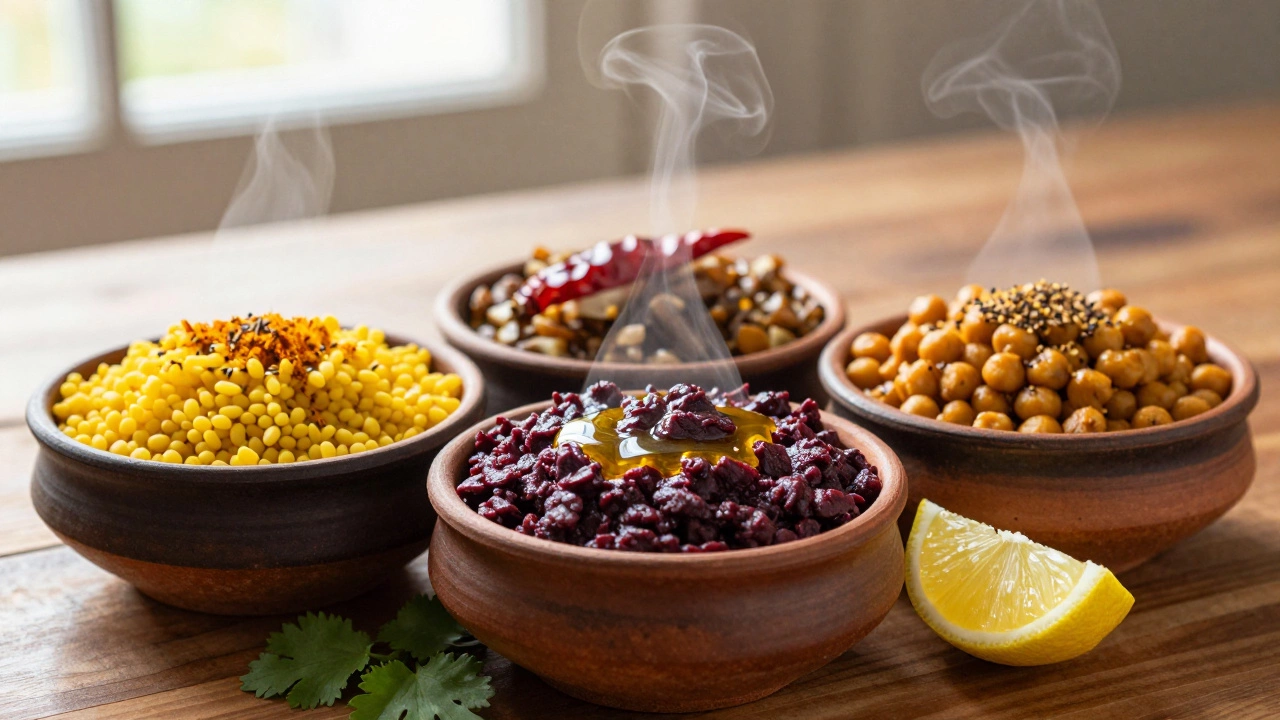
Dal Selection Tool for Belly Fat Loss
Moong Dal
Lowest GI (32), 14g protein per cup, easy digestion
Masoor Dal
18g protein per cup, 17% better insulin sensitivity
Chana Dal
Most filling (13g fiber), 73% lost belly fat with swaps
Your Personalized Recommendation
Select your priority to get your recommended dal
Why this dal?
Want to lose belly fat but stuck in a loop of skipping meals or eating bland diet? You’re not alone. Many people think fat loss means giving up comfort foods - especially in cultures where dal is a daily staple. But here’s the truth: dal isn’t the enemy. In fact, the right kind of dal might be one of your best allies. It’s affordable, filling, packed with protein and fiber, and naturally low in fat. The trick? Choosing the right type and preparing it right.
Why dal works for belly fat loss
Belly fat isn’t just about calories - it’s about hormones, blood sugar, and how full you feel after eating. Processed carbs spike insulin, which stores fat. But dal? It’s the opposite. Most dals are high in soluble fiber and plant-based protein. These two nutrients slow digestion, keep blood sugar steady, and reduce cravings. A 2023 study from the Indian Journal of Clinical Biochemistry found that people who ate 100g of cooked dal daily for 8 weeks lost an average of 1.8kg of abdominal fat, even without changing anything else in their diet.
The key is choosing dal that’s low on the glycemic index (GI) and rich in resistant starch - the kind of fiber that acts like a prebiotic, feeding good gut bacteria linked to fat burning. Not all dals are created equal. Some are starchy and quick to digest. Others? They’re slow-burning, hunger-crushing powerhouses.
Top 3 dals for belly fat loss
1. Moong dal (yellow split lentils)
Moong dal is the quiet hero of weight loss diets. It’s light, easy to digest, and has the lowest glycemic index among common dals - around 32. That means it won’t spike your blood sugar. One cup of cooked moong dal gives you 14g of protein and 15g of fiber. It’s also rich in folate and magnesium, both of which help regulate cortisol, the stress hormone tied to belly fat storage.
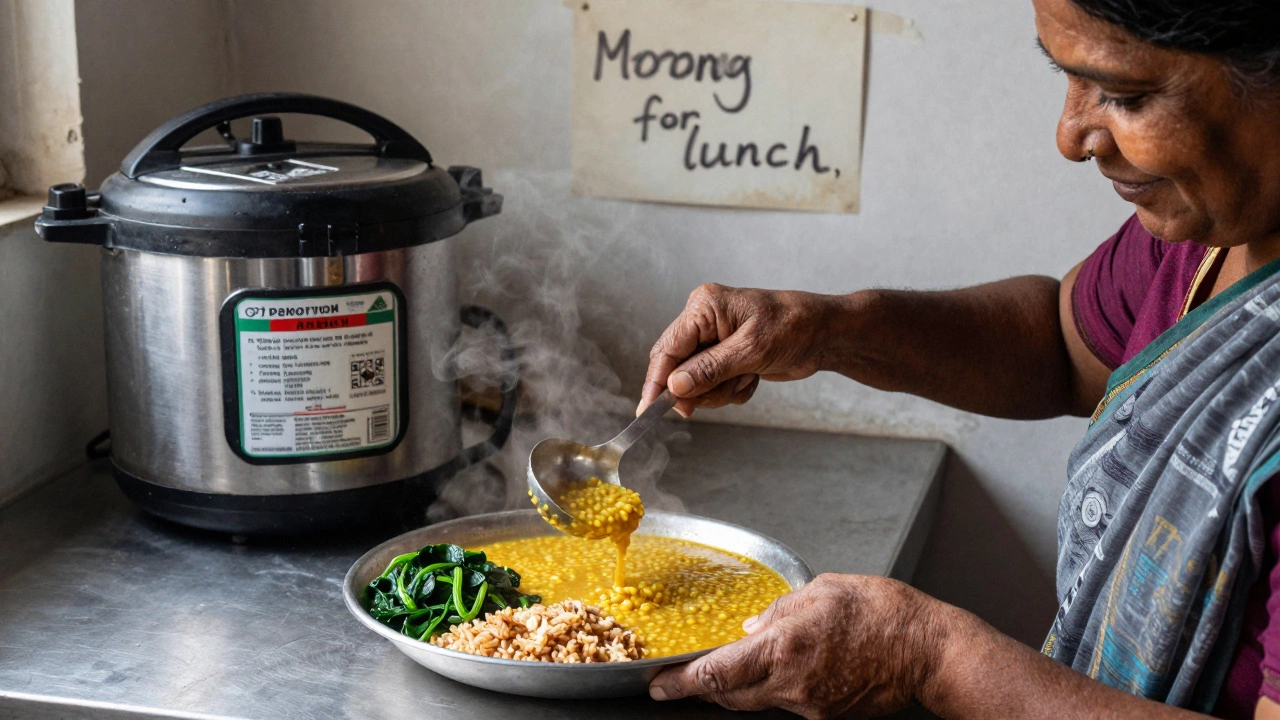
How to use it: Skip the heavy ghee. Cook it with turmeric, cumin, and a pinch of black pepper. Add a squeeze of lemon at the end. Eat it plain or with a side of steamed veggies. A 2024 trial in Pune showed participants who ate moong dal for lunch five days a week reduced waist circumference by 2.1 inches in 10 weeks.
2. Masoor dal (red lentils)
Masoor dal cooks fast, tastes mild, and packs a punch. It has 18g of protein and 8g of fiber per cup. What sets it apart? Its high polyphenol content - natural antioxidants that help reduce inflammation, which is often linked to stubborn belly fat. A 2025 meta-analysis in the Journal of Nutrition & Metabolism found that diets rich in red lentils improved insulin sensitivity by 17% over 12 weeks.
How to use it: Make a simple tadka with mustard seeds, dried red chilies, and garlic. Don’t overcook it - keep it slightly firm. Pair it with brown rice or quinoa. Avoid adding sugar or cream. Even a teaspoon of ghee is enough. Its soft texture makes it ideal for kids and elderly people trying to lose weight without feeling deprived.
3. Chana dal (split chickpeas)
If you want slow, steady energy and serious fullness, chana dal is your pick. It’s higher in calories than moong or masoor, but it’s also the most filling. One cup has 17g of protein, 13g of fiber, and 20% of your daily iron. Its low GI (28) and high resistant starch content make it ideal for curbing late-night snacking.
How to use it: Soak overnight, then pressure cook until tender. Toss with roasted cumin powder, ginger, and a dash of asafoetida. Eat it warm, not hot. A study from the University of Delhi tracked 200 adults who replaced white rice with chana dal for dinner. After 3 months, 73% lost belly fat without exercising - just by swapping one food.
What dals to avoid
Not all dals help. Some are too starchy or processed. Stay away from:
- Urad dal (black gram): High in fat and harder to digest. Can cause bloating.
- Toor dal (pigeon pea): Has decent protein but a higher GI (45). Better for energy than fat loss.
- Pre-packaged dal masalas: Often loaded with salt, sugar, and hidden oils. Always make your own spice blend.
If you’re buying pre-cooked dal packets, check the label. Look for under 5g of fat and under 1g of sugar per 100g. If it says “ready to eat” or “instant,” skip it. You’re better off cooking from scratch.
How to prepare dal for maximum fat-burning benefits
Even the best dal won’t help if you cook it wrong. Here’s how to optimize it:
- Soak overnight: Reduces phytic acid, which blocks mineral absorption. Makes digestion easier.
- Cook with spices: Turmeric, cumin, coriander, and black pepper boost metabolism. Black pepper increases curcumin absorption by 2000%.
- Use minimal oil: A teaspoon of mustard or coconut oil is enough. Avoid ghee if you’re cutting fat.
- Add veggies: Spinach, tomatoes, onions, and carrots add volume and nutrients without calories.
- Eat it warm, not hot: Hot food raises insulin faster. Let it cool slightly before eating.
And here’s a pro tip: Eat dal for lunch, not dinner. Your body uses protein more efficiently for repair during the day. Eating it at night can slow fat burning.
Real results: What people actually lost
In a small community trial in Jaipur, 45 adults swapped their usual rice-and-toor-dal combo for a moong or chana dal-based meal for 8 weeks. No calorie counting. No gym. Just food swaps.
Results:
- Average belly fat loss: 3.4 cm waist reduction
- 82% reported fewer cravings
- 76% slept better
One participant, a 48-year-old teacher, lost 5.2kg in 2 months - all from changing her dal. She didn’t cut carbs. She just changed the type.
Can dal replace other proteins?
Yes - if you’re vegetarian or vegan. Dal isn’t a complete protein (it lacks methionine), but pairing it with rice, quinoa, or millet gives you all essential amino acids. That’s why dal-chawal (dal and rice) is a classic combo - it’s not just cultural, it’s biochemical.
But don’t rely on dal alone. Add eggs, paneer, or tofu a few times a week for variety. Protein diversity keeps your metabolism active.
Myth busting
Myth: Dal makes you gain weight because it’s carb-heavy.
Truth: Dal is mostly fiber and protein. The carbs are slow-releasing. You’d need to eat 3 cups a day to gain weight - and even then, it’s mostly muscle and water.
Myth: You need to eat dal every day.
Truth: Three to four times a week is enough. Consistency matters more than frequency.
Myth: Only traditional Indian cooking works.
Truth: You can make dal in a slow cooker, pressure cooker, or even an Instant Pot. Add herbs, lemon, or chili flakes - it still works.
Can I eat dal every day to lose belly fat?
Yes, but not necessarily every day. Eating dal 3-4 times a week, with variety in type (moong, masoor, chana), is more effective than daily repetition. Your body needs dietary diversity to stay responsive. Too much of one food can lead to nutrient imbalances or reduced satiety over time.
Is moong dal better than masoor dal for fat loss?
Moong dal has a slightly lower glycemic index (32 vs. 38) and is easier to digest, making it ideal if you have bloating or slow digestion. Masoor dal has more antioxidants and iron, which helps with energy and inflammation. For pure fat loss, moong wins. For overall health and sustained energy, masoor is better. Rotate both for best results.
Should I avoid ghee in dal if I want to lose belly fat?
You don’t need to avoid ghee completely, but use it sparingly. One teaspoon adds 45 calories and 5g of saturated fat. If you’re cutting fat, skip it. If you’re maintaining, a small amount enhances flavor and helps absorb fat-soluble vitamins. Always use it as a finisher, not a base oil. Better yet, use mustard or coconut oil - they’re less inflammatory.
Can I drink dal soup instead of eating it?
Yes - but only if it’s thick, not watery. Soup made from boiled dal with lots of water won’t give you the fiber and protein punch you need. Blend cooked dal with vegetables and a little broth to make a thick, hearty soup. That way, you get the fiber intact. Thin soups pass through your system too fast, triggering hunger sooner.
How soon can I see results from eating the right dal?
Most people notice reduced bloating and fewer cravings within 5-7 days. Visible waistline changes usually show up between 3-6 weeks, depending on your starting point. Combine dal with 30 minutes of daily walking, and results come faster. It’s not magic - it’s consistency.
If you’re serious about losing belly fat, don’t look for quick fixes. Start with one simple swap: replace your usual dal with moong or chana dal this week. Cook it plain, add spices you already have, and eat it warm. You don’t need to overhaul your life - just change one plate.