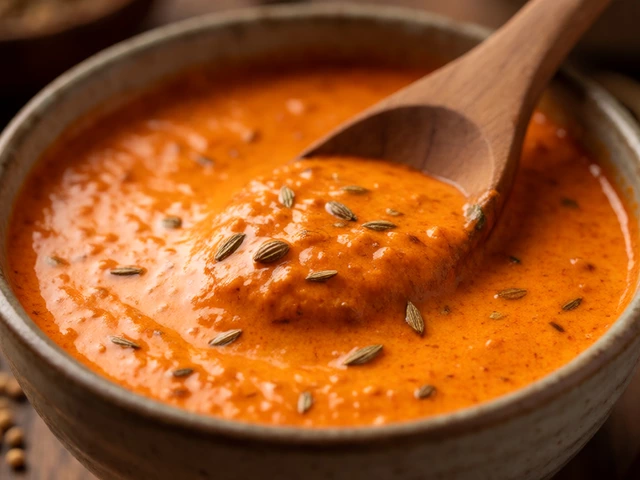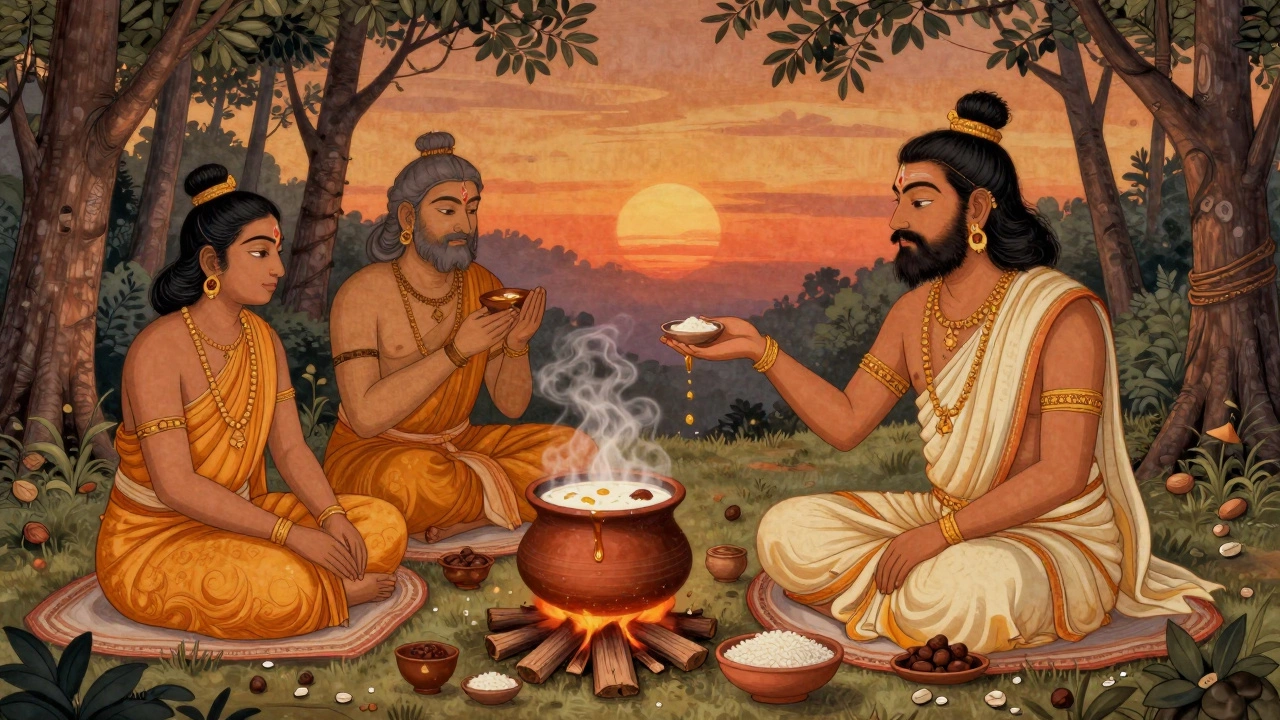
India boasts over 500 distinct sweets, but only one holds the title of the oldest. The answer might surprise you-it's not the famous Laddu or Jalebi, but a humble dish made from just milk, rice, and honey. Payasam is an ancient Indian sweet dish, also known as Kheer in North India, with origins tracing back to the Rigveda over 3,000 years ago. Also known as Kheer, this milk-based dessert has been a staple in Vedic rituals and continues to be a cultural icon across regions.
How Payasam's Story Begins in Ancient Texts
Let's go back 3,000 years. The Rigveda is the oldest of the four Vedas, composed between 1500 and 1200 BCE, which references milk-based offerings. In these ancient Sanskrit hymns, a dish called Kshira is the Sanskrit term for 'milk' used in rituals, forming the basis of Payasam appears as a sacred offering. Unlike today's elaborate sweets, early Payasam was simple: boiled rice in milk with honey for sweetness. No spices, no nuts-just pure, nourishing ingredients.
Why was it so important? In Vedic times, milk symbolized purity and prosperity. Offering Kshira to deities was believed to bring blessings for harvests and health. This practice wasn't just ritualistic-it was practical. Milk was a key source of nutrition in ancient India, and cooking it into a sweet dish made it last longer and taste better. Farmers and priests alike relied on this dish during lean seasons.
From Simple Ritual to Regional Delight
Over centuries, Payasam evolved as India's culinary landscape changed. Early recipes used rice is a staple grain in ancient Indian agriculture, often used in Payasam, but some regions substituted lentils or vermicelli. The sweetener also shifted: jaggery is unrefined cane sugar used in South Indian Payasam for a rich, caramel flavor became common in the south, while ghee is clarified butter used to fry ingredients and add richness to Payasam and sugar dominated in the north.
Here's how regional variations shaped the dish:
| Region | Key Ingredients | Traditional Name | Unique Feature |
|---|---|---|---|
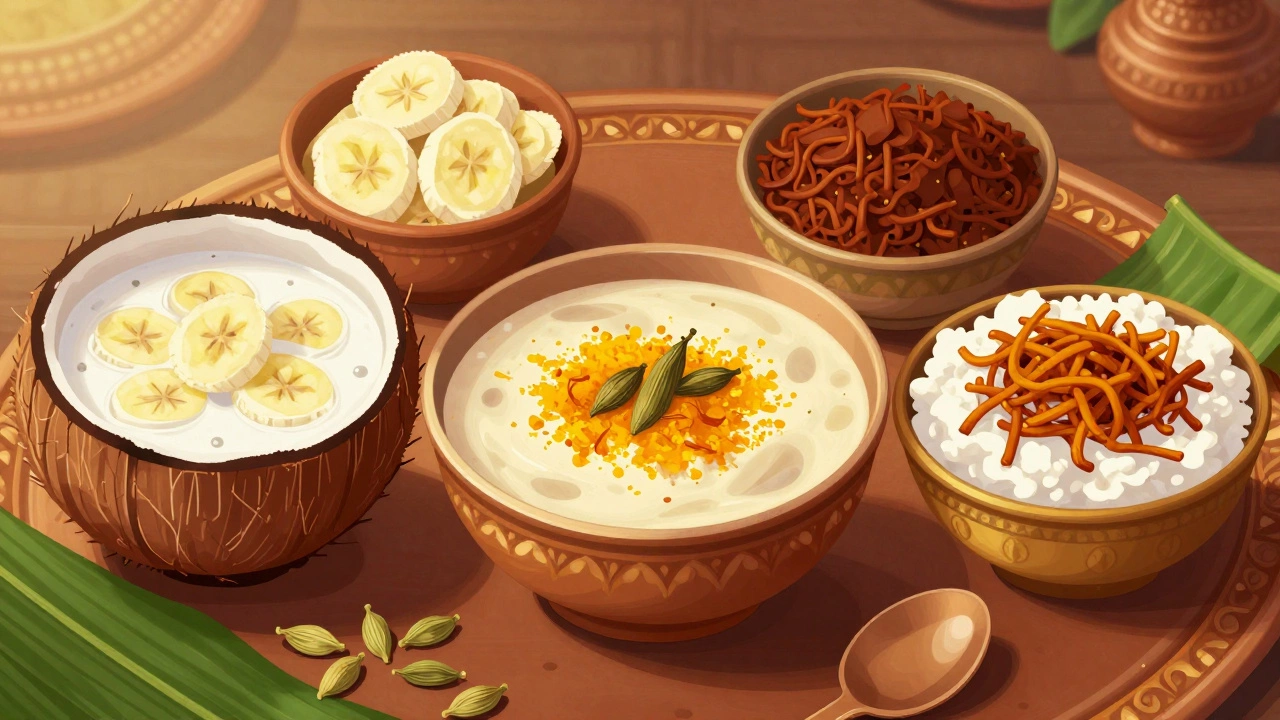
| South India | Rice, coconut milk, jaggery | Payasam | Often includes banana or jackfruit |
| North India | Rice, whole milk, sugar | Kheer | Flavored with cardamom and saffron |
| Bengal | Rice, yogurt | Payesh | Served chilled with rosewater |
| Kerala | Vermicelli, ghee | Semiya Payasam | Roasted vermicelli for texture |
| Tamil Nadu | Moong dal | Parippu Payasam | Lentil-based for protein |
Why Payasam Is More Than Just Dessert
Payasam's role in Indian culture goes beyond taste. In Ayurveda is the ancient Indian system of medicine that classifies Payasam as a cooling, nourishing food, it's considered a cooling food that balances body temperature-perfect for hot climates. This is why it's often served after meals to aid digestion.
During festivals like Diwali, Onam, or Pongal, Payasam is a must-have dish. In Kerala's Onam feast (Sadya), it's one of 12+ courses, symbolizing abundance. In Hindu weddings, it's offered to guests as prasadam-blessed food that connects the divine with the community. Even in daily life, many households prepare it for newborns' first solid food, believing it brings health and longevity.
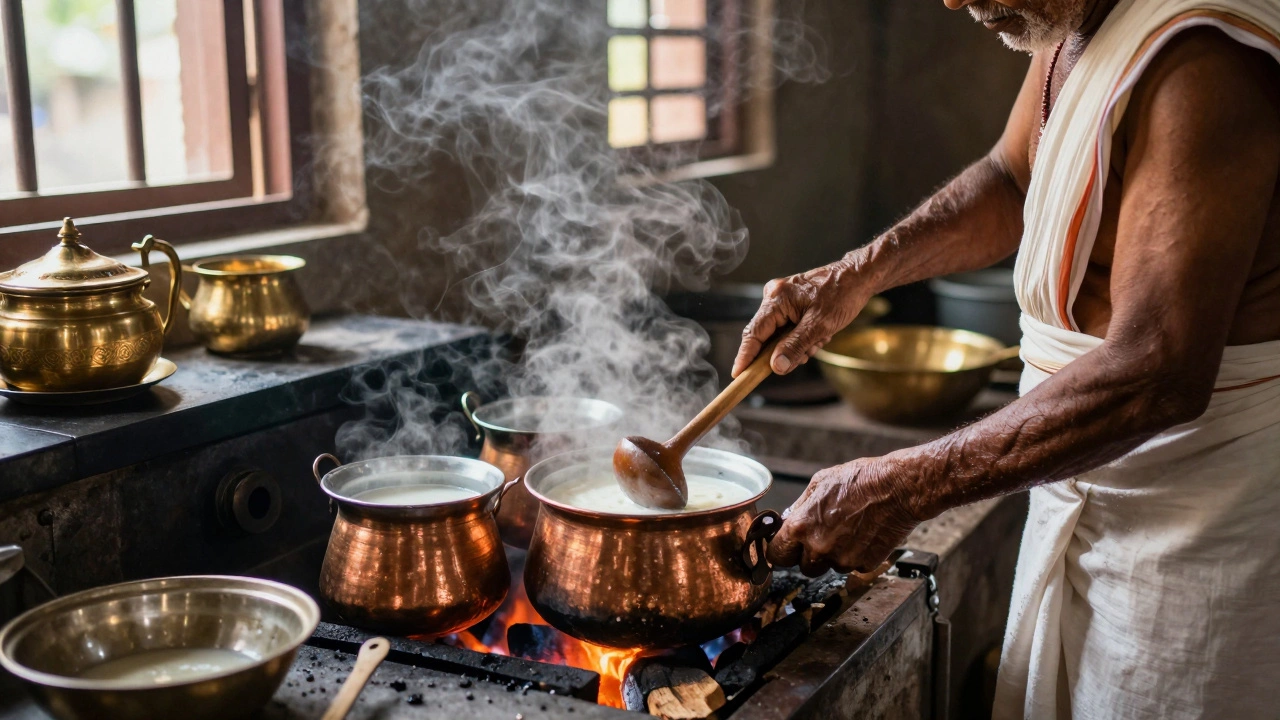
Modern chefs still respect these traditions. At temple kitchens in Tamil Nadu, Payasam is cooked in copper pots over wood fires, following recipes unchanged for centuries. This isn't just cooking-it's preserving history one bowl at a time.
Debunking Myths About India's Oldest Sweets
Many assume Laddu is a popular Indian sweet often mistaken as older than Payasam is the oldest because of its religious significance. But historical records show Laddus emerged around the 10th century CE-over 2,000 years after Payasam's first mention in the Rigveda. Similarly, Jalebi is a sweet often confused with ancient Indian desserts originated in Persian courts during the 12th century, making it a relative newcomer.
Another myth: Payasam is "just rice pudding." In reality, its simplicity is its strength. The dish has no fixed recipe-it adapts to local ingredients. In Rajasthan, it's made with millet; in coastal areas, with coconut milk. This flexibility is why it survived 3,000 years of cultural shifts while other sweets faded.
Why Payasam Still Rules India's Sweet Scene
Today, Payasam is everywhere-from street stalls to fine dining. Why? Because it's adaptable. Modern versions use quinoa for gluten-free options, almond milk for dairy-free diets, or even chocolate for fusion desserts. But the core remains unchanged: slow-cooked milk, patience, and love.
Its simplicity also makes it accessible. Unlike complex sweets requiring special tools, Payasam only needs a pot and stove. This is why it's a go-to dish for home cooks across India. During festivals like Holi, families gather to cook it together, passing down stories along with the recipe.
Even nutritionists praise it. A single bowl provides calcium, protein, and energy-perfect for growing kids or elders. In Ayurveda, it's called "Sattvic food," meaning it promotes purity and calmness. No wonder it's still a staple.
What is the oldest sweet dish in India?
Payasam (also known as Kheer) is widely recognized as India's oldest sweet dish. Historical evidence from the Rigveda (1500-1200 BCE) mentions milk-based offerings that evolved into Payasam, making it over 3,000 years old. While other sweets like Laddu or Jalebi are ancient, they emerged much later-around the 10th and 12th centuries CE, respectively.
How did Payasam get its name?
The name comes from Sanskrit. "Payas" means milk, and "am" is a suffix for sweetness. In South India, it's called Payasam, while North India uses "Kheer"-a Persian-influenced term. However, the dish's roots predate Persian influence, as early Vedic texts refer to it as "Kshira" (milk).
Is Payasam the same as rice pudding?
While similar, Payasam is distinctly Indian. Rice pudding is a Western adaptation with different spices and techniques. Payasam uses traditional Indian ingredients like jaggery, ghee, and regional variations-such as lentils in Tamil Nadu or vermicelli in Kerala-making it far more diverse than its global counterpart.
Why is Payasam used in religious rituals?
In Vedic traditions, milk symbolized purity and life. Offering Payasam to deities was believed to bring blessings for prosperity and health. Today, it's still used as prasadam (blessed food) in temples during festivals like Diwali and Onam, connecting communities to ancient spiritual practices.
Can I make Payasam without dairy?
Absolutely! Modern adaptations use plant-based milks like almond, coconut, or oat milk. Some South Indian versions already use coconut milk for a dairy-free twist. Just replace dairy milk with your preferred alternative and adjust cooking time since non-dairy milks often thicken faster.