Halal Gummy Checker
Enter ingredients separated by commas or paste the full ingredients list. Common haram ingredients include pork gelatin, non-halal animal sources, or alcohol-based flavors.
Analysis Results
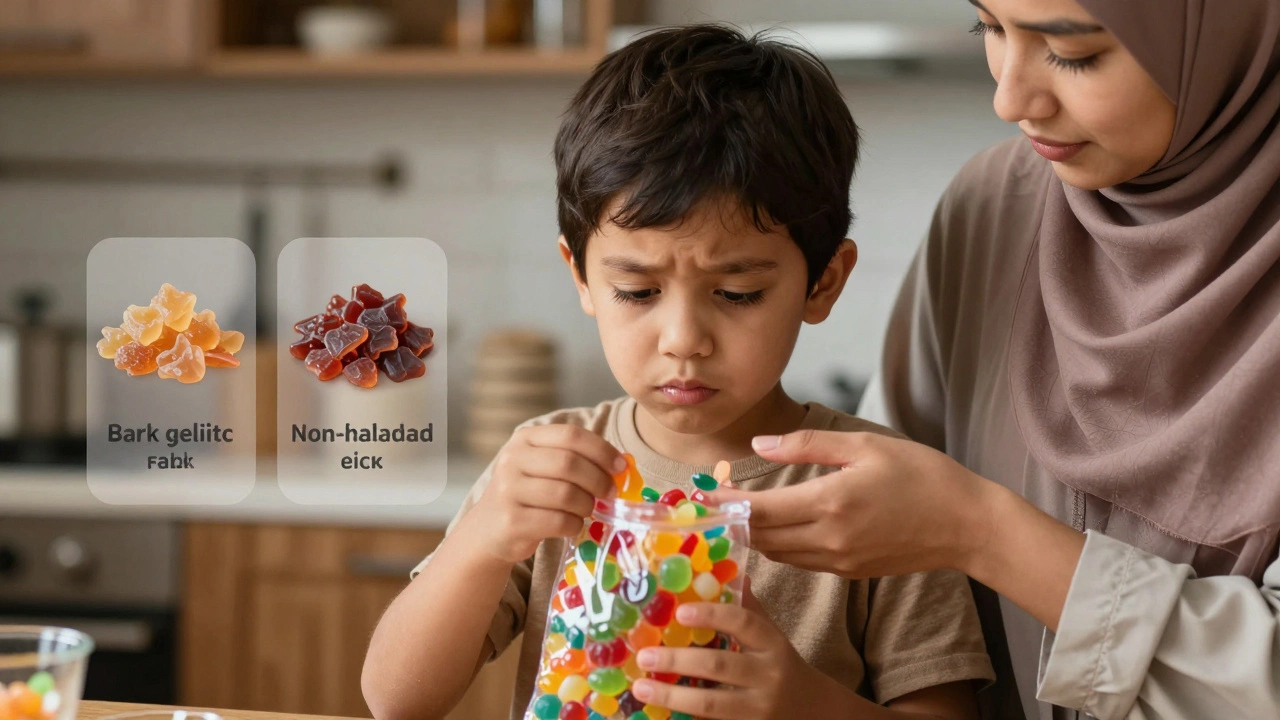
Have you ever handed a child a colorful gummy candy, only to hear, "I can't eat this"? If you're part of a Muslim household or know someone who is, you've probably heard this before. It's not about taste or texture-it's about what’s inside. Many popular gummy candies, even ones that look like innocent fruit snacks, contain ingredients that make them haram-forbidden-under Islamic law. And it’s not always obvious.
What’s Really in Gummies?
Gummies are made from sugar, flavorings, and colorings-but the key ingredient most people don’t think about is gelatin. Gelatin gives gummies their chewy texture. It’s not just a filler; it’s essential. And here’s the catch: most gelatin comes from animal bones, skin, and connective tissue. If those animals weren’t slaughtered according to Islamic guidelines, the gelatin is not halal.
Think about it: cows, pigs, chickens. If a cow is killed without being blessed in the name of Allah, or if the animal was already dead before slaughter, its parts can’t be used by Muslims. Pigs are outright forbidden in Islam. So if a gummy uses pork gelatin-which is common in cheap candies-it’s automatically haram. Even if the label says "beef gelatin," if the animal wasn’t slaughtered the halal way, it’s still not allowed.
Why Can’t Muslims Just Check the Label?
You’d think reading the ingredients list would be enough. But here’s the problem: gelatin often doesn’t appear as "gelatin" on labels. Sometimes it’s listed as "hydrolyzed collagen," "animal protein," or just "natural flavors." In many countries, manufacturers aren’t required to specify the animal source. A candy might say "vegetarian gelatin" but still be made from fish collagen, which is halal-but how would you know unless you called the company?
Even in places like India, where halal-certified sweets are common, imported gummies from the U.S., Europe, or China rarely carry halal labels. You might find a jar of colorful gummies in a convenience store, labeled "fruit-flavored snacks," and assume they’re safe. But without clear certification, the risk is too high for observant Muslims to take.
Halal vs. Non-Halal: A Real-World Example
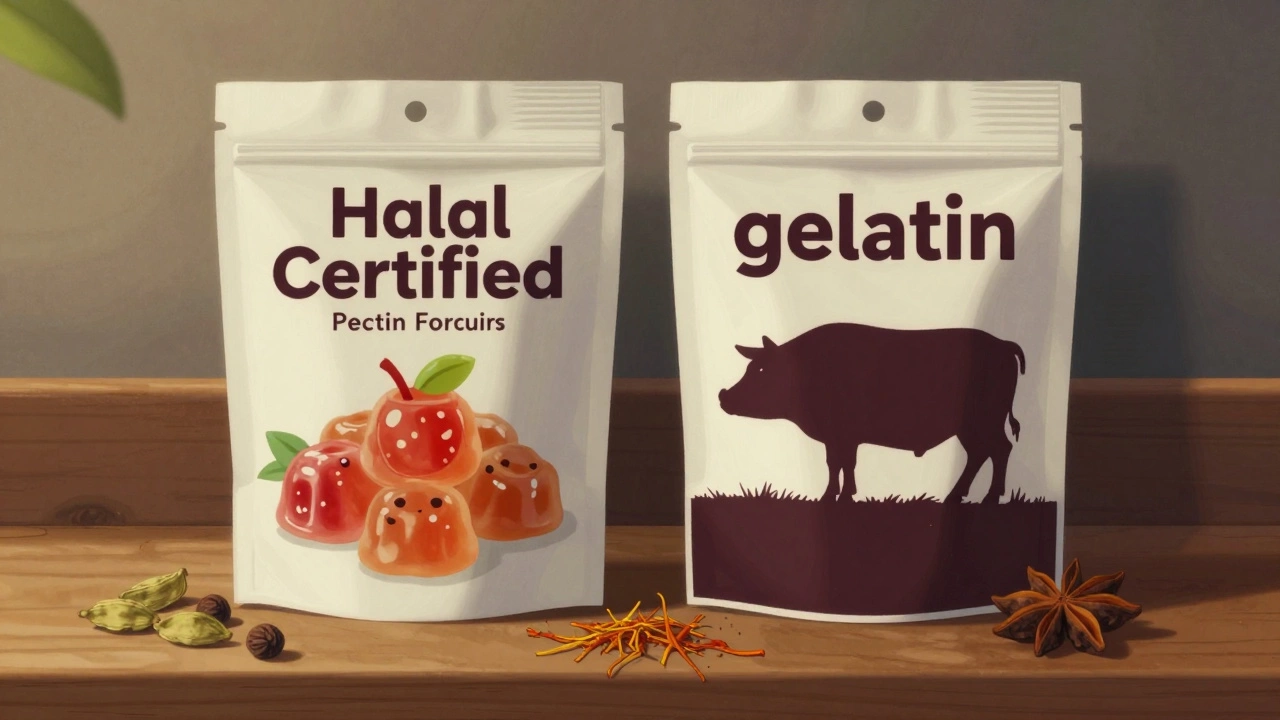
Let’s say you’re at a grocery store in Brighton, and you pick up two packs of gummies. One is from a well-known American brand. The ingredients say: "corn syrup, sugar, gelatin, citric acid, natural flavors, colors." No mention of source. You don’t know if it’s pork, beef, or fish. You don’t know if the beef came from a halal-slaughtered cow.
The other pack says "Halal Certified" on the front, with a logo from a recognized Islamic authority. The back lists: "vegetable-based pectin, fruit juice, natural flavors." No animal products. No ambiguity. That’s the difference.
Many Muslim families avoid gummies entirely-not because they’re picky, but because the risk of accidental haram consumption is too great. It’s not about being strict; it’s about faith.
What About Vegan Gummies?
Not all plant-based sweets are safe, but many vegan gummies are halal. If a gummy uses pectin (from fruit) or agar-agar (from seaweed) instead of gelatin, it’s usually acceptable. Brands like YumEarth, Surf Sweets, and Haribo’s "Fruity" line (made in Turkey) use pectin and are certified halal.
But here’s the catch: some "vegan" gummies still use non-halal additives. For example, some use alcohol-based flavorings (like vanilla extract), which are also forbidden. Others use artificial colors derived from insects (like carmine), which some scholars consider haram. So even vegan doesn’t always mean halal.
What Can Muslims Eat Instead?
Indian sweets have a long tradition of being naturally halal. Jalebi, laddoo, barfi, and rasgulla are made from milk, sugar, flour, and cardamom. No gelatin. No hidden animal byproducts. Many of these sweets are made fresh daily in homes and local shops, and the ingredients are simple and transparent.
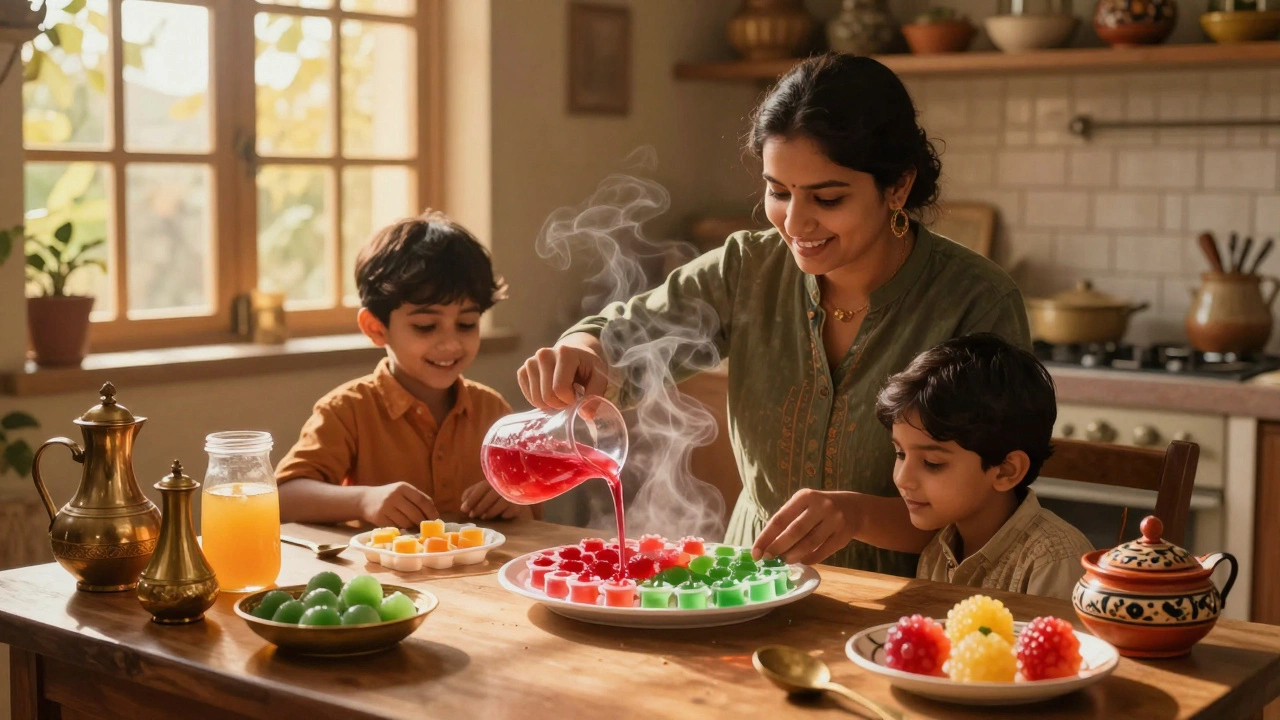
Some Muslim families even make their own "gummy-like" sweets using agar-agar. You can boil agar-agar with fruit juice, pour it into molds, and let it set. It’s chewy, colorful, and 100% halal. You can flavor it with rose water, saffron, or even cardamom-just like traditional Indian sweets.
The Bigger Picture: Faith in Everyday Choices
For Muslims, food isn’t just fuel. It’s part of identity, discipline, and devotion. Choosing halal isn’t about avoiding fun-it’s about staying connected to belief in small, daily acts. A child might miss out on a candy at a birthday party, but they also learn early that their faith guides even the smallest decisions.
And it’s not just about gummies. The same rules apply to marshmallows, jelly beans, some yogurts, and even certain medications. The principle is simple: if you don’t know where it came from, and it might be from a forbidden source, it’s better to leave it.
How to Find Halal Gummies
- Look for halal certification logos on packaging-Halam, IFANCA, or Halal Food Authority are trusted.
- Choose brands that use pectin or agar-agar instead of gelatin.
- When in doubt, contact the manufacturer. Ask: "Is the gelatin from pork? Is it halal-certified?"
- Make your own using agar-agar and fruit juice. It’s easy, cheap, and safe.
- Stick to traditional Indian sweets. They’re naturally halal and delicious.
There’s no need to feel left out. Halal gummies exist. And if you can’t find them? Make them. A little effort turns a restriction into a tradition.