Turmeric Quantity Calculator
Turmeric isn't just about color—it's the backbone of authentic curry flavor. As the article explains, it creates the deep, earthy foundation that holds all other spices together.
Pro Tip: Always add turmeric to hot oil or ghee for maximum flavor release. Too little makes curry flat, too much makes it bitter.
Recommended Turmeric Amount
1 teaspoon
Key Insight: This is the golden standard used in Chennai, Delhi, and London—1 teaspoon for 4 servings. The same amount provides perfect balance without bitterness.
When you bite into a bowl of chicken curry, what’s the first thing you taste? Is it the heat? The coconut milk? The garlic? Most people think it’s spice-chili, cumin, or ginger. But the real heart of every great chicken curry isn’t one of those. It’s turmeric.
You won’t always taste turmeric like you taste chili or garlic. It doesn’t shout. It whispers. But without it, your curry just doesn’t feel right. It’s the difference between a song with a bassline and one without. You might not notice it’s missing until it’s gone.
Think about it: every traditional chicken curry recipe-from North Indian butter chicken to South Indian coconut curry-starts with turmeric. Not as an afterthought. Not as decoration. As the foundation. Even when you see a curry that looks red or orange, that color? Mostly from turmeric. Not paprika. Not chili powder. Turmeric.
Why Turmeric Isn’t Just a Color
Turmeric comes from the root of a plant called Curcuma longa. It’s dried, ground, and turned into that bright yellow powder you see in spice racks. But it’s not just for looks. It’s got a deep, earthy, slightly bitter, and warm flavor. It’s the backbone of the curry paste, the thing that holds all the other spices together.
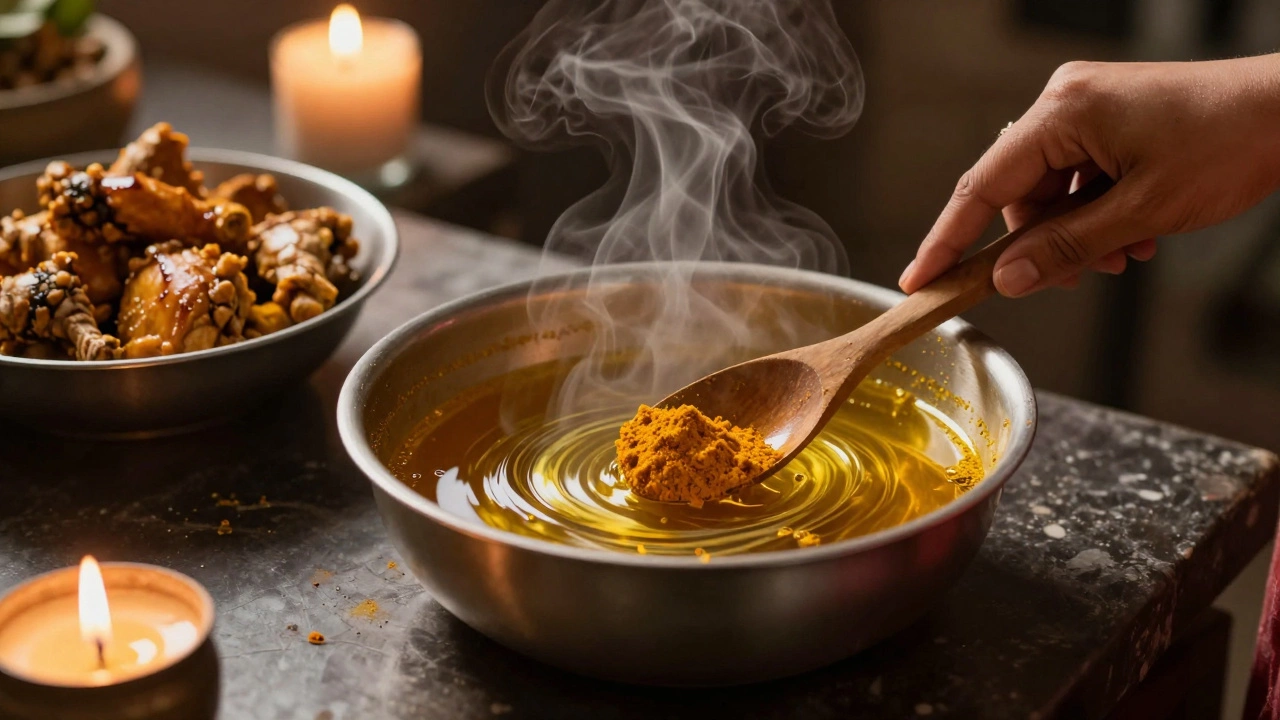
In India, home cooks don’t just toss turmeric in at the end. They fry it in hot oil or ghee first. That’s called tempering. When turmeric hits hot oil, its oils release, and its flavor wakes up. That’s when the real magic happens. The bitterness softens. The aroma blooms. And suddenly, your kitchen smells like a village kitchen in Kerala or Punjab.
Try this: make two batches of chicken curry. One with turmeric. One without. Just skip it. You’ll notice the one without turmeric tastes flat. Like a meal with no soul. The one with it? It’s deeper. Richer. Even if you can’t name the flavor, you’ll feel it.
What People Get Wrong About Curry
Most people think “curry” is a single spice. It’s not. It’s a mix. A blend. A layered experience. And in every single blend, turmeric is there-always.
Take garam masala. It’s often called the “curry spice.” But garam masala doesn’t even have turmeric in it. That’s because turmeric isn’t part of the final spice mix. It’s part of the base. Like onions. Like garlic. Like oil. You don’t serve them on the side. You cook them in.
Even in recipes that use a lot of chili or cumin, turmeric is still the silent partner. In a Madras curry, the heat comes from dried red chilies. The smokiness from cumin. But the color? The depth? That’s turmeric. It’s the glue.
And here’s something most cookbooks don’t tell you: if you use too little turmeric, your curry tastes thin. If you use too much, it turns bitter. The sweet spot? One teaspoon for a standard chicken curry serving four people. That’s it. Not more. Not less.
The Other Players (and Why They’re Not the Main Flavor)
Let’s clear up the noise. People blame other spices for curry’s flavor. Here’s the truth:
- Cumin: Adds smokiness. Great for earthiness. But it doesn’t give curry its body.
- Coriander: Bright, citrusy. Balances heat. But it’s a sidekick.
- Chili: Heat. Yes. But heat isn’t flavor. It’s sensation.
- Ginger and garlic: Aromatic. Essential. But they fade fast in cooking.
- Cinnamon or cardamom: Sweet notes. Used in richer curries. But they’re accents.
Turmeric? It stays. It lingers. It’s the one spice that survives long simmering. Even after two hours on the stove, its flavor is still there-quiet, steady, unshakable.
How to Spot Real Curry Flavor
If you’ve ever eaten a chicken curry that tasted like it came from a packet? You know what I mean. It’s one-note. Too spicy. Too salty. No depth.
Real curry flavor comes from balance. And balance starts with turmeric. Here’s how to test it:
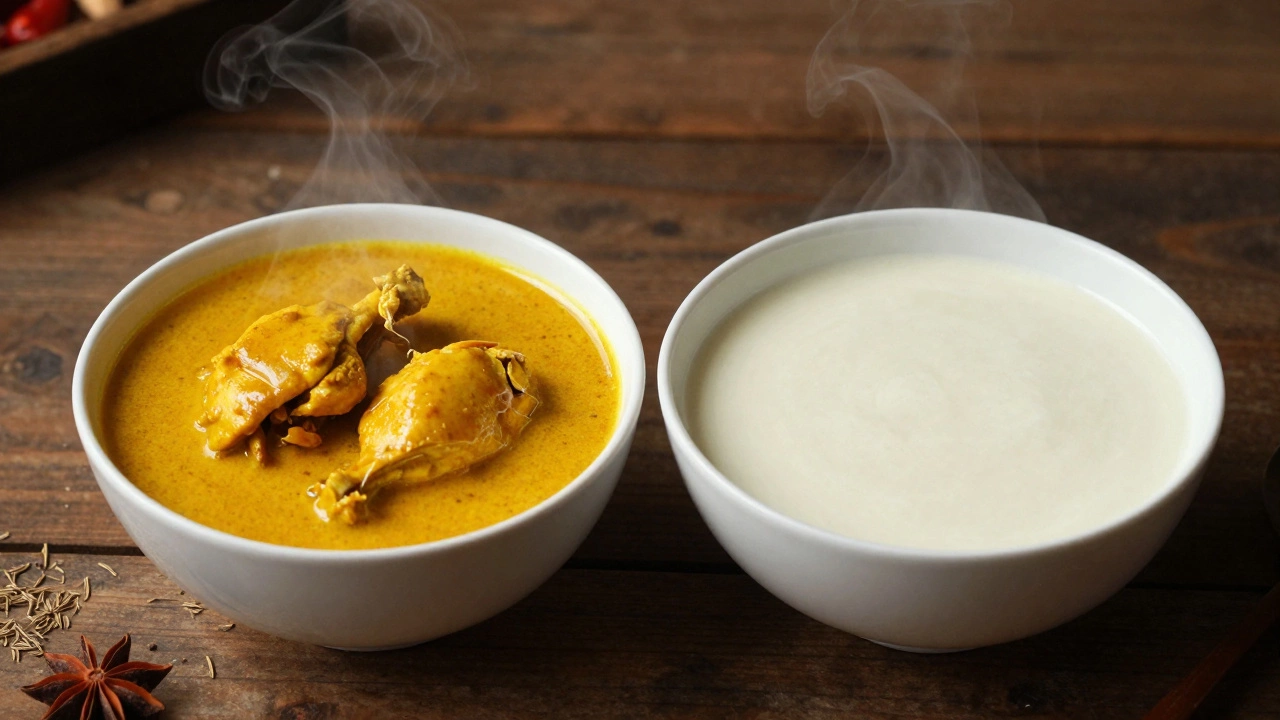
- Look at the color. Is it a deep golden yellow? Not bright orange. Not red. Yellow? That’s turmeric doing its job.
- Smell it before you eat. Does it smell warm? Earthy? Like damp soil after rain? That’s turmeric.
- Let it cool a little. The flavor should deepen, not fade. If it gets more complex as it cools, you’ve got a good base.
- Try it without rice. If it still tastes satisfying on its own? Turmeric’s holding it together.
Most restaurant curries use artificial coloring to make things look “authentic.” But real turmeric doesn’t need help. It gives color naturally. And it doesn’t fade. Not even after sitting in the fridge for days.
The Secret to Layering Flavor
Here’s how the best Indian home cooks build flavor: they don’t dump all the spices in at once. They build in stages.
Step one: Heat oil. Add mustard seeds. Let them pop. Then add turmeric. Just a pinch. Stir for 10 seconds. That’s when the aroma starts.
Step two: Add onions. Fry until golden. Then garlic and ginger. Cook until the raw smell disappears.
Step three: Add ground spices-cumin, coriander, chili. Stir for 30 seconds. Don’t let them burn.
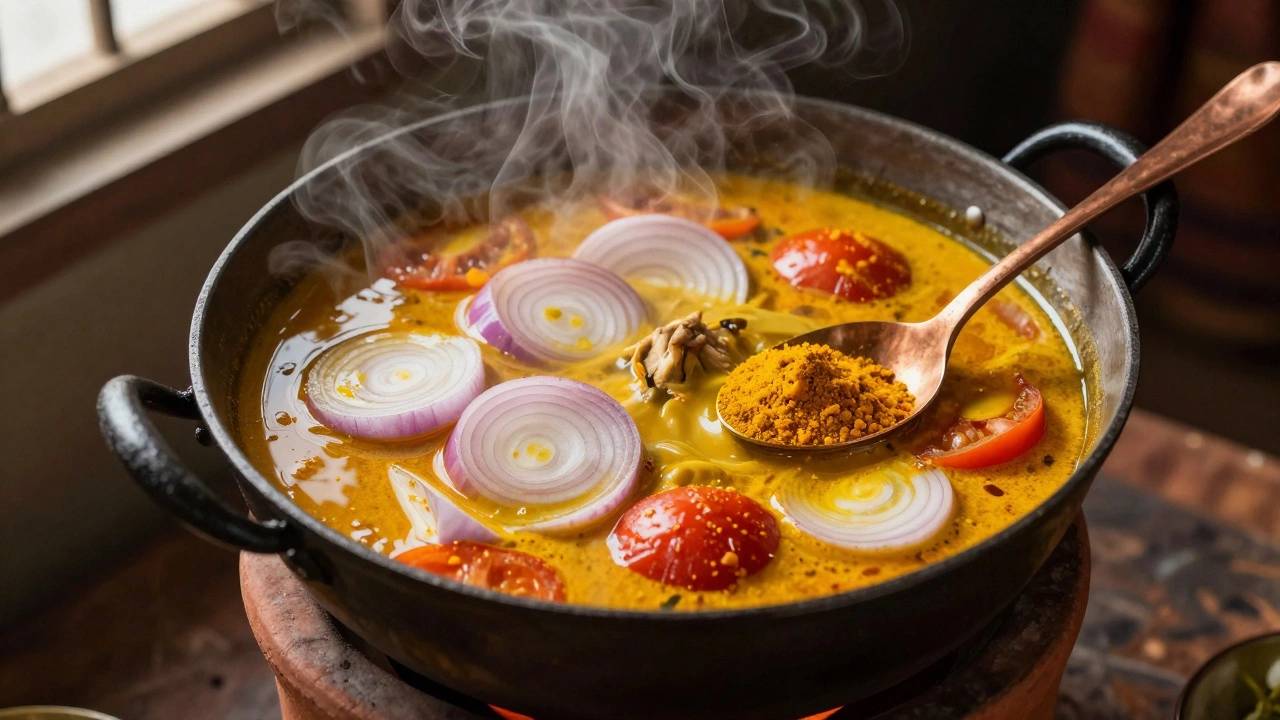
Step four: Add tomatoes. Let them break down. That’s when the turmeric starts to bloom again, mixing with the tomato’s acidity.
Step five: Add chicken. Brown it. Then add water or coconut milk. Simmer for 45 minutes.
Notice where turmeric shows up? Twice. Once at the start. Once again when the tomatoes come in. That’s not a mistake. That’s technique.
What Happens If You Skip Turmeric?
I’ve tried it. A few years ago, I made chicken curry without turmeric-just to see. I used paprika for color. Extra cumin for depth. Even added a little smoked salt.
The result? It looked fine. Smelled okay. But when I ate it? It felt incomplete. Like a story with no ending. No warmth. No grounding. My husband said, “It’s good, but… it’s not curry.”
That’s the moment I understood. It’s not about the heat. Not about the cream. Not even about the chicken. It’s about the turmeric. It’s the flavor that makes curry feel like home.
How Much Should You Use?
For a standard chicken curry (about 1.5 pounds of chicken, serving 4):
- 1 teaspoon ground turmeric (fresh is better, but ground works)
- Always add it to hot oil or ghee before anything else
- Stir for 10-15 seconds-don’t let it burn
- Don’t add more later. One time is enough
Too much turmeric turns bitter. Too little leaves your curry flat. One teaspoon is the golden mean. And yes-it’s the same amount used in Chennai, Delhi, and London.
Final Thought: Flavor Isn’t Always Loud
The main flavor in curry isn’t the loudest spice. It’s the quietest. It doesn’t burn your tongue. It doesn’t make you sweat. But it’s the reason you go back for seconds. The reason you remember the meal. The reason you say, “This tastes like my grandma’s.”
Turmeric doesn’t just flavor curry. It carries memory. Tradition. Comfort. And that’s why no matter how many new recipes you try, you’ll always come back to the one with the right amount of yellow.
Is turmeric the only important spice in chicken curry?
No, turmeric isn’t the only important spice, but it’s the most essential one. Cumin, coriander, and chili add depth and heat, but without turmeric, the curry loses its structure and color. It’s the base that holds everything together.
Can I substitute turmeric with something else?
You can’t truly substitute turmeric. Paprika gives color but not flavor. Saffron is expensive and adds a different aroma. Curry powder often contains turmeric, but if you’re making curry from scratch, skipping it leaves a gap no other spice can fill. It’s irreplaceable.
Why does my curry taste bitter?
Bitterness usually comes from burning turmeric. Always add it to hot oil, not cold, and stir for only 10-15 seconds. If you leave it too long, it turns bitter. Also, using too much-more than 1 teaspoon per 4 servings-can make it taste harsh.
Does chicken curry always have coconut milk?
No. Coconut milk is common in South Indian and Thai curries, but in North Indian or Punjabi-style chicken curry, you’ll find tomato-based sauces or cream. The base flavor still comes from turmeric-it’s the one constant across all styles.
How do I know if my turmeric is good quality?
Good turmeric is bright yellow, not dull orange. It should smell earthy and slightly peppery, not musty. If it looks faded or smells like dust, it’s old. Buy from a spice shop that turns stock often. Or check the expiration date-it should be within 12 months.