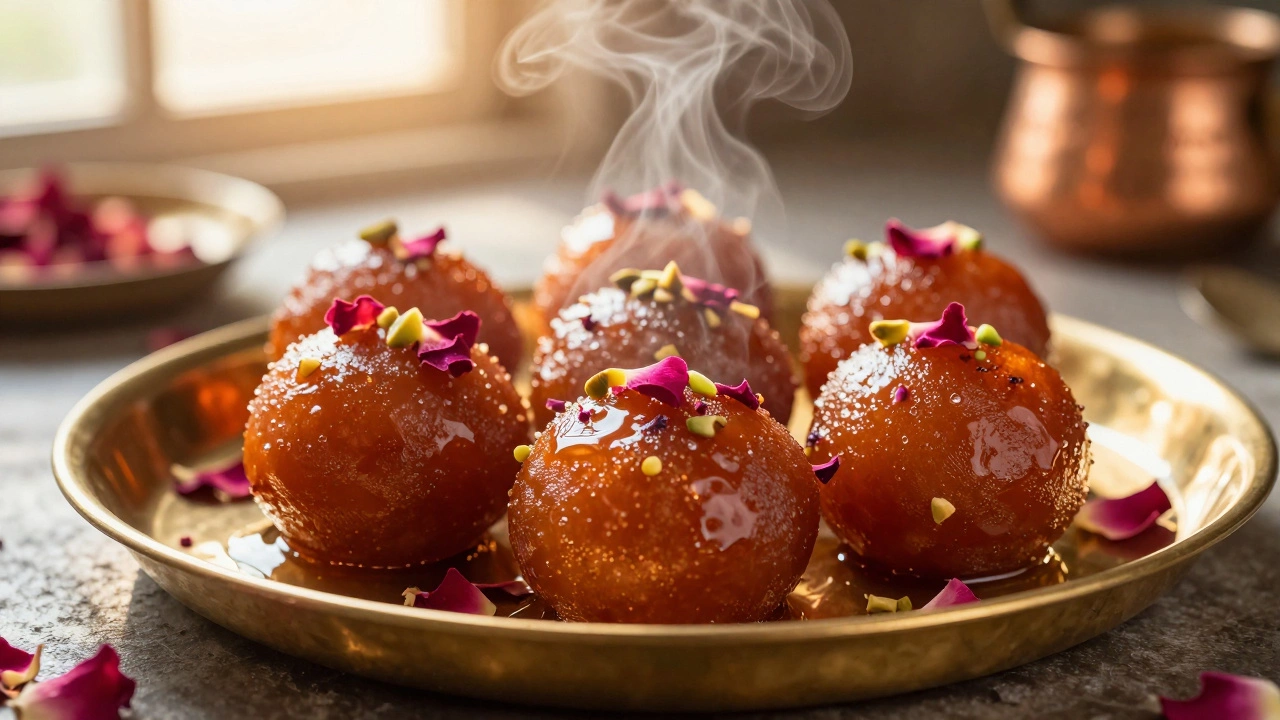
Perfect Gulab Jamun Calculator
Calculate the exact ingredient proportions for soft, melt-in-your-mouth Gulab Jamuns based on your desired batch size.
Walk into any household in India during a festival, and you will likely smell sugar syrup boiling on the stove. You might see bright red rose petals being crushed for garnish. But if you ask anyone what the true "national sweet" is, the answer is almost always the same: Gulab Jamun. It is a deep-fried milk solid dumpling soaked in rose-flavored sugar syrup, beloved across every state, language, and community.
India does not have an officially declared national sweet by the government. Unlike the national animal (the Bengal Tiger) or the national flower (the Lotus), there is no legal document naming a dessert. However, culturally and historically, Gulab Jamun has claimed this unofficial title. It is the first thing offered to guests, the centerpiece of weddings, and the comfort food that connects millions of people. In this article, we will explore why this sticky, soft treat holds such power, how it evolved from ancient recipes, and how you can make the perfect batch at home.
The Cultural Crown Jewel of Indian Desserts
To understand why Gulab Jamun is considered the national sweet, we have to look at its reach. Indian cuisine is incredibly diverse. A person from Kerala might prefer Payasam, while someone from Punjab loves Gajar Ka Halwa. Yet, when it comes to a universal favorite, Gulab Jamun wins. It appears in North, South, East, and West India, often with slight regional twists but always recognizable.
The name itself tells a story. "Gulab" means rose, and "Jamun" refers to the Indian black plum fruit. The round, dark brown shape of the fried dough resembles the Jamun fruit, while the syrup carries the scent of roses. This combination of visual and olfactory cues makes it distinct. It is not just food; it is a sensory experience that defines hospitality in India.
Consider the social role of the sweet. In Indian culture, refusing a sweet is considered rude. When elders visit, they bring sweets. When children achieve something, they are rewarded with sweets. Gulab Jamun is the default choice because it is affordable, widely available, and universally liked. It bridges gaps between generations and regions in a way few other foods can.
A Journey Through Time: Origins and Evolution
The history of Gulab Jamun is fascinating because it shows how culinary traditions evolve over centuries. Many believe it originated in Persia (modern-day Iran). Historical records suggest that Persian travelers brought similar fried milk-based desserts to the Indian subcontinent around the 16th century. These early versions were known as "Zarda" or "Sheer Khurma" variants.
In India, the recipe was adapted using local ingredients. The use of khoya (reduced milk solids) became central. Khoya is a staple in Indian confectionery, providing the rich, dense texture that distinguishes authentic Gulab Jamun from lighter Western donuts. Over time, the Mughal courts refined the technique, turning it into the delicacy we know today.
By the 19th and 20th centuries, Gulab Jamun had moved from royal kitchens to street stalls and home kitchens. It became democratized. Today, you can find high-end versions made with premium cream and vanilla, alongside simple homemade batches made with basic milk powder. This adaptability is part of its enduring popularity.
| Period | Origin/Region | Key Characteristics | Name Variations |
|---|---|---|---|
| Pre-1500s | Persia/Middle East | Fried dough balls, honey syrup | Zarda, Zardali |
| 1500s-1800s | Mughal India | Introduction of Khoya, rose water | Khaja, Lassi Peda |
| 1900s-Present | All India | Standardized Gulab Jamun, cardamom flavor | Gulab Jamun, Hemu, Rasgulla (variant) |

Why Not Other Sweets? Comparing the Contenders
If Gulab Jamun is the king, who are the princes? Several other sweets have strong claims to fame, but they lack the universal appeal of Gulab Jamun.
Rasgulla: Originating from Odisha and West Bengal, Rasgulla is a spongy cottage cheese ball soaked in light sugar syrup. While it is iconic in Eastern India, many people in North and South India find the texture too soft or the flavor too mild. It is also perishable and harder to transport, limiting its widespread daily consumption compared to Gulab Jamun.
Jalebi: This crispy, spiral-shaped sweet is dipped in saffron syrup. Jalebi is extremely popular, especially for breakfast with tea. However, it is often seen as a snack rather than a ceremonial dessert. Its texture changes quickly, becoming soggy, which limits its shelf life and presentation versatility.
Ladoo: Made from flour, lentils, or nuts, Ladoos are dry and portable. They are essential for religious offerings. Yet, they are often viewed as functional sweets-given for blessings rather than enjoyed for pure indulgence. Gulab Jamun offers a moist, rich experience that feels more like a treat.
Ultimately, Gulab Jamun strikes the perfect balance. It is moist but not wet, sweet but not cloying (when made correctly), and soft but structured enough to hold its shape. This balance makes it the most versatile and loved sweet across the nation.
The Science of Perfect Gulab Jamun
Making Gulab Jamun seems simple: mix, fry, soak. But getting it right requires understanding the chemistry. The biggest mistake beginners make is frying them too fast or soaking them in cold syrup. Let’s break down the critical steps.
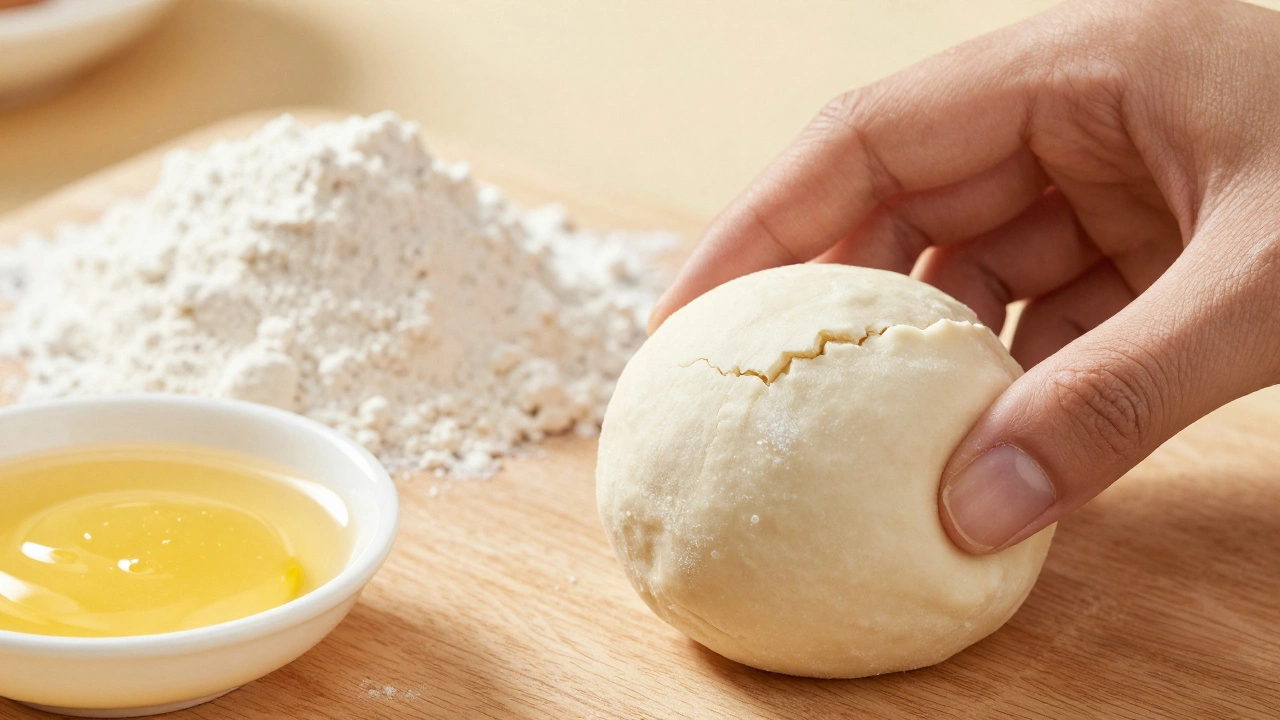
The Dough: Traditional recipes use fresh khoya. For home cooks, a mixture of milk powder and all-purpose flour (maida) works well. The ratio is crucial. Too much flour makes the jamuns hard; too much milk powder makes them crumble. A good rule of thumb is 1 cup milk powder to 2-3 tablespoons of flour. Add a pinch of baking soda to help them puff up slightly without becoming airy like a donut.
The Frying: Temperature control is everything. The oil must be on low heat. If the oil is too hot, the outside burns before the inside cooks, leading to hollow centers. If it’s too cool, the jamuns absorb oil and become greasy. You want them to turn a deep golden brown slowly. Patience here pays off with a soft, melt-in-the-mouth interior.
The Syrup: The sugar syrup should be warm, not boiling, when you add the fried jamuns. Hot syrup melts the outer layer, making them disintegrate. Cold syrup doesn’t penetrate, leaving the center dry. Warm syrup allows the jamuns to absorb the sweetness evenly. Adding a drop of rose water or cardamom powder enhances the aroma without overpowering the milk flavor.
- Mix milk powder, flour, baking soda, and ghee until the dough resembles breadcrumbs.
- Add milk gradually to form a smooth, non-sticky dough. Do not knead excessively, as this develops gluten and makes the jamuns hard.
- Shape small, crack-free balls. Wet your hands to prevent sticking.
- Fry on low heat, turning occasionally, until uniformly dark brown.
- Prepare one-string consistency sugar syrup with cardamom and rose water.
- Soak fried jamuns in warm syrup for at least 30 minutes before serving.
Regional Twists on a National Favorite
While the core recipe remains consistent, different regions add their own flair. In some parts of North India, pistachios and almonds are pressed into the top for decoration. In Southern states, you might find Gulab Jamuns flavored with coconut or served with a side of payasam. In Maharashtra, a variant called "Hemu" uses semolina (suji) instead of milk powder, giving it a grainier texture.
These variations show how adaptable the concept is. Whether you call it Gulab Jamun, Hemu, or Rasagola, the underlying idea of a milk-based sphere in sweet syrup resonates deeply with the Indian palate. This shared preference is what cements its status as the de facto national sweet.
Serving Suggestions and Pairings
Gulab Jamun is rarely eaten alone. It pairs beautifully with warm milk, which helps digest the richness. It is also a classic accompaniment to chai (tea), where the bitterness of the tea cuts through the sweetness of the syrup. For a modern twist, try serving it with vanilla ice cream or a scoop of mango kulfi. The contrast of temperatures and textures creates a delightful dessert experience.
In restaurants, you might see "Gulab Jamun Shake," where the sweet is blended with milk and ice. This innovation has introduced the traditional sweet to younger generations who might not enjoy the texture of the whole dumpling. It proves that even a timeless classic can evolve to meet new tastes.
Is Gulab Jamun officially the national sweet of India?
No, the Government of India has not officially declared any sweet as the national sweet. However, Gulab Jamun is widely recognized as the cultural favorite due to its popularity across all regions and communities.
Why do my Gulab Jamuns turn out hard?
Hardness usually results from over-kneading the dough, which develops gluten, or frying them in oil that is too hot. Ensure you mix the dough gently and fry on low heat until they are fully cooked inside.
Can I make Gulab Jamun without khoya?
Yes, many home recipes use milk powder mixed with all-purpose flour and a little ghee. This method is easier and yields soft results if the proportions are correct.
How long can I store Gulab Jamun?
Homemade Gulab Jamun stays fresh for 2-3 days in the refrigerator. Store them in an airtight container with the syrup. Avoid freezing as it can alter the texture upon thawing.
What is the difference between Gulab Jamun and Rasgulla?
Gulab Jamun is made from reduced milk solids (khoya) or milk powder and is deep-fried, giving it a dense, dark brown appearance. Rasgulla is made from chenna (cottage cheese), boiled in sugar syrup, and is white, spongy, and lighter in texture.