How to Separate Paneer from Milk: Simple Methods and Tips
When you separate paneer from milk, you’re turning fresh milk into a soft, crumbly cheese used in everything from palak paneer to paneer tikka. Also known as Indian cottage cheese, paneer is made by curdling milk with acid—no rennet, no complex equipment, just heat and patience. It’s the backbone of hundreds of Indian dishes, and getting it right changes everything.
Most people think you need special ingredients or a fancy machine to make paneer, but you don’t. All you need is whole milk, a souring agent like lemon juice or vinegar, and a bit of timing. The key is in the milk curdling, the process where proteins in milk clump together when heated and exposed to acid. If the milk doesn’t curdle properly, your paneer will be watery, weak, or worse—fall apart in your curry. That’s why temperature matters. Heat the milk slowly to just below boiling, then add your acid in small batches. Watch for clean separation: the whey should turn clear yellow, and the curds should pull away from the sides like fluffy clouds.
Once the curds form, strain them through a clean cloth—cotton muslin works best. Tie it up, hang it for 15 minutes, or press it lightly under a heavy bowl for 30 minutes. Too much pressure and your paneer turns hard. Too little and it stays soggy. This is where most home cooks fail. They skip the pressing step, then wonder why their paneer melts in the pan. homemade paneer, when made right, holds its shape, soaks up spices, and gives that satisfying bite. It’s not just a substitute for store-bought—it’s better. And unlike packaged paneer, which often has additives, your version is pure milk and acid—no preservatives, no gums, no guesswork.
People ask why they can’t just buy paneer from the store. Easy answer: store-bought paneer is often dry, rubbery, or too salty. Homemade paneer is soft, fresh, and tastes like milk—because it is. It’s also cheaper. A liter of milk costs less than a pack of paneer, and you get twice the amount. Plus, you control the fat content—use full-fat milk for rich paneer, or skim a bit for lighter versions.
If your paneer doesn’t set, it’s usually because the milk wasn’t hot enough, or you added too much acid too fast. Cold milk won’t curdle properly. Boiling it too hard can make the curds tough. And if you use too much lemon juice, the paneer turns bitter. It’s a balance, not a race.
Once you nail the basics, you’ll start experimenting—adding a pinch of salt to the milk before curdling, using yogurt instead of lemon, or even trying vinegar from different sources. Each change tweaks the flavor and texture. And when you make paneer yourself, you start noticing things you never did before: how the whey smells, how the curds feel between your fingers, how the final product behaves in your favorite curry.
Below, you’ll find real-tested methods from home cooks who’ve made paneer dozens of times—some with kids in the kitchen, others on tight budgets, all with one goal: perfect paneer every single time. Whether you’re new to Indian cooking or just tired of dry store-bought cheese, these guides will show you exactly how to do it right.
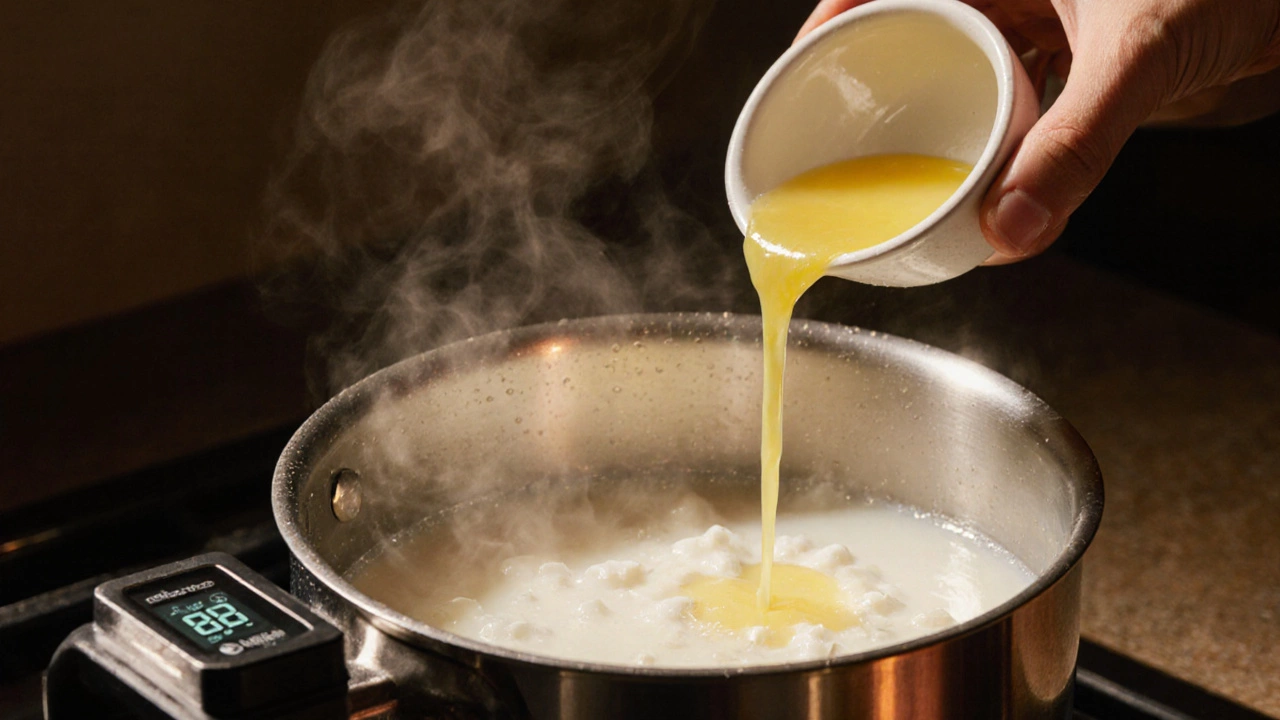
How to Separate Paneer from Milk: The Classic Home‑Made Method
Learn the exact method to separate paneer from milk, including the science, step‑by‑step process, acid choices, tips, and FAQs for perfect homemade paneer.
Read More