Rice in Dosa: How Rice Shapes India's Favorite Fermented Crisp
When you think of rice in dosa, the primary grain that gives dosa its light, crisp texture and subtle sweetness. Also known as raw rice batter, it's not just a base—it's the soul of a dish eaten daily by millions across South India. Most people assume dosa is just a thin pancake, but it’s really a fermented masterpiece built on rice, urad dal, and time. Without the right kind of rice, you don’t get that signature crunch, the slight tang, or the airy holes inside. It’s not about any rice—you need short-grain, non-sticky varieties like idli rice or ponni rice. Long-grain basmati? It won’t ferment right. It’ll make your dosa dense, not crisp.
The magic happens when rice and black gram dal soak together, then sit overnight. Bacteria and yeasts wake up, eat the starch, and release gas—tiny bubbles that turn the batter fluffy. This fermentation isn’t just for texture; it unlocks nutrients. The rice becomes easier to digest, and your body absorbs more iron and B vitamins. That’s why dosa is often called one of the healthiest breakfasts in the world. You’re not eating plain rice—you’re eating living food. And while many think dosa is only about rice, it’s the balance between rice and urad dal that makes it work. Too much dal? It turns sticky. Too little rice? It falls apart. The classic ratio is 3:1 or 4:1 rice to dal. That’s the secret passed down in kitchens from Chennai to Coimbatore.
People ask if you can substitute rice with oats or quinoa. You can try, but you won’t get a real dosa. The unique chew-crisp combo comes from rice’s specific starch structure. Even in modern versions—like methi dosa or cheese dosa—it’s still rice doing the heavy lifting. And while you might see rice flour used in store-bought mixes, nothing beats freshly ground soaked rice. It’s the difference between a flat cracker and a living, breathing snack that bubbles as it cooks.
If you’ve ever eaten a dosa with coconut chutney or sambar, you know it’s more than a meal—it’s a ritual. The steam rising off the griddle, the sizzle as the batter hits the hot surface, the way it peels off clean and golden. That’s rice in dosa at work. It’s simple, but it’s science. It’s tradition. And it’s why, even after hundreds of years, no one has figured out a better way to turn rice into something so perfect.
Below, you’ll find real recipes, common mistakes, and the hidden tricks that turn ordinary rice into unforgettable dosa. Whether you’re making it for the first time or trying to fix a soggy batch, the posts here have what you need—no fluff, no guesswork, just clear, tested advice from home cooks who do this every day.
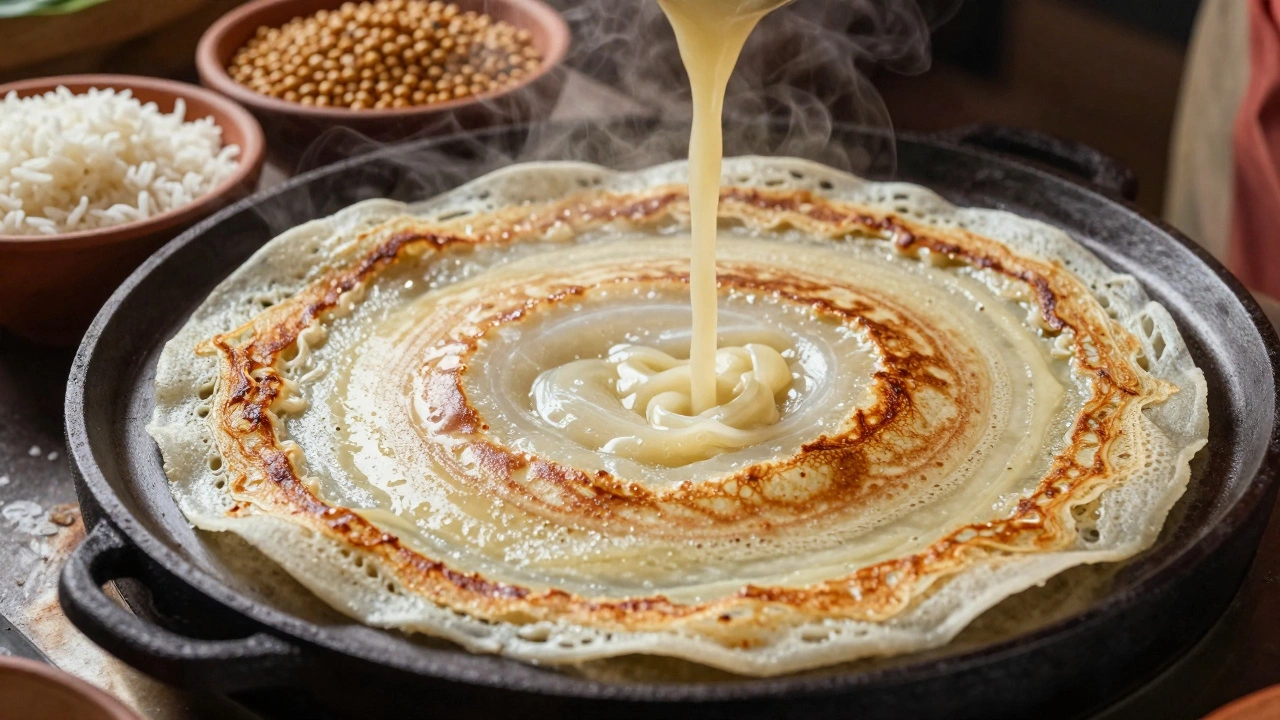
Why Do We Add Rice in Dosa Batter? The Science Behind the Perfect Crispy Dosa
Rice in dosa batter isn't just tradition-it's science. It creates crispness, controls fermentation, and gives dosa its signature texture. Learn why skipping rice ruins dosa and how to get it right every time.
Read More