Dosa Batter Ratio Calculator
Perfect Dosa Batter Calculator
Calculate your ideal rice-to-urad dal ratio and water amounts based on the science of dosa fermentation
Ever wondered why every traditional dosa recipe starts with rice? It’s not just tradition-it’s science. Skip the rice, and your dosa turns out thick, chewy, and lifeless. Add the right kind of rice, and you get that signature crisp edge, airy center, and golden-brown texture that makes dosa irresistible. Rice isn’t just an ingredient in dosa batter; it’s the foundation.
Rice Gives Dosa Its Crisp Texture
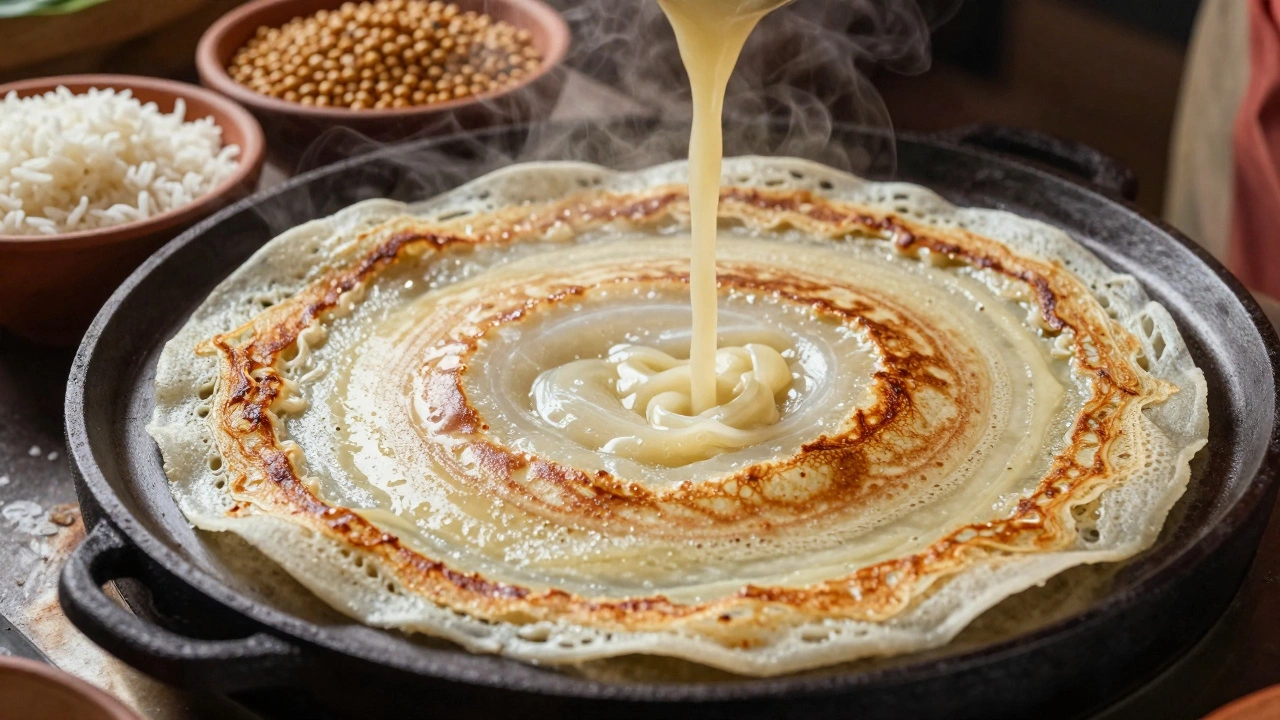
White rice, especially parboiled or idli rice, is the backbone of dosa batter because of its high starch content and low protein. When soaked and ground, rice releases starch that gelatinizes during cooking. That gelatinized starch forms a rigid, brittle structure when it hits the hot griddle-creating the crispness you love. Without rice, the batter relies too much on lentils, which are rich in protein. Protein creates elasticity, not crunch. Think of it like bread dough: too much gluten, and you get chew. Too little, and you get crumble. Rice keeps that balance just right.
Try making dosa with only urad dal. You’ll get a soft, spongy pancake-not a dosa. Rice doesn’t just add texture; it defines the dish.
Why Not Use Just Urad Dal?
Urad dal (black gram) is essential too-but for a different reason. It ferments aggressively. When soaked and ground, urad dal traps air like a sponge, creating bubbles that make the batter light. But if you use too much urad dal, the batter becomes sticky, over-fermented, and smells sour too fast. The rice acts as a buffer. It slows down fermentation just enough to give you control.
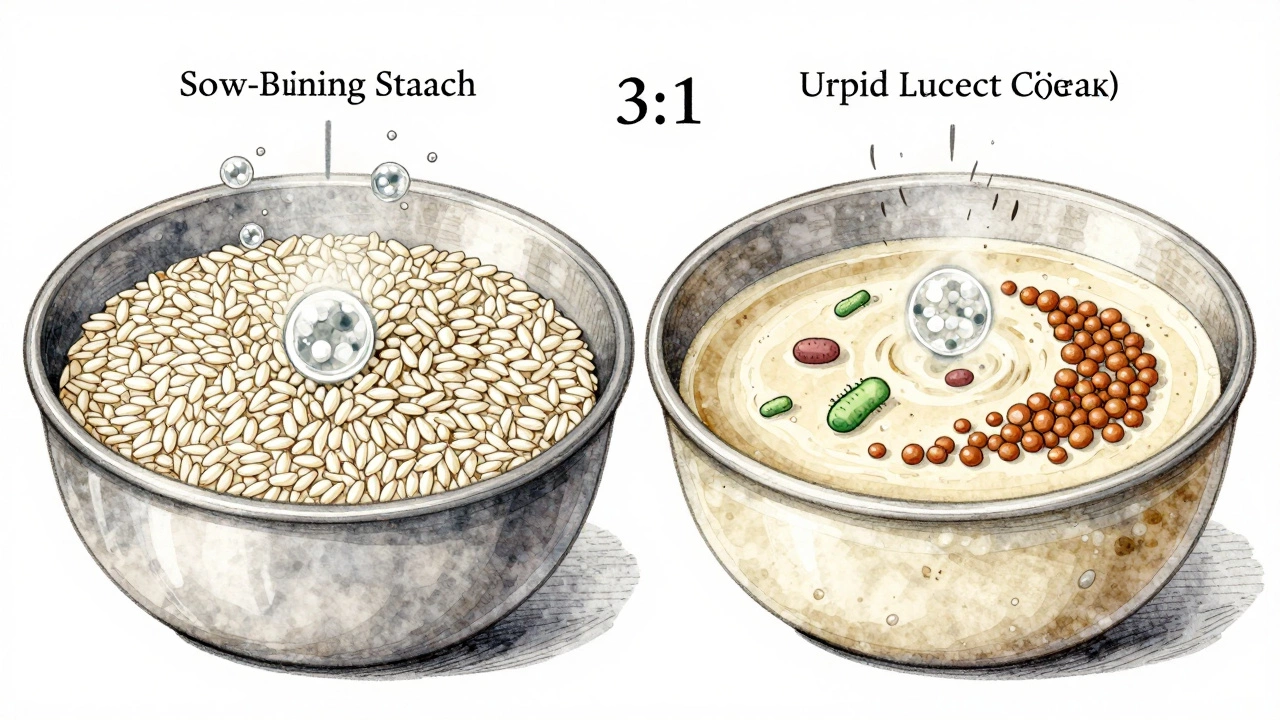
Traditional recipes use a 3:1 or 4:1 ratio of rice to urad dal. That’s not arbitrary. It’s the sweet spot where urad dal does its job-adding lift and flavor-while rice holds everything together. Too much rice? The dosa becomes dry and crumbly. Too little? It sticks to the pan and tears apart.
Fermentation Needs Rice to Work Right
Fermentation isn’t magic-it’s biology. Wild yeast and lactic acid bacteria feed on sugars in the batter. Rice provides slow-releasing starches that break down into glucose over time. That steady food source keeps the microbes active for 8-12 hours, letting the batter rise evenly. Urad dal has more immediate sugars, so it ferments fast. Left alone, it would overdo it, making the batter collapse or smell off.
Think of rice as the slow-burning fuel. It lets the fermentation process last long enough to develop flavor and lift without burning out. That’s why dosa batter left in a warm kitchen for 10 hours tastes better than one left for 4 hours. Rice makes that time matter.
Not All Rice Is the Same
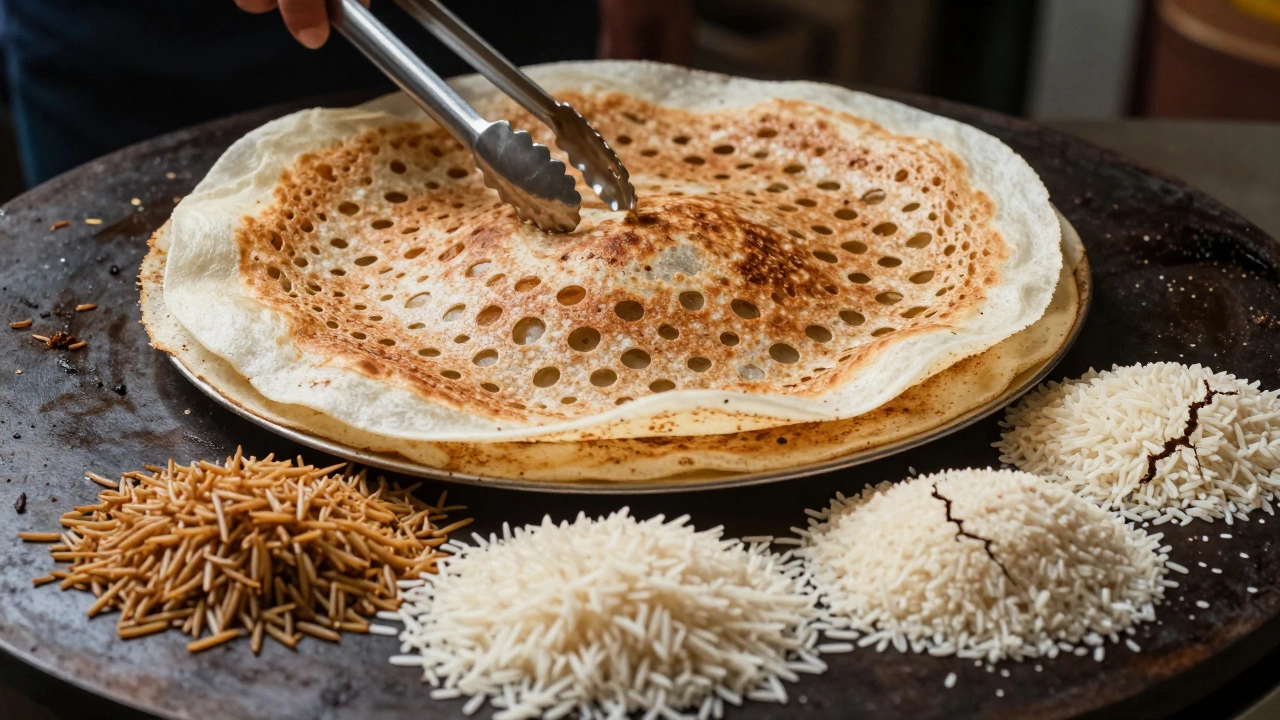
Not every rice works. Long-grain white rice like Ponni or Sona Masoori is ideal. It’s low in amylopectin (the sticky starch), so it doesn’t turn gummy. Parboiled rice (also called ukda chawal) is even better-it’s partially cooked, which breaks down the starch structure slightly, making it easier to grind and ferment. You’ll notice the batter becomes smoother and rises faster.
Don’t use brown rice. It has bran and germ that interfere with fermentation. It also adds a nutty flavor that clashes with the clean taste of dosa. Sticky rice? Avoid it. That’s for mochi, not dosa. Even basmati, while fragrant, doesn’t give the same crispness because it’s too long and thin.
Real South Indian households stick to one or two rice types. They’ve tested them over generations. You don’t need to experiment-you need to replicate.
The Water Ratio Matters Too
Rice absorbs more water than urad dal. That’s why dosa batter needs more water than idli batter. Too little water, and the batter turns thick and pasty. Too much, and it won’t spread properly. The ideal ratio? About 2 cups of rice and 1 cup of urad dal soaked in 3 to 3.5 cups of water total.
After grinding, the batter should pour like heavy cream. If it’s too thick, add a splash of water. If it’s too thin, let it rest longer-rice continues to absorb water as it ferments. You’ll know it’s ready when the batter doubles in volume and has tiny bubbles all over the surface.
Why Store-Bought Dosa Mix Often Fails
Many pre-mixed dosa powders skip the rice or use cheap substitutes like wheat or semolina. They’re faster to use, sure-but they don’t ferment right. The result? Dosa that’s flat, rubbery, or tastes like cardboard. Even if the mix says “authentic,” check the ingredients. If rice isn’t the first ingredient, it’s not real dosa.
Homemade batter ferments naturally. Store-bought mixes often use chemical leaveners or enzymes to mimic fermentation. That’s why they taste flat. Real dosa has a subtle tang from lactic acid. That flavor comes from time, not additives.
What Happens If You Skip Rice?
You can make a lentil pancake without rice. But it won’t be a dosa. It’ll be a chilla or a kadhi pakora. You’ll miss the crispness. You’ll miss the way the batter spreads thin on the pan. You’ll miss the way it lifts off cleanly without tearing.
Some modern recipes try to replace rice with oats or quinoa. They might work for gluten-free diets, but they change the texture entirely. The batter won’t ferment the same way. The dosa won’t crisp up. You’ll end up with something that looks like dosa but tastes like a health food experiment.
Rice isn’t optional. It’s the reason dosa is dosa.
Pro Tips for Perfect Dosa Batter
- Soak rice and urad dal separately for 4-6 hours. Rice needs more time to soften.
- Grind urad dal first-it whips up into a fluffy foam. Then add rice and grind slowly with water.
- Keep the batter in a warm spot. A turned-off oven with the light on works perfectly.
- Stir the batter gently before using. Don’t beat it-that knocks out the air.
- Use a cast iron tawa or seasoned steel pan. Non-stick won’t give you the same crust.
- Heat the pan until a drop of water sizzles and dances. That’s the right temp.
Make a batch on a weekend. Store it in the fridge for up to 5 days. Reheat it gently in the microwave for 30 seconds before using. It’ll still ferment slowly, so you get fresh-tasting dosa all week.
Final Thought: It’s Not Just About Taste
Adding rice to dosa batter isn’t about flavor-it’s about structure, texture, and timing. It’s what turns a simple mix of lentils and grains into something that’s crispy, light, and endlessly versatile. Whether you’re eating it with coconut chutney, sambar, or just a squeeze of lemon, the rice is the silent hero.
Next time you make dosa, notice how the batter behaves. Watch how it spreads. Feel how it crisps. Taste the difference between a rice-based batter and one without. You’ll understand why generations of South Indian cooks never questioned it.
Can I use brown rice instead of white rice in dosa batter?
No. Brown rice has bran and germ that interfere with fermentation and make the batter gritty. It also absorbs water unevenly, leading to inconsistent texture. White rice-preferably parboiled or idli rice-is the only type that gives the right crispness and rise.
Why does my dosa batter not ferment well?
Cold temperatures are the most common cause. Fermentation needs warmth-ideally 25-30°C (77-86°F). If your kitchen is chilly, place the batter near a warm appliance or in a turned-off oven with the light on. Also, check your water quality. Chlorinated tap water can kill natural yeast. Use filtered or boiled-and-cooled water.
How long should I soak the rice and urad dal?
Soak rice for 4-6 hours and urad dal for 4 hours. Rice needs more time to soften fully. If you’re short on time, you can soak both together for 6 hours, but separating them gives better results. Never soak longer than 8 hours-urad dal can start to spoil.
Can I use leftover idli batter for dosa?
Yes, but you’ll need to thin it out. Idli batter is thicker because it’s meant to steam, not spread. Add 2-4 tablespoons of water to make it pourable. You might also need to let it sit for another hour to re-ferment slightly. The dosa won’t be as crisp as one made with fresh batter, but it works in a pinch.
Why does my dosa stick to the pan?
Two reasons: the pan isn’t hot enough, or the batter is too thick. Heat the tawa until water droplets dance. Then, use a ladle to spread the batter quickly in a circular motion. If it sticks, your pan isn’t seasoned well. Cast iron or seasoned steel works best. Avoid non-stick pans-they don’t get hot enough to crisp the batter properly.