Roti Dough Hydration Calculator
Dough Calculator
Calculate the ideal water amount for your roti dough based on flour type and temperature
Results
Enter flour quantity and temperature to see recommended water amount
Ever made roti that turned out tough, dry, or stubbornly stuck to the rolling pin? You’re not alone. Millions of home cooks struggle with this every day. The secret to soft dough isn’t a trick, a special ingredient, or a secret family recipe-it’s about understanding how flour, water, and time work together. Most people focus too much on kneading harder or adding more ghee, but the real answer lies in hydration, rest, and temperature.
Flour Matters More Than You Think
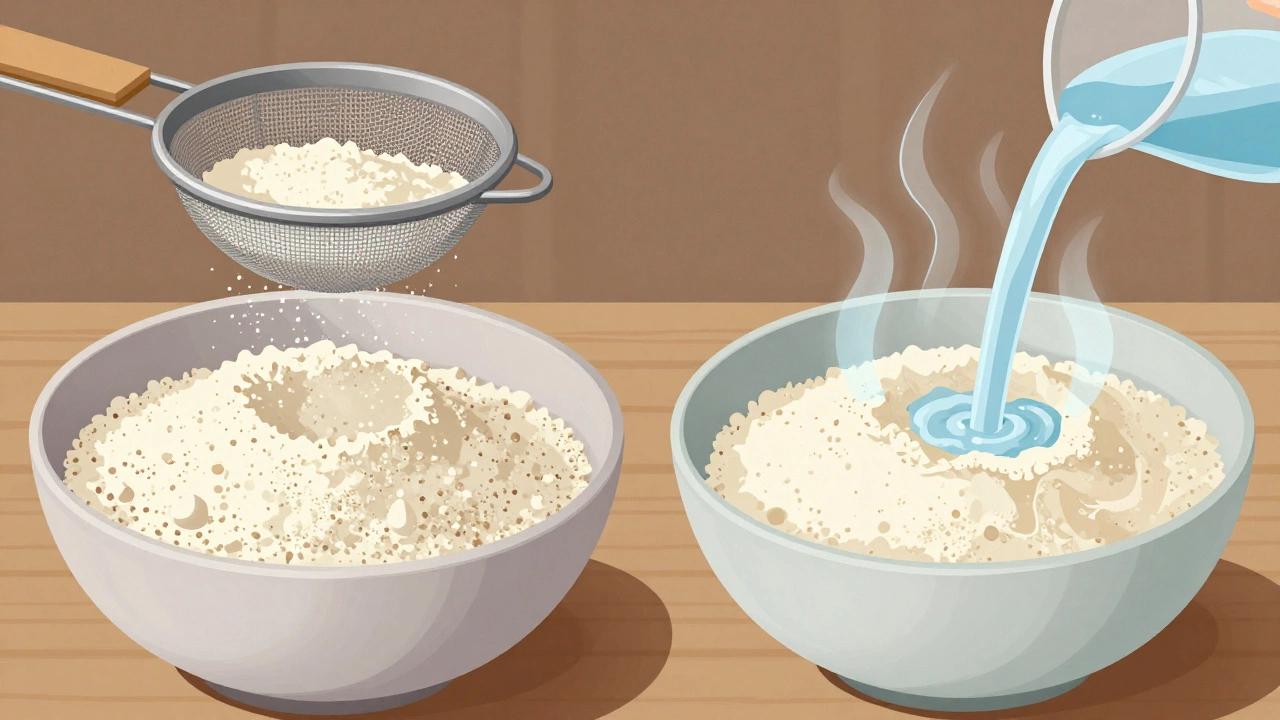
Not all atta (whole wheat flour) is the same. In India, brands like Aashirvaad or Pillsbury Atta are commonly used because they’re milled to a fine consistency with just the right amount of bran and germ. But if you’re outside India, store-bought whole wheat flour can be coarser and absorb more water. That’s why your dough feels dry even when you follow the recipe exactly. The key? Use flour labeled as "fine whole wheat" or "roti atta"-not generic "whole wheat flour." If you only have coarse flour, sift it twice before mixing. This breaks up clumps and lets water penetrate evenly.
Here’s a simple test: take a handful of flour and squeeze it. If it holds its shape briefly and then crumbles, it’s good. If it stays in a tight ball, it’s too fine and may make dough gummy. If it doesn’t hold at all, it’s too coarse. You want that middle ground.
Water Isn’t Just Water
The amount of water you add is only half the story. The temperature of the water changes everything. Cold water? The gluten doesn’t develop properly. Boiling water? It cooks the flour on contact and leaves you with a crumbly mess. The sweet spot is warm water-around 40°C (105°F). That’s just warmer than body temperature. It activates the starches in the flour, helping them swell and absorb moisture more fully.
Try this: mix 2 cups of atta with 3/4 cup of warm water. Don’t add all the water at once. Start with 1/2 cup, mix into a shaggy mass, then add the rest a tablespoon at a time. You’ll feel when the dough stops sticking to your fingers and starts pulling away cleanly. That’s your sign to stop.
Kneading Isn’t About Strength-It’s About Time
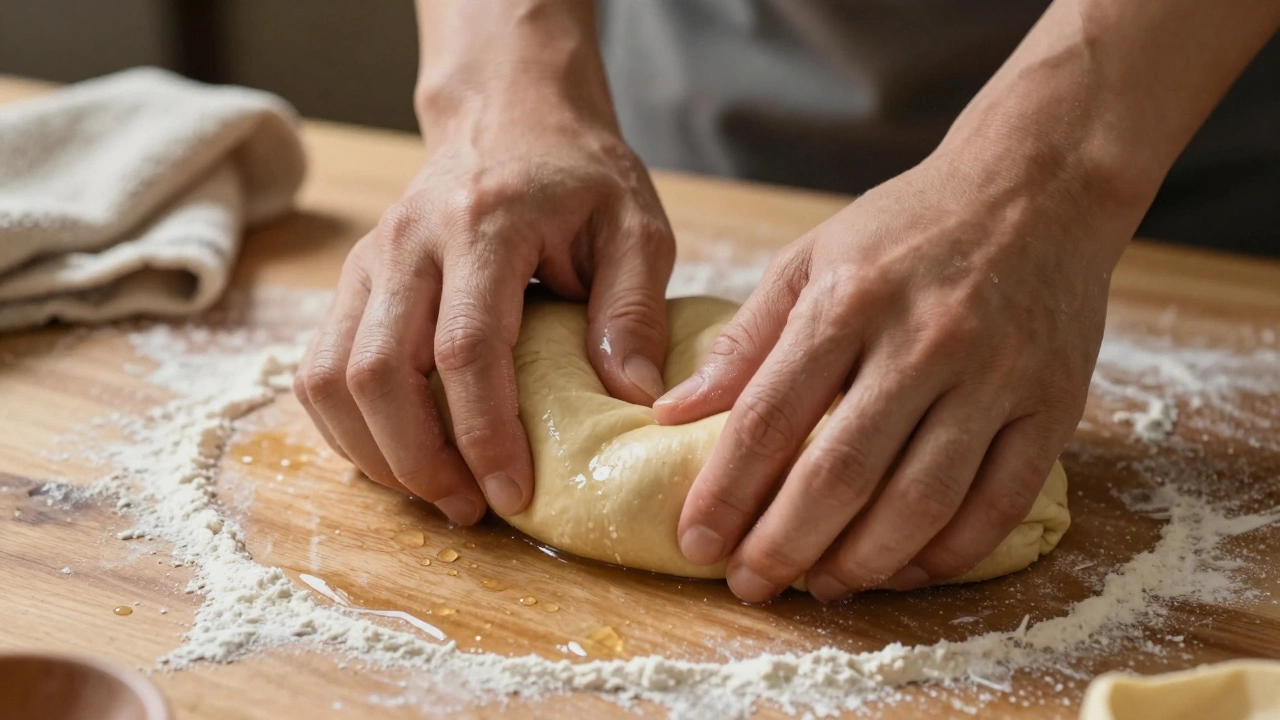
Most people knead for 2-3 minutes and think they’re done. That’s not enough. Soft roti dough needs at least 8-10 minutes of kneading. Not with brute force, but with consistent, rhythmic pressure. Use the heel of your palm to push the dough away from you, fold it back, turn it 90 degrees, and repeat. It should feel like working with Play-Doh-smooth, elastic, and slightly springy.
If your dough feels stiff or cracks when you fold it, it’s under-kneaded. If it sticks to your hands no matter how much flour you add, it’s under-hydrated. The right dough will stretch thin without tearing. You’ll know it’s ready when you can roll a small ball into a sheet that’s translucent enough to see your fingerprint through it.
The Rest Is Everything
This is where most recipes fail. After kneading, cover the dough with a damp cloth and let it rest for at least 30 minutes. Longer? Even better. Resting isn’t just waiting-it’s a chemical process. The flour’s proteins (gluten) relax. The starches fully hydrate. The dough becomes more pliable, less likely to spring back when rolled.
If you’re in a hurry, 15 minutes works. But if you can wait 45 minutes or even refrigerate it overnight, the difference is night and day. Cold dough? Let it sit at room temperature for 20 minutes before rolling. Cold dough rolls unevenly and tears easily.
Oil or Ghee? It’s Not About Flavor
Adding oil or ghee to the dough is common, but not always necessary. If you’re making roti for everyday meals, skip it. The moisture from proper hydration and resting is enough. But if you want roti that stays soft for hours-like for a lunchbox or a party-add one teaspoon of oil or ghee per cup of flour. It doesn’t make it taste better; it slows down moisture loss. The fat coats the gluten strands, preventing them from drying out too fast.
Don’t overdo it. More than a tablespoon per cup of flour makes the dough greasy and hard to roll. A little goes a long way.
Rolling Technique: Less Flour, More Pressure
Flouring your rolling surface seems logical, right? Wrong. Too much flour on the board creates a barrier between the dough and the surface. The dough ends up dry on the outside and sticky on the inside. Instead, use a dry cloth or a silicone mat. Lightly dust the dough ball itself with flour-not the board. Roll gently from the center outward, rotating the dough after each roll. Don’t press down hard. Let the weight of the rolling pin do the work.
If the dough sticks, lift it with a spatula and sprinkle a tiny bit of flour underneath. Never force it. A stuck roti is a sign of under-rested dough, not poor technique.
Heat Is the Final Step
Roti needs direct, high heat. A tawa (flat griddle) heated to medium-high is ideal. You should see a faint shimmer when you sprinkle a drop of water on it-it sizzles and vanishes in under a second. Press the roti lightly with a dry cloth or spatula as it cooks. This helps it puff up. Flip it once. The second side should cook faster. Don’t overcook. A few brown spots are fine. Blackened edges mean you’ve dried it out.
Right after cooking, stack the rotis in a covered basket or wrap them in a clean kitchen towel. The trapped steam keeps them soft. If you leave them uncovered, they’ll go stiff in minutes.

Common Mistakes (and How to Fix Them)
- Dough too hard? Add water, one teaspoon at a time, and knead for another 2 minutes.
- Dough too sticky? Let it rest 10 minutes, then dust lightly with flour. Don’t add more flour to the mix.
- Roti doesn’t puff? Your tawa isn’t hot enough. Or the dough wasn’t rested long enough.
- Roti turns tough after cooling? You didn’t use enough moisture, or you didn’t stack them while warm.
Pro Tip: The Overnight Method
Here’s what professional bakers do: make the dough the night before. Mix it, rest it for 1 hour at room temperature, then cover and refrigerate. In the morning, let it warm up for 20 minutes. Knead it again for 2 minutes to reactivate the gluten. Roll and cook. The result? Roti that’s impossibly soft, slightly sweet, and stays fresh for 12 hours. It’s not magic-it’s science.
Final Thought: Softness Is a Process, Not a Moment
There’s no single step that makes roti soft. It’s the combination of fine flour, warm water, long kneading, proper resting, minimal flour when rolling, and steam-trapping after cooking. If you get just one of these right, your roti improves. If you get all five, you’ll make roti people ask you to make every week.
Why does my roti dough crack when I roll it?
Cracking means the dough is too dry or hasn’t rested enough. Add a teaspoon of warm water, knead for 2 minutes, then let it rest for another 15-20 minutes. If the flour is coarse, sift it before mixing. Cracking also happens if you roll too fast-slow, even pressure is key.
Can I use all-purpose flour instead of atta?
You can, but it won’t be traditional roti. All-purpose flour has less fiber and protein, so the roti will be softer but less nutritious and won’t puff as well. If you must use it, mix half atta and half all-purpose for a balance. Pure all-purpose roti tends to get rubbery when cooled.
How do I know if I’ve kneaded enough?
Do the windowpane test: pinch off a small piece of dough and stretch it gently between your fingers. If it forms a thin, translucent sheet without tearing, you’re done. If it rips easily, keep kneading. It should feel smooth and slightly elastic, like an earlobe.
Should I use cold or warm water for roti dough?
Always use warm water-around 40°C (105°F). Cold water doesn’t hydrate the flour fully, leading to dry, crumbly dough. Hot water cooks the flour and ruins the texture. Warm water activates the starches, helping the dough hold moisture and become pliable.
Can I make roti dough ahead of time?
Yes. Make the dough up to 24 hours ahead. After kneading, cover it tightly with plastic wrap or a damp cloth, then refrigerate. When ready to use, let it sit at room temperature for 20 minutes. Knead it again for 1-2 minutes to reactivate the gluten. Roll and cook as usual. The dough will be even softer than freshly made.