Sikh Dietary Practices Checker
This tool helps determine if a specific meat preparation method aligns with Sikh dietary principles. Sikhism does not forbid meat consumption, but emphasizes the method of slaughter and intention behind eating.
Many people wonder if eating chicken is a sin in Sikhism. The short answer is no-it’s not a sin. But the reason behind that answer isn’t simple. Sikhism doesn’t forbid meat, but it also doesn’t push it. What matters most is how the food is prepared, why you eat it, and what your intentions are.
What Sikhism Actually Says About Meat
The Guru Granth Sahib, the holy scripture of Sikhism, doesn’t list meat as forbidden. Unlike some other faiths, Sikhism doesn’t have a strict vegetarian code. The Gurus taught that the soul lives in all living things, so killing for pleasure or greed is discouraged. But killing for survival or necessity? That’s different.
Historically, many Sikhs ate meat. The Sikh Gurus themselves hunted and ate game. Guru Gobind Singh, the tenth Guru, ate meat and encouraged his followers to be strong and ready for defense. He didn’t see meat as impure. What he did reject was ritual slaughter-like halal or kosher methods-where animals are killed in the name of another god. That’s why Sikhs who eat meat follow the practice of jhatka: a quick, single strike to minimize suffering.
Jhatka vs. Halal: The Key Difference
If you’ve ever seen a Sikh family serve chicken or goat at a langar (community kitchen), you might notice it’s not the same as what you’d find at a halal butcher. That’s because Sikhs avoid meat slaughtered in the name of Allah or any other deity. The idea is simple: your food shouldn’t be tied to another religion’s rituals.
For Sikhs, eating meat is a personal choice. There’s no religious punishment for eating chicken. But if you’re eating meat because you think it makes you stronger, or because you’re craving it, that’s fine. If you’re eating it to show off, to waste, or to harm animals needlessly-that’s where the problem lies.
Why Some Sikhs Are Vegetarian
Even though Sikhism doesn’t require vegetarianism, many Sikhs choose to be vegetarian. Why? For several reasons.
- Some follow the teachings of earlier saints and reformers who promoted non-violence.
- Others avoid meat to make langar inclusive-for visitors of all faiths, including Jains and many Hindus who are strict vegetarians.
- Some believe eating less meat helps with spiritual clarity and discipline.
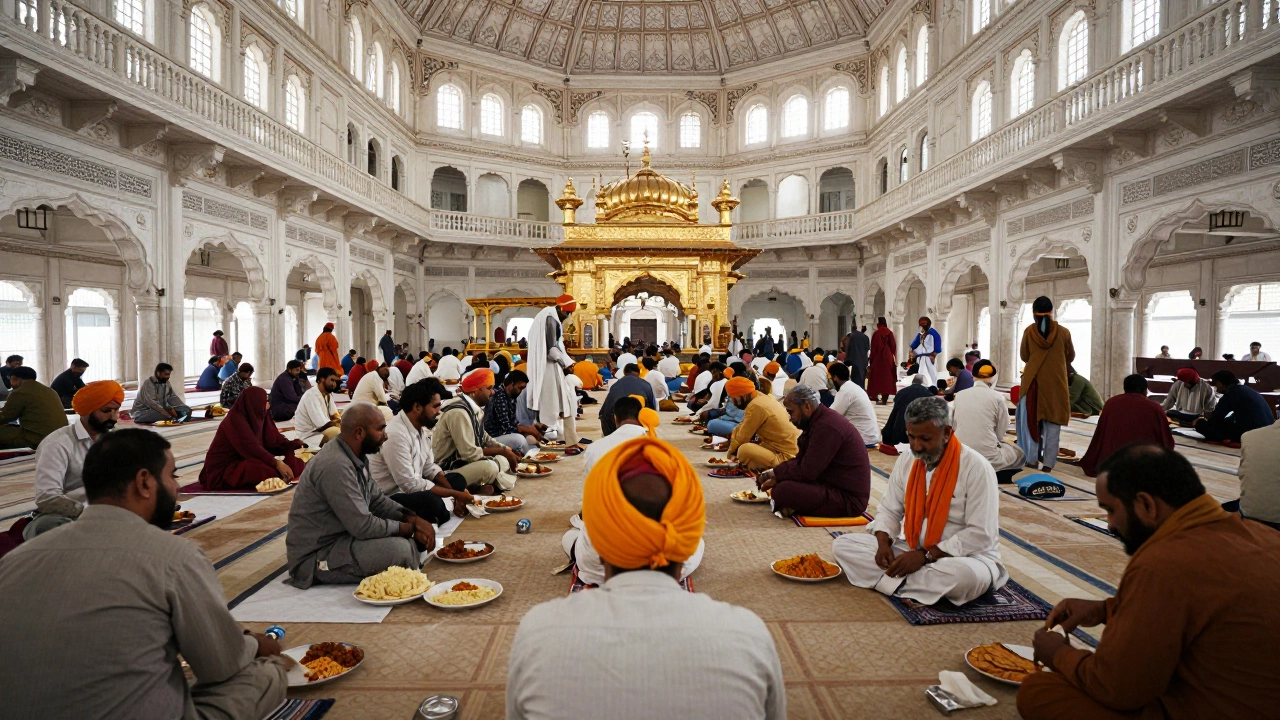
At the Golden Temple in Amritsar, the langar serves only vegetarian food. That’s not because Sikhism says meat is sinful-it’s because the temple welcomes millions of people every year, from every background. Serving vegetarian food removes any barrier. It’s about respect, not religion.
Is Vegetarianism More Spiritual in Sikhism?
No. Sikhism teaches that spirituality isn’t measured by what’s on your plate. It’s measured by how you live-your honesty, your service, your humility. The Gurus said, “It’s not what you eat, but how you behave.”
One famous story tells of a Sikh who ate meat but spent his days helping the poor. Another ate only vegetables but was cruel and proud. The Guru said the first man was closer to God-not because of his diet, but because of his heart.
So if you’re wondering whether eating chicken makes you less spiritual, the answer is no. A Sikh who eats chicken and gives to charity is more aligned with Sikh values than one who eats only salad but lies, cheats, or looks down on others.
What About Eggs and Dairy?
Eggs are generally avoided by many Sikhs who are vegetarian-not because they’re considered unclean, but because they’re seen as potential life. That’s a cultural preference, not a religious rule. Dairy, on the other hand, is widely accepted. Milk, ghee, and paneer are common in Sikh households and langars.
Some modern Sikhs, especially in the West, avoid eggs because they’re trying to align with vegan or plant-based lifestyles. That’s fine. Sikhism doesn’t forbid it. But it also doesn’t require it.
Practical Advice for Sikhs Who Eat Chicken
If you’re a Sikh and you eat chicken, here’s what to keep in mind:
- Always choose jhatka meat-never halal or kosher.
- Don’t eat meat out of greed or to show off.
- Be respectful when eating around vegetarians. Don’t pressure them or mock their choices.
- Give thanks before eating. Sikhs say a short prayer called Ardaas before meals, even if it’s just a quiet moment of gratitude.
- Remember that food is fuel, not identity. Your faith isn’t defined by your diet.
What About Sikhism and Indian Vegetarian Dishes?
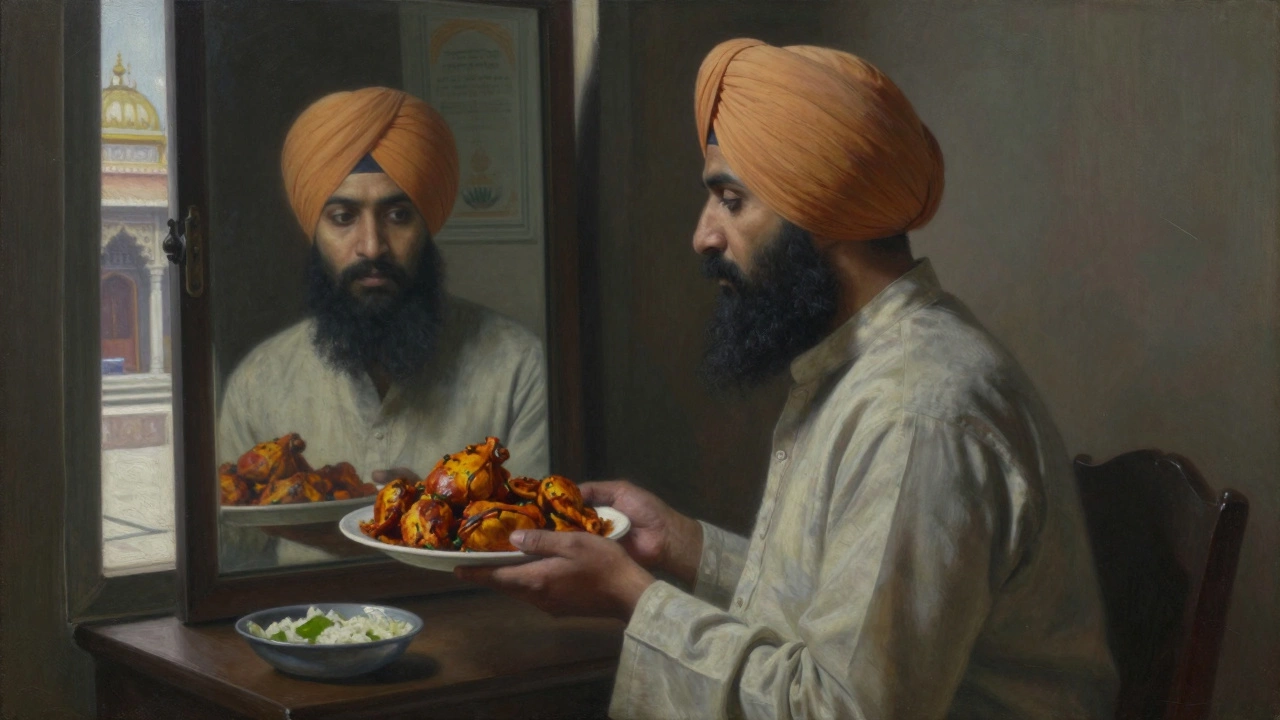
India has a rich tradition of vegetarian cooking, and Sikhs have contributed to it just as much as anyone else. Dishes like chana masala, dal tadka, aloo gobi, and paneer tikka are common in Sikh homes. But so are chicken curry, tandoori chicken, and meat-based stews.
There’s no Sikh “vegetarian cuisine.” There’s just Sikh food-made with care, shared with love, and eaten with gratitude. Whether it’s lentils or chicken, the spirit behind the meal matters more than the ingredients.
Common Misconceptions
Many people assume all Indians are vegetarian. That’s not true. Even in Punjab, where most Sikhs live, meat is part of daily life. The idea that Sikhism = vegetarianism is a myth pushed by outsiders.
Another myth: that eating meat makes you impure. Sikhism rejects the idea of ritual purity. You can’t become “clean” by what you eat or “dirty” by what you don’t. Purity comes from your actions, not your plate.
Final Thought: It’s About Intention, Not Ingredients
Is eating chicken a sin in Sikhism? No. But if you eat chicken while ignoring the suffering of others, or while forgetting your duty to serve, then you’ve missed the point.
Sikhism asks you to be honest, humble, and helpful. Whether your meal is made of lentils or chicken, it’s your heart that counts.
Is it a sin to eat chicken in Sikhism?
No, it is not a sin. Sikhism does not forbid meat, including chicken. What matters is how the animal is slaughtered and why you eat it. Sikhs who eat meat follow the jhatka method, which avoids ritual slaughter in the name of another god.
Why do some Sikhs not eat meat?
Some Sikhs choose vegetarianism out of personal belief, cultural influence, or to make langar inclusive for visitors of all faiths. It’s a personal choice, not a religious requirement. Many Sikh families serve vegetarian meals at home or in community kitchens to respect diverse dietary practices.
Can Sikhs eat eggs?
There is no religious rule against eggs in Sikhism. However, many Sikhs who follow a vegetarian diet avoid eggs because they are seen as potential life. This is a cultural or personal preference, not a religious law.
What is jhatka meat?
Jhatka is a method of slaughtering animals with a single, swift strike to the neck, minimizing pain. It is preferred by Sikhs because it avoids religious rituals tied to other faiths, such as halal or kosher slaughter. Jhatka meat is commonly found in Sikh households and langars where meat is served.
Does eating meat affect your spirituality in Sikhism?
No. Sikhism teaches that spirituality comes from your actions-not your diet. A person who eats meat but lives honestly, serves others, and stays humble is closer to the teachings of the Gurus than someone who eats only vegetables but is dishonest or arrogant.
At the end of the day, Sikhism doesn’t judge you by your plate. It judges you by your purpose. Eat what you need. Serve what you can. And always, always, remember why you’re eating in the first place.