Roti Puffing Troubleshooter
Why isn't your roti puffing?
Select what's happening when you cook your roti to get specific solutions
Your dough
Your cooking process
Your Solutions
Select one or more issues and click "Find Solutions" to see your fixes.
Ever made roti that stayed flat instead of puffing up like a soft, golden balloon? You’re not alone. It’s one of the most common frustrations in Indian home kitchens. You follow the recipe, knead the dough, roll it out thin - but when it hits the hot tawa, nothing happens. No puff. No fluff. Just a sad, floppy disc. The good news? It’s almost always one of five simple things you’re doing wrong. And fixing them takes less than a minute.
Your dough is too dry
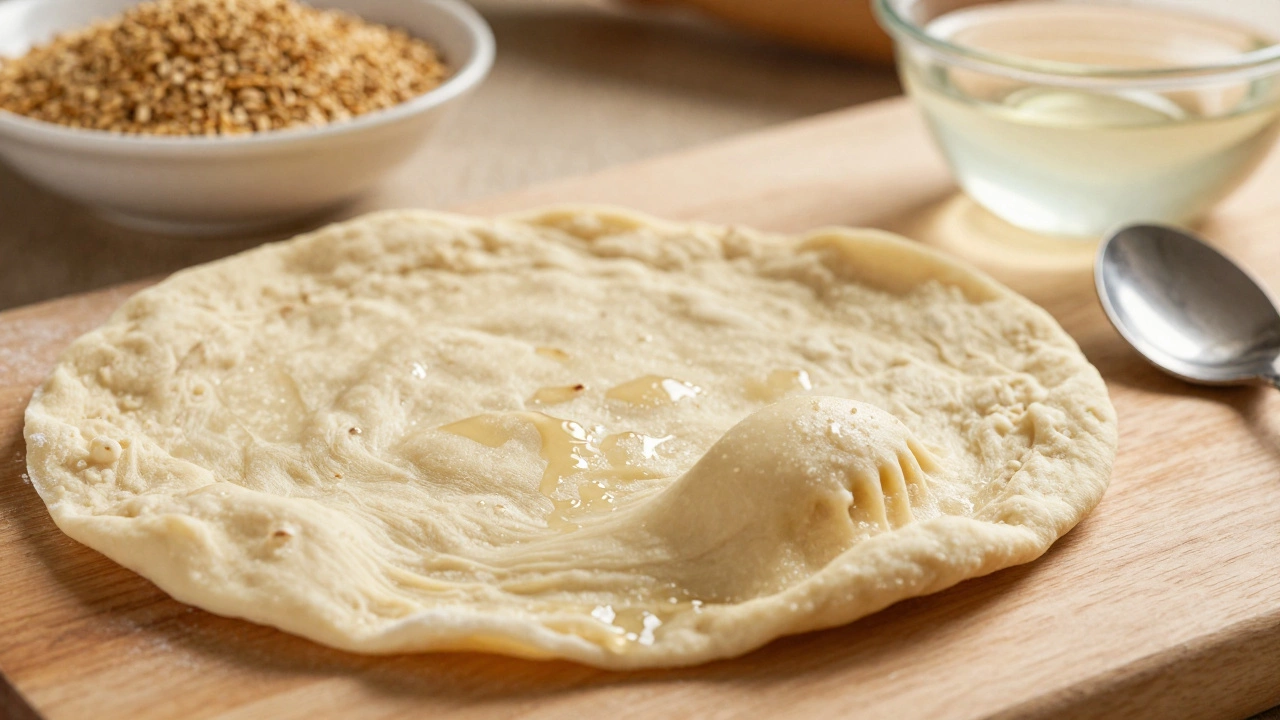
Roti needs moisture to steam and puff. If the dough feels crumbly or cracks when you roll it, it’s too dry. Most people add just enough water to make the dough hold together - but that’s not enough. The right dough should feel like soft earlobe: pliable, slightly sticky, and elastic. Try this: after mixing flour and water, let the dough rest for 10 minutes. Then knead it again. You’ll often find it absorbs more water. Add a teaspoon at a time until it’s smooth and springy. Dry dough doesn’t trap steam. No steam = no puff.
You’re not letting the dough rest long enough
Resting isn’t optional. It’s physics. When you knead flour and water, gluten forms. But gluten is tight and tense right after mixing. Resting lets it relax. If you skip this step or rest for less than 20 minutes, the dough snaps back when you roll it. That tension prevents even expansion on the tawa. Aim for 30-40 minutes at room temperature. In colder climates, cover it with a damp cloth and leave it near a warm stove. The dough should feel loose, not stiff. A well-rested dough stretches without tearing - and that’s how it traps steam to puff.
Your tawa isn’t hot enough - or it’s too hot
This is where most people mess up. A roti needs medium-high heat. Not low. Not blazing. If the tawa is too cold, the roti just fries. It browns slowly, dries out, and never gets that burst of steam inside. If it’s too hot, the outside chars before the inside heats up. The steam escapes before it can puff. Test it: sprinkle a few drops of water on the tawa. They should dance and evaporate in 2-3 seconds. Not sizzle like a fryer, not sit there like a puddle. Preheat it for at least 5 minutes on medium flame. And don’t oil it. Roti should cook dry. Any grease stops the puff.
You’re rolling it too thick or uneven
Roti puffs because steam builds up evenly under a thin, consistent layer of dough. If one part is thick, it won’t cook fast enough. If it’s uneven, steam escapes from the thin spots. Think of it like a balloon - you need uniform pressure. Roll your roti to about 6-7 inches wide and as thin as your hand. Use a rolling pin with even pressure. Don’t press harder on one side. If you see thick edges or bulges, re-roll it. A perfectly round, thin roti is the only kind that puffs reliably. Thicker ones? They’ll just brown and get chewy.
You’re flipping too early or too often
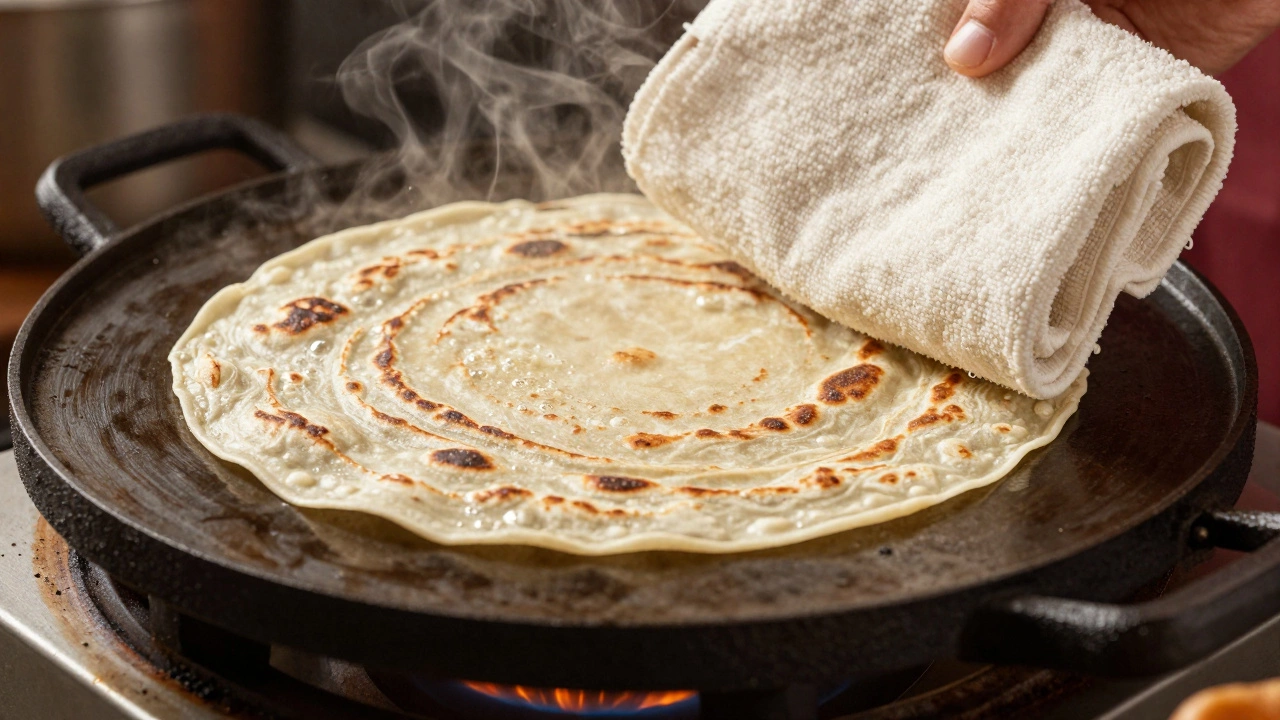
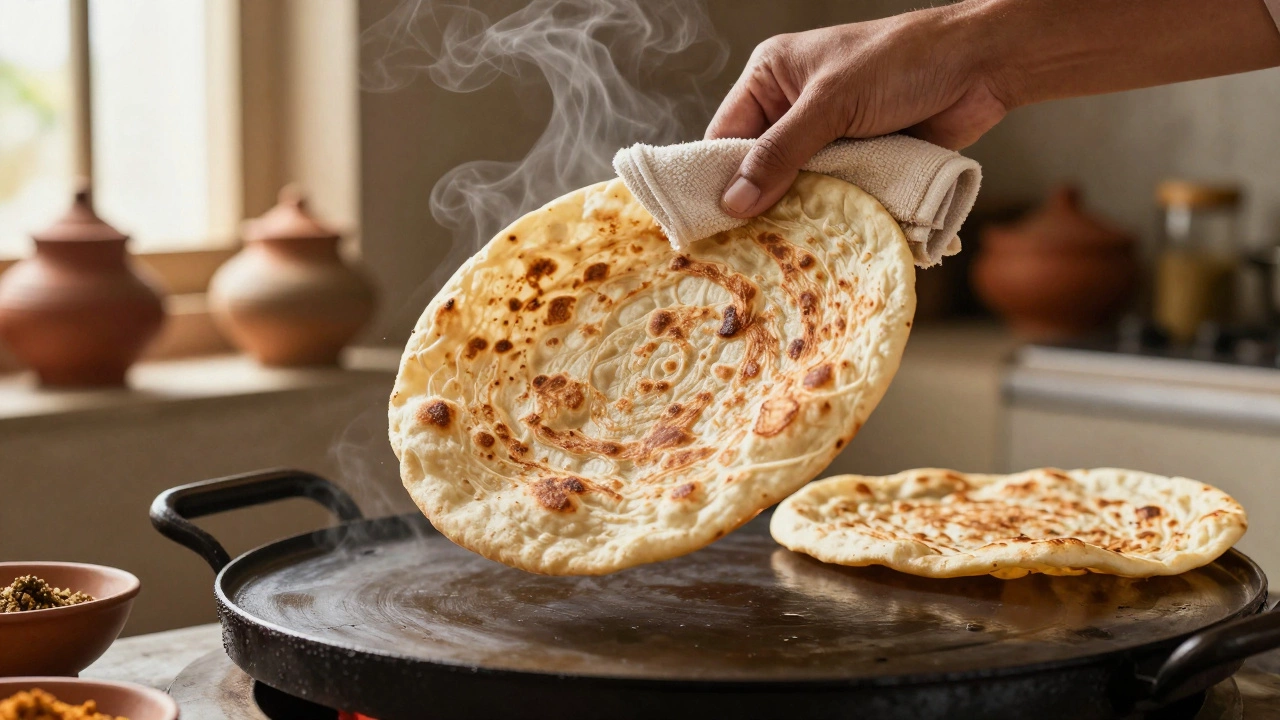
Let the roti sit on the tawa until you see dry patches forming - about 30 seconds. Then flip it. Don’t touch it again until you see bubbles rising. That’s the steam building. Flip once. Then press gently with a dry cloth or spatula. That’s the magic trick. Pressing lightly pushes the heat into the dough, forcing the steam to expand outward. If you flip too soon, you break the bubble before it forms. If you flip too many times, you let the steam escape. One flip. One press. That’s all it takes.
Your flour isn’t right
Not all atta is created equal. True roti flour is whole wheat, finely ground, and has a high gluten content. If you’re using coarse flour, or a blend meant for baking bread, it won’t trap steam the same way. Look for brands labeled “chapati atta” - they’re milled specifically for roti. Brands like Aashirvaad, Fortune, or Laxmi are common in Indian households and work every time. Avoid organic or stone-ground flours unless you know they’re fine enough. Coarse flour = uneven texture = no puff.
You’re not using the right technique to press
Here’s what most cooks miss: the final press. After flipping the roti and seeing bubbles, don’t just leave it. Use a clean, dry kitchen towel or a flat spatula and press down gently for 2-3 seconds. You’re not squashing it. You’re guiding the steam to expand upward. You’ll hear a soft hiss. That’s the sound of the roti puffing. If it doesn’t puff after pressing, try again on the other side. But don’t press hard. Just a light, steady pressure. This step alone fixes 70% of flat roti problems.
Quick checklist to fix flat roti
- Use fine chapati atta - not generic whole wheat flour
- Knead dough until it’s soft and earlobe-elastic
- Rest dough for 30-40 minutes
- Roll thin and even - no thick edges
- Preheat tawa until water drops dance
- Flip once, then press gently with a dry cloth
- No oil on the tawa
Try this next time: make one roti with all these steps. You’ll see the difference. It’s not magic. It’s heat, moisture, and timing. Once you get it right, you’ll wonder why you ever had flat roti before.
Why does my roti puff only sometimes?
It usually means inconsistency in one of the key steps - dough hydration, resting time, tawa temperature, or rolling thickness. If you’re rushing the dough, using a cold tawa, or rolling unevenly, the puff will be hit-or-miss. Stick to the same process every time. The first few rotis might still be flat, but by the fifth, you’ll be in the rhythm. Consistency beats perfection.
Can I use a gas stove instead of a tawa?
Yes, but you need a flat, heavy-bottomed pan - not a wok or skillet. A cast iron tawa or thick steel griddle works best. Thin pans heat unevenly and cause hot spots. If you’re using a gas flame directly, hold the roti with tongs and char both sides lightly after puffing. That’s how street vendors do it. But for home use, a tawa gives better control and consistent results.
Does adding oil or ghee to the dough help?
No. Adding fat to the dough makes roti softer after cooking, but it stops steam from building up. That’s why it won’t puff. Oil or ghee coats the gluten strands and prevents them from trapping air. If you want soft roti, brush a tiny bit of ghee on the cooked roti after it puffs - not in the dough. The puff comes from steam, not fat.
Can I make roti ahead and reheat it?
Yes, but don’t store them in the fridge. Cold roti loses moisture and gets tough. Instead, stack freshly cooked rotis in a cloth-lined container and keep them warm for up to 4 hours. To reheat, warm each one on a dry tawa for 10 seconds per side. That brings back the puff and softness. Microwaving makes them rubbery. Always reheat dry - no water, no oil.
Why does my roti stick to the tawa?
Sticking means the tawa isn’t hot enough, or the dough is too wet. A properly heated tawa creates instant steam under the roti, which lifts it off. If it sticks, let it cook a few more seconds before flipping. Don’t force it. If it’s still sticking after 45 seconds, the dough might be too wet. Add a pinch of flour to the next batch. Also, clean your tawa after each use - leftover flour or oil buildup causes sticking over time.