Indian Sweet Explorer
Discover the unofficial national sweets of India. Click on a sweet to learn about its origins, ingredients, and cultural significance.
Gulab Jamun
Pan-IndiaThe most popular festival sweet.
Rasgulla
East IndiaSpongy cheese balls in syrup.
Jalebi
Street FoodCrispy spiral fried snack.
Ladoo
South & WestReligious offering staple.
Select a sweet above to view details
Gulab Jamun
Region: Pan-India (North/West focus) | Status: De facto National Sweet
Key Ingredients
Preparation
Deep-fried milk solid dumplings soaked in warm sugar syrup infused with rosewater and cardamom.
Cultural Significance
Universally served at weddings, Diwali, and Holi. Symbolizes hospitality and celebration across religious boundaries.
Rasgulla
Region: East India (Bengal/Odisha) | Status: GI Tag Disputed
Key Ingredients
Preparation
Spongy cheese balls cooked in light sugar syrup. Known for delicate texture and subtle sweetness compared to Gulab Jamun.
Cultural Significance
Central to Bengali identity and Durga Puja celebrations. Both West Bengal and Odisha hold separate Geographical Indication (GI) tags for their versions.
Jalebi
Region: Pan-India (Street Food) | Status: Most Consumed by Volume
Key Ingredients
Preparation
Piped into hot ghee in spiral shapes and dunked in syrup. Crispy, juicy, and intensely sweet.
Cultural Significance
King of street food stalls. In Gujarat, it is traditionally paired with Fafda (savory snack) as a morning ritual.
Ladoo
Region: South & West India | Status: Religious Offering Staple
Key Ingredients
Preparation
Round balls made from flour or semolina, bound with ghee and sugar. Varieties include Motichoor and Besan Ladoo.
Cultural Significance
Primary form of Prasad (religious offering). Distributed during birth ceremonies to announce the arrival of a child.
You might be surprised to learn that India does not have an officially declared national sweet dish. Unlike the mango or the peacock, which hold official status, no single mithai (sweet) has been crowned by the government through a parliamentary act or gazette notification. Yet, if you ask a random person on the street in Delhi, Mumbai, or Kolkata what represents the soul of Indian desserts, the answer is almost always unanimous: Gulab Jamun is a deep-fried milk solid dumpling soaked in sugar syrup, widely regarded as the de facto national sweet of India due to its ubiquity at festivals and celebrations.
This distinction matters because it changes how we view Indian culinary heritage. It isn't about one rigid definition but rather a collective consensus built over centuries of trade, religion, and regional exchange. While the government hasn't picked a favorite, the people have. And while Gulab Jamun takes the crown in popularity polls, other contenders like Rasgulla and Jalebi fight hard for the title depending on where you are standing. Let's unpack why this ambiguity exists, who the real winners are, and how you can make these iconic treats yourself.
The Myth of the Official Designation
It’s easy to assume that every major country has a designated national food. France has baguettes, Japan has sushi, and Italy has pizza. But India is different. The country’s constitution lists a national flag, anthem, emblem, animal, bird, flower, fruit, tree, river, sport, and calendar. Notably absent? Food. There is no clause in the Indian Constitution that names a national cuisine or a specific dish.
Why the silence? Some historians argue it’s intentional. With over 1.4 billion people speaking hundreds of languages and practicing diverse dietary customs, picking one sweet could spark political and cultural controversy. Would North India accept South Indian Payasam? Would Bengal stand for Rajasthani Ghevar? Instead of imposing unity from the top down, the identity of Indian sweets emerged organically from the bottom up. This grassroots selection process means that "national" status is fluid, based on consumption data and cultural presence rather than bureaucratic decree.
Gulab Jamun: The People’s Choice
If you had to bet money on which sweet appears most frequently at Indian weddings, Diwali parties, and Holi gatherings, it would be Gulab Jamun. Its dominance isn't just anecdotal; market research from major FMCG companies like Haldiram’s and Bikanervala consistently shows Gulab Jamun as their highest-selling item across multiple regions.
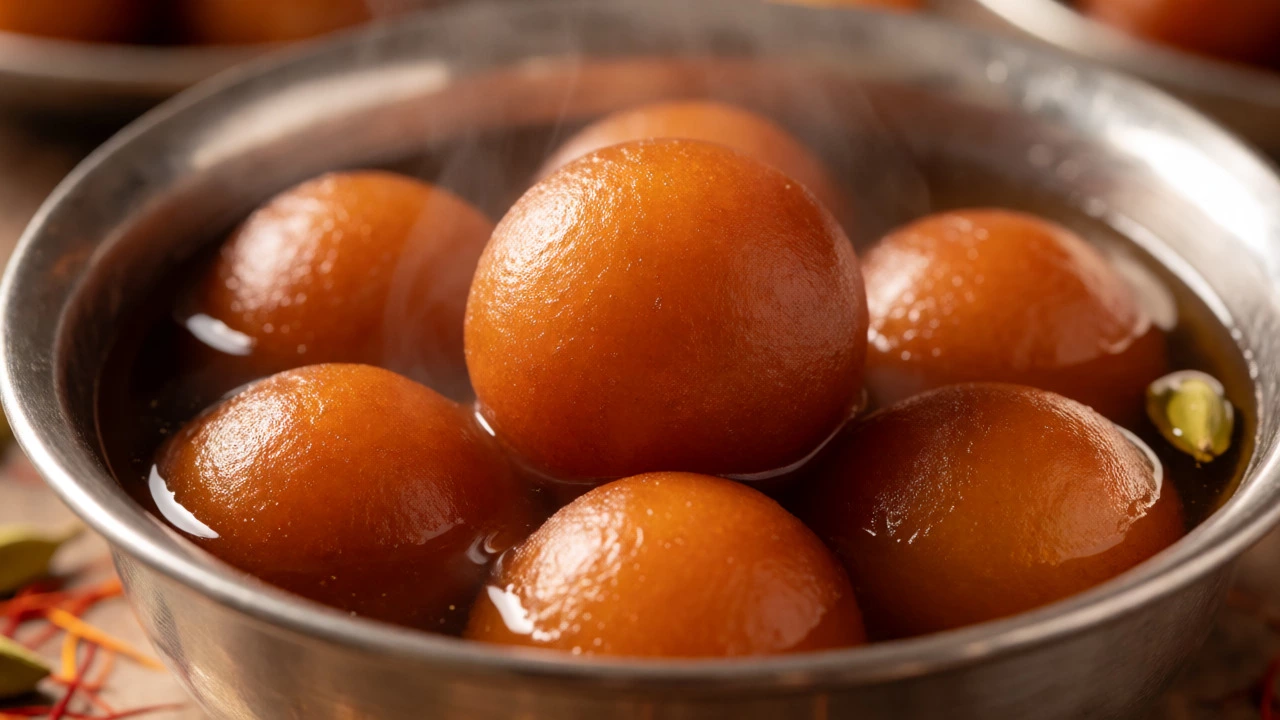
Gulab Jamun derives its name from Persian roots-gulab meaning rosewater and jamun referring to the black plum fruit it resembles in shape and color. The dish consists of khoya (milk solids), flour, and baking powder formed into balls, deep-fried until golden brown, and then submerged in a warm sugar syrup infused with cardamom and saffron.
Its appeal lies in its texture contrast. The exterior offers a slight crunch that gives way to a soft, spongy interior that absorbs the syrup without becoming soggy. This balance is difficult to achieve, which is why homemade versions often fail compared to shop-bought ones. However, its simplicity allows for endless variations, from dry Gulab Jamuns served with rabri to those stuffed with pistachios or chocolate.
The Regional Rivals: Why One Size Doesn’t Fit All
While Gulab Jamun claims the center stage, India’s vast geography creates distinct sweet zones. To understand the true landscape of Indian mithai, you must look at three major players who challenge the monopoly of the fried dumpling.
| Sweet Name | Primary Region | Key Ingredient | Cultural Significance |
|---|---|---|---|
| Gulab Jamun | Pan-India (North/West focus) | Khoya (Milk Solids) | Universal festival staple; symbol of hospitality. |
| Rasgulla | East India (Bengal/Odisha) | Chhena (Fresh Cheese) | Central to Bengali culture; subject of GI tag disputes. |
| Jalebi | Pan-India (Street Food) | Maida (Refined Flour) | Breakfast favorite; paired with Fafda in Gujarat. |
| Ladoo | South & West India | Gram Flour / Semolina | Religious offering (Prasad); birth ceremonies. |
Rasgulla: The Eastern Powerhouse
In West Bengal and Odisha, claiming Gulab Jamun as the national sweet feels almost sacrilegious. Here, Rasgulla is a spongy cheese ball cooked in light sugar syrup, known for its delicate texture and subtle sweetness. The rivalry between Bengal and Odisha over the origin of Rasgulla is so intense that both states secured Geographical Indication (GI) tags for their respective versions. For many eastern Indians, Rasgulla is not just a dessert; it is a marker of identity. If you visit Kolkata during Durga Puja, you will see more Rasgullas distributed than Gulab Jamuns.
Jalebi: The Street Food King
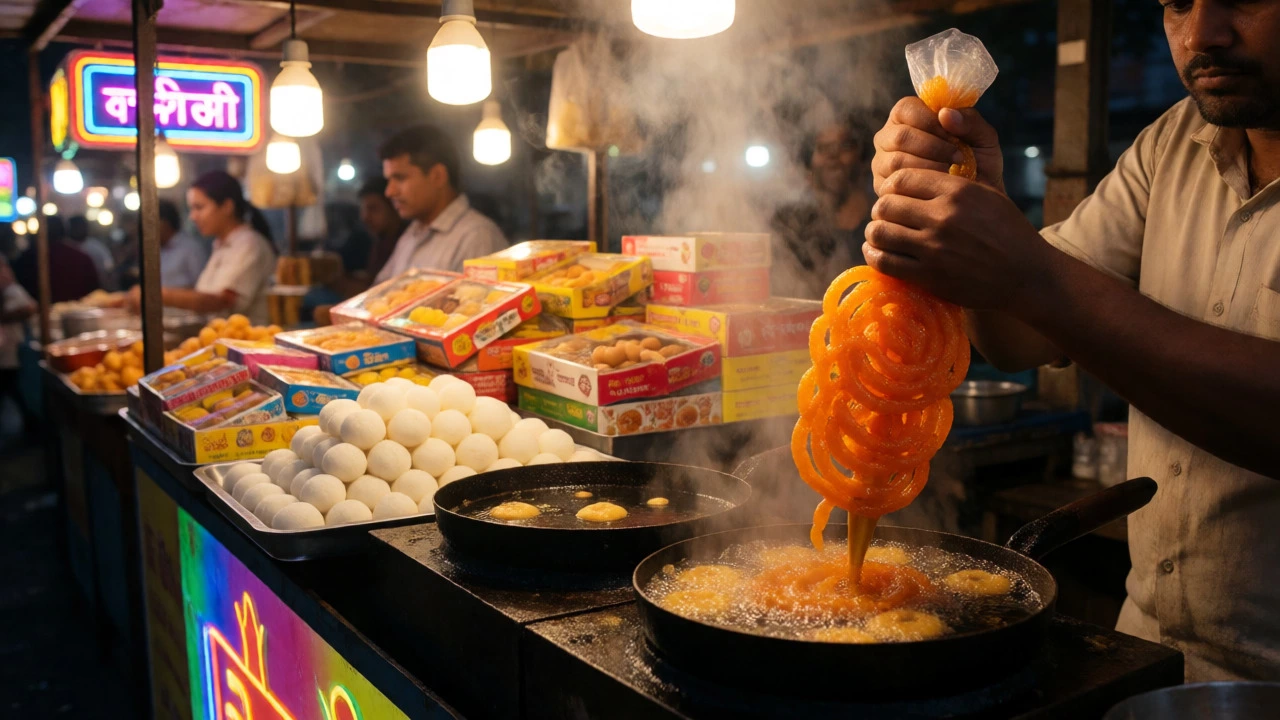
Jalebi doesn’t need a wedding invitation to show up. It is the king of street food stalls. Made by piping fermented batter into hot ghee in spiral shapes and dunking them in syrup, Jalebi is crispy, juicy, and intensely sweet. In Gujarat, eating Jalebi with Fafda (a savory snack) is a morning ritual. Its accessibility makes it arguably the most consumed sweet by volume, even if it lacks the ceremonial prestige of Gulab Jamun.
The Science Behind the Sweetness
Why do these sweets taste so good together? It comes down to chemistry. Most Indian sweets rely on two main components: dairy fat and sugar concentration.
- Khoya and Chhena: These are concentrated forms of milk. Khoya is made by slowly evaporating milk until only solids remain. Chhena is fresh curdled milk pressed to remove whey. Both provide the protein structure needed for the dough.
- Sugar Syrup Saturation: The syrup isn't just water and sugar. It needs to reach a specific consistency (often called "one-string" or "two-string" consistency in traditional recipes) to ensure the sweet absorbs flavor without disintegrating.
- Frying Medium: Traditionalists use pure cow ghee, which adds aromatic compounds that vegetable oil cannot replicate. This is why authentic Gulab Jamun tastes richer than commercial versions made with palm oil.
Understanding these elements helps you troubleshoot common kitchen disasters. If your Gulab Jamun cracks while frying, your oil was too hot. If it stays hard after soaking, your khoya was too dry. Mastery comes from balancing these variables.
How to Make Authentic Gulab Jamun at Home
You don’t need professional equipment to make restaurant-quality sweets. You just need patience and the right ingredients. Here is a simplified method for making classic Gulab Jamun.
- Prepare the Dough: Take 500g of fresh khoya (or mix paneer with milk powder if khoya is unavailable). Knead it well to remove lumps. Add 2 tablespoons of all-purpose flour and a pinch of baking soda. The baking soda is crucial-it creates air pockets that make the jamun soft.
- Shape the Balls: Roll small portions into smooth, crack-free balls. Any crack on the surface will absorb too much oil and ruin the texture.
- Fry Low and Slow: Heat ghee or oil to medium-low temperature. Fry the balls gently, turning them constantly until they turn a uniform dark brown. High heat burns the outside before the inside cooks.
- Make the Syrup: Boil 1 cup sugar with 1 cup water. Add cardamom pods and a few strands of saffron. Simmer until the syrup thickens slightly.
- Soak: Drop the hot fried balls directly into the warm syrup. Let them soak for at least 2 hours. They will double in size as they absorb the liquid.
Pro Tip: Never use cold syrup for hot jamuns. The thermal shock causes the outer layer to shrink and become rubbery. Always keep the syrup warm.
Beyond the Plate: Cultural Significance
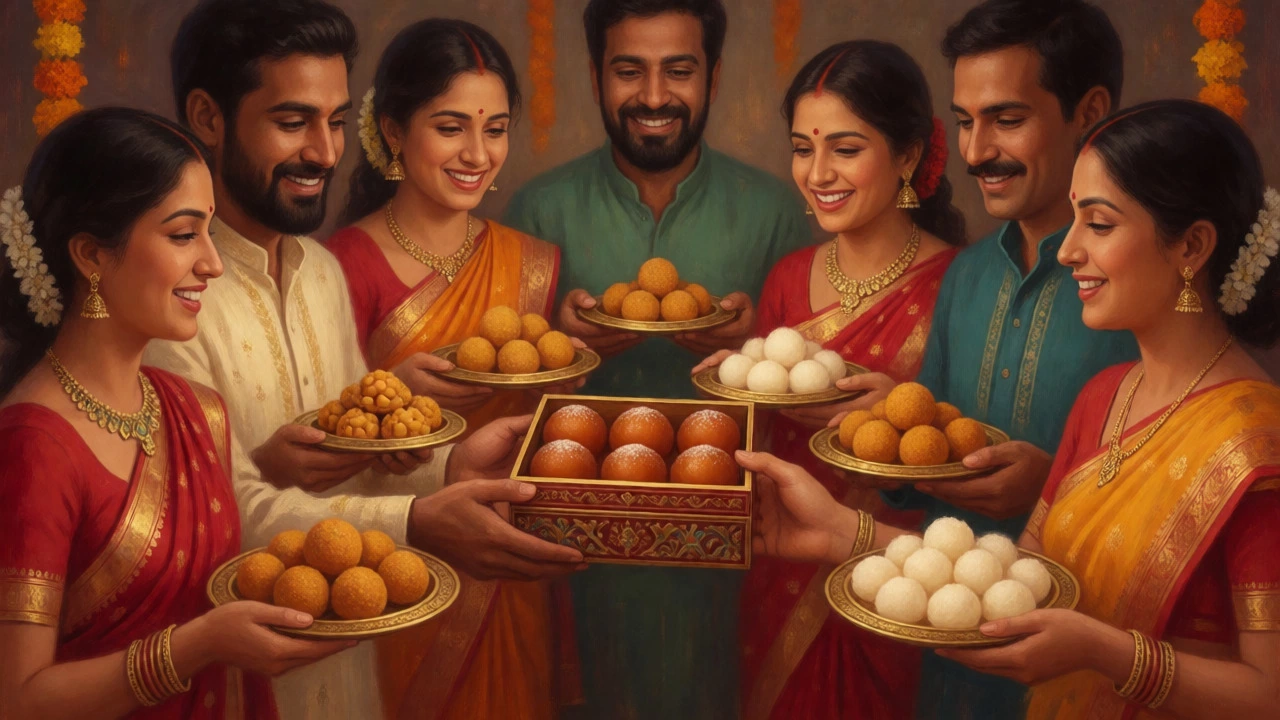
Indian sweets are never just about taste. They carry social weight. Offering sweets signifies the end of a conflict, the beginning of a new venture, or gratitude to the divine. During Diwali, families exchange boxes of assorted mithai as a gesture of goodwill. At births, Ladoos are distributed to announce the arrival of a child.
This ritualistic aspect elevates certain sweets above others. Gulab Jamun, being universally liked and visually appealing, has become the default "safe" gift. It crosses religious boundaries, appearing in Hindu temples, Muslim Iftar tables, and Christian Christmas feasts alike. This universality cements its status as the unofficial national sweet, despite the lack of legal recognition.
Modern Twists and Global Influence
As Indian diaspora communities grow globally, traditional sweets are evolving. You’ll now find Gulab Jamun cheesecakes in London, Rasgulla ice cream in New York, and Jalebi-flavored macarons in Paris. Fusion chefs are experimenting with reducing sugar content and using alternative milks like almond or oat to cater to vegan diets.
However, purists argue that altering the core recipe strips away the cultural essence. The debate continues: should we preserve the traditional high-calorie, high-sugar profile, or adapt it for modern health standards? Regardless of the approach, the global visibility of Indian mithai ensures that whatever "national" status it holds, it is increasingly recognized worldwide.
Is there an official national sweet of India?
No, the Government of India has not officially declared any sweet dish as the national sweet. The designation is informal and based on popular consensus, with Gulab Jamun being the most widely accepted choice.
Which state is famous for Rasgulla?
Both West Bengal and Odisha are famous for Rasgulla. Due to historical disputes over its origin, both states have received separate Geographical Indication (GI) tags for their unique varieties of the sweet.
What is the difference between Khoya and Paneer?
Khoya is made by slowly evaporating milk until it becomes semi-solid, retaining more moisture and fat. Paneer is made by curdling milk with acid and pressing out the whey, resulting in a firmer, less moist cheese. Gulab Jamun traditionally uses Khoya for a softer texture.
Why do my Gulab Jamuns break while frying?
Gulab Jamuns usually break due to cracks in the dough or frying at too high a temperature. Ensure the dough is smooth and crack-free before shaping, and fry them on low-medium heat to allow even cooking without bursting.
Are Indian sweets healthy?
Traditional Indian sweets are generally high in calories, sugar, and saturated fats due to the use of ghee and khoya. While delicious, they are best consumed in moderation as part of a balanced diet.