Indian Egg Consumption Estimator
Estimated weekly egg consumption:
0.0
Based on ICMR 2023 data and regional consumption patterns
When you think of Indian food, you might picture spicy curries, fluffy naan, or fragrant biryani. But what about eggs? Do people in India eat them? The answer isn’t simple-and it’s not just about religion or tradition. It’s about region, income, family habits, and what’s on the table at sunrise.
Eggs Are Everywhere in India-If You Know Where to Look
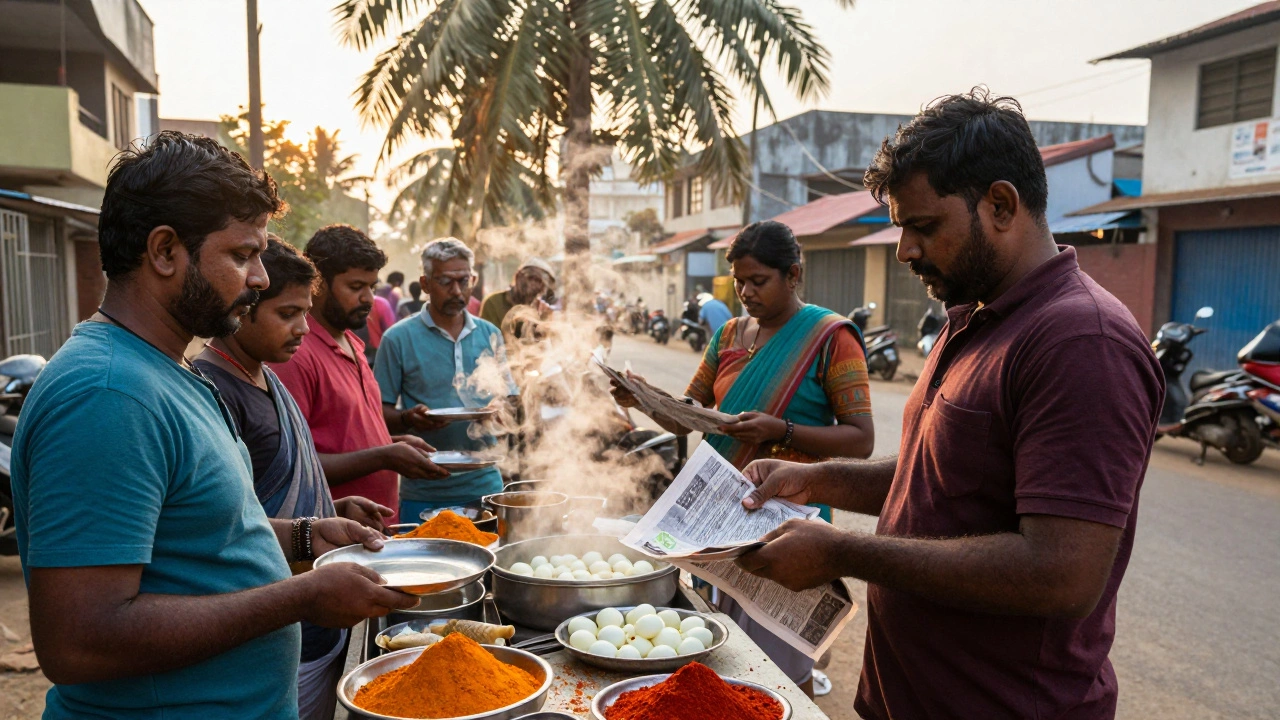
Walk into any small town or village in southern India before 7 a.m., and you’ll see street vendors selling boiled eggs wrapped in newspaper. In Tamil Nadu, eggs are a common breakfast alongside idli and sambar. In Kerala, they’re fried with chili and curry leaves and served with rice. In West Bengal, egg curry is a weekend staple. Even in cities like Delhi and Mumbai, egg bhurji-scrambled eggs with onions, tomatoes, and spices-is a go-to quick meal for students, office workers, and delivery riders.
But here’s the twist: many people assume India is a purely vegetarian country. That’s not true. While a large portion of the population doesn’t eat meat, eggs are treated differently. They’re not considered meat by most Indians who eat them. In fact, the Indian government’s own dietary guidelines list eggs as a protein source alongside lentils and dairy. The National Institute of Nutrition in Hyderabad includes eggs in its recommended daily intake for children and pregnant women.
Why Some Indians Don’t Eat Eggs-And Why Others Do
Not everyone eats eggs in India. In some communities, especially among upper-caste Hindus in northern and western states, eggs are avoided because they’re seen as non-vegetarian. This isn’t about health or taste-it’s about cultural identity. Some families don’t serve eggs because their grandparents didn’t, or because they follow a strict lacto-vegetarian diet that excludes all animal flesh, including eggs.
But in the south, east, and among lower-income households, eggs are a cheap, reliable source of protein. A single egg costs about 6 to 8 rupees (less than 10 cents). That’s cheaper than a cup of tea in many places. For families with limited budgets, eggs are a lifesaver. A 2023 survey by the Indian Council of Medical Research found that 42% of rural households in Andhra Pradesh and Telangana eat eggs at least three times a week. In urban middle-class homes, that number jumps to 68%.
Eggs Aren’t Just Food-They’re Medicine, Too
In many Indian homes, eggs aren’t just for breakfast. They’re part of recovery meals. When someone’s sick, you’ll often hear: “Eat an egg, it’ll help you get strong.” Grandmothers swear by boiled eggs for tired children. Postpartum women are given eggs with turmeric and black pepper to boost energy and milk supply. Even in Ayurveda, eggs are considered “tamasic” (heavy) in some texts, but they’re still used in healing diets for weakness or low hemoglobin.
Hospitals in India routinely serve eggs to patients recovering from surgery or illness. The Indian Academy of Pediatrics recommends eggs for toddlers starting at 6 months. And yet, you won’t find them on the menu in many elite private schools or high-end vegetarian restaurants. That’s the divide: urban, affluent, and upper-caste families often avoid eggs, while working-class and rural families rely on them.
What Do Indian Egg Recipes Actually Look Like?
If you’ve never tried Indian-style eggs, you’re missing out. They’re not bland. Here are a few real dishes you’ll find in homes across the country:
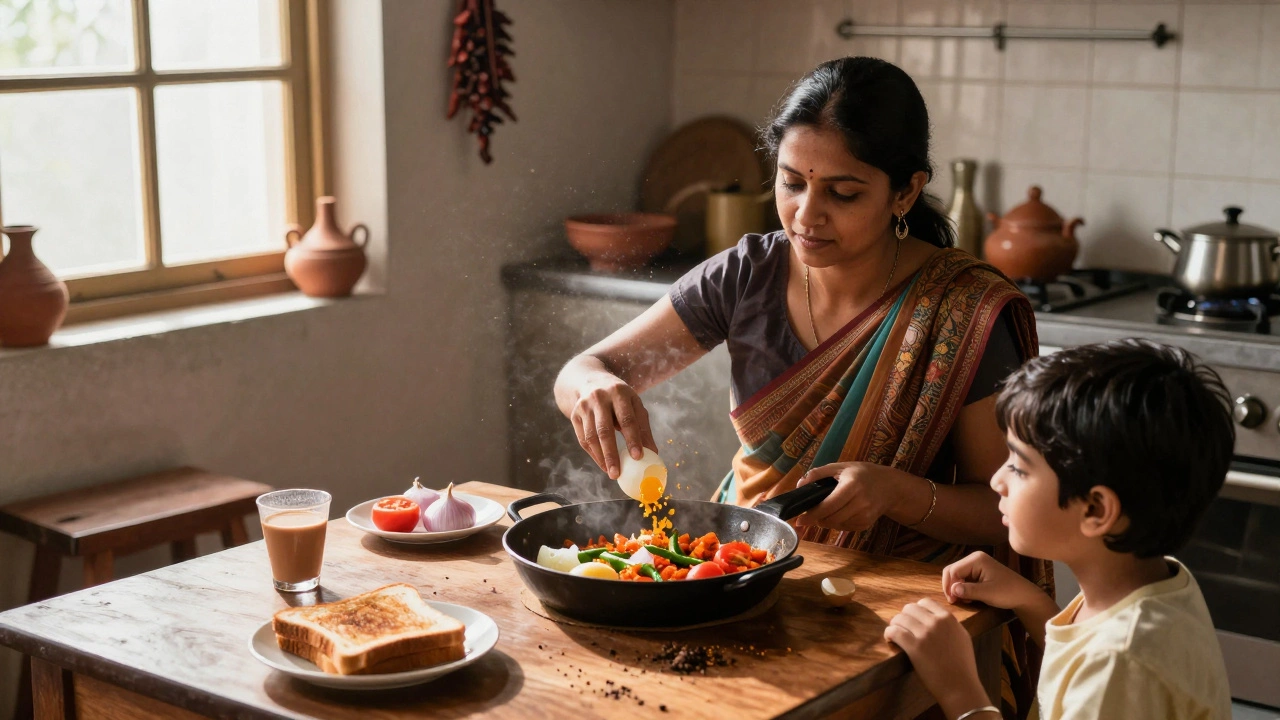
- Egg Bhurji: Scrambled eggs cooked with onions, tomatoes, green chilies, and cumin. Often eaten with toast or pav (Indian rolls). A Mumbai staple.
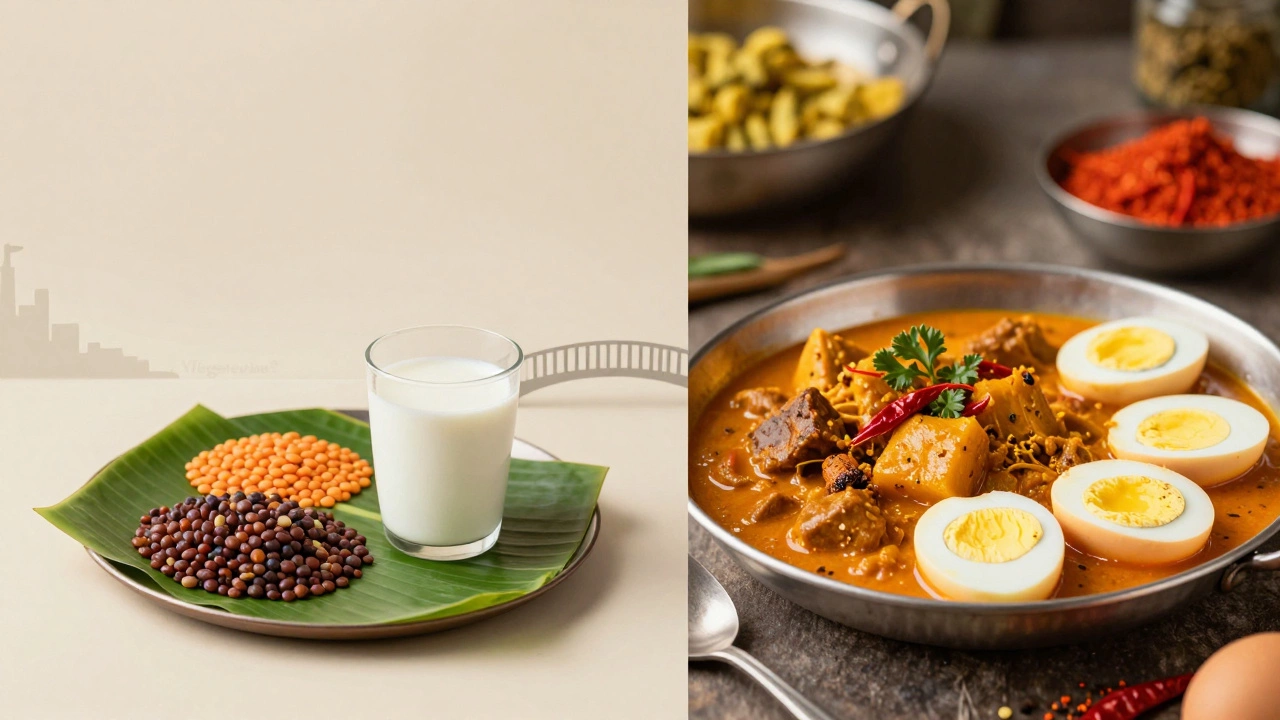
- Egg Curry: Hard-boiled eggs simmered in a spicy tomato-coconut gravy, common in Kerala and coastal Karnataka.
- Boiled Eggs with Chutney: Simple, but popular in Tamil Nadu and Andhra. Served with coconut chutney or tamarind sauce.
- Egg Pulao: Rice cooked with spices, onions, and hard-boiled eggs. A one-pot meal for busy weeknights.
- Andhra Egg Masala: Eggs fried with mustard seeds, dried red chilies, and curry leaves. Spicy, crunchy, and addictive.
These aren’t fancy restaurant dishes. They’re everyday meals made in kitchens across villages and apartments. No fancy ingredients. Just eggs, spices, and heat.
The Vegetarian Label Confusion
One of the biggest misunderstandings about Indian food is the word “vegetarian.” In India, “vegetarian” often means no meat, no fish, no eggs. But in the rest of the world, vegetarian usually includes eggs. This causes confusion for tourists and even delivery apps. If you order “vegetarian” food on Swiggy or Zomato and ask for an egg, you might get a surprised look-or worse, a refund.
Many Indian restaurants label dishes as “eggless vegetarian” to avoid confusion. But in homes, it’s not that clear-cut. A family might serve dal and rice with vegetables for lunch and then have egg bhurji for dinner. They still call themselves vegetarian. The line is blurry, and it’s not about logic-it’s about culture.
Are Eggs Becoming More Popular?
Yes. And fast. Over the last decade, egg consumption in India has risen by nearly 35%. The National Egg Coordination Committee reports that per capita egg consumption jumped from 35 eggs per person in 2015 to 51 in 2024. That’s more than one egg a week for every man, woman, and child.
Why? Because people are learning about nutrition. More young Indians are reading about protein needs. Fitness culture is growing. And egg producers have made them more accessible-packaged boiled eggs are now sold in metro supermarkets. Even vegan influencers in Delhi are starting to say: “If you’re avoiding meat for health, eggs are still a smart choice.”
Meanwhile, egg prices have stayed stable because of increased production. India is now the third-largest egg producer in the world, after China and the U.S. And unlike chicken meat, eggs don’t carry the same stigma. You won’t hear people say, “I don’t eat eggs because I believe in animal rights.” The conversation just isn’t there yet.
So, Do They Eat Eggs in India?
Yes-millions do. But not everyone. It depends on where you are, who you are, and what your family believes. Eggs aren’t a symbol of rebellion or modernity. They’re just food. Simple, cheap, and full of protein. In a country where hunger still exists in pockets, eggs are one of the most practical ways to feed a family.
If you visit India and want to try real home cooking, ask for egg bhurji. It’s the most common egg dish you’ll find. Order it with a side of toast or roti. Eat it hot. You’ll taste the cumin, the chili, the crisp onion-and you’ll understand why so many Indians start their day with it.