Indian Street Food Finder
Select a snack below to learn its name, regional variations, and flavor profile.
The Crispy Triangle
Deep-fried pastry with spiced potato filling.
The Water Balloon
Hollow crispy shell filled with spicy water.
The Mumbai Burger
Spicy potato dumpling in a soft bread roll.
The Flavor Bomb
Crispy discs topped with yogurt, chutneys, and sev.
The Sweet Spiral
Golden orange spirals soaked in sugar syrup.
The Lentil Puff
Round fried bread stuffed with spicy lentils.
Key Ingredient
You’ve seen them in movies. You’ve smelled them on busy streets. But when someone asks you what that specific spicy, tangy, crunchy snack is called, do you know the answer? India doesn’t have just one national snack. It has hundreds. The confusion usually comes from two places: either you are looking for a specific item like the hollow bread filled with tamarind water, or you want to know the umbrella term for this entire genre of delicious chaos.
If you are asking for the general category, the word you are looking for is chaat. If you are asking for the most famous individual snacks, you need to know names like samosa, pani puri, and vada pav. Let’s clear up the confusion so you can order with confidence next time you’re in an Indian market or trying to make it at home.
The Umbrella Term: What is Chaat?
When people ask "what is Indian street food called?" they are often half-right but missing the key vocabulary. The broad term for savory snacks in India is Chaat. This isn't just one dish; it is a style of cooking. Chaat refers to a wide variety of savory snacks that balance five distinct tastes: sweet, sour, salty, bitter, and spicy.
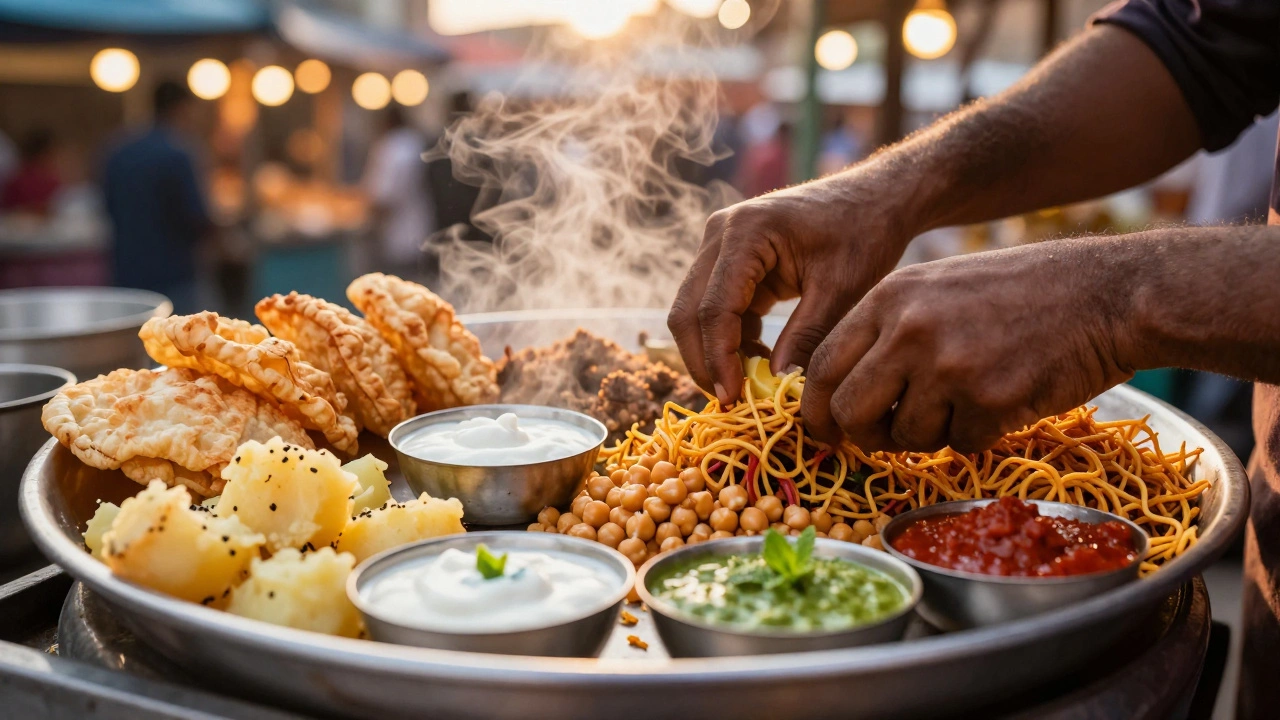
Think of chaat as the Indian equivalent of a flavor bomb. It usually involves a base-like fried dough, potatoes, chickpeas, or yogurt-that gets topped with chutneys (mint and tamarind), spices (chaat masala), and sometimes yogurt or sev (crispy chickpea flour noodles). When you walk into any Indian grocery store or street stall, if you see a tray with multiple small bowls of toppings and a person assembling bites right in front of you, you are looking at chaat.
| Snack Name | Base Ingredient | Key Flavor Profile |
|---|---|---|
| Pani Puri | Crispy hollow pastry shell | Sour, spicy, refreshing (water-based) |
| Dahi Puri | Crispy hollow pastry shell | Creamy, mild, tangy (yogurt-based) |
| Papdi Chaat | Fried wheat flour discs | Tangy, spicy, textured |
| Sev Puri | Flat crispy crackers | Crunchy, savory, minty |
The Global Icon: Samosa
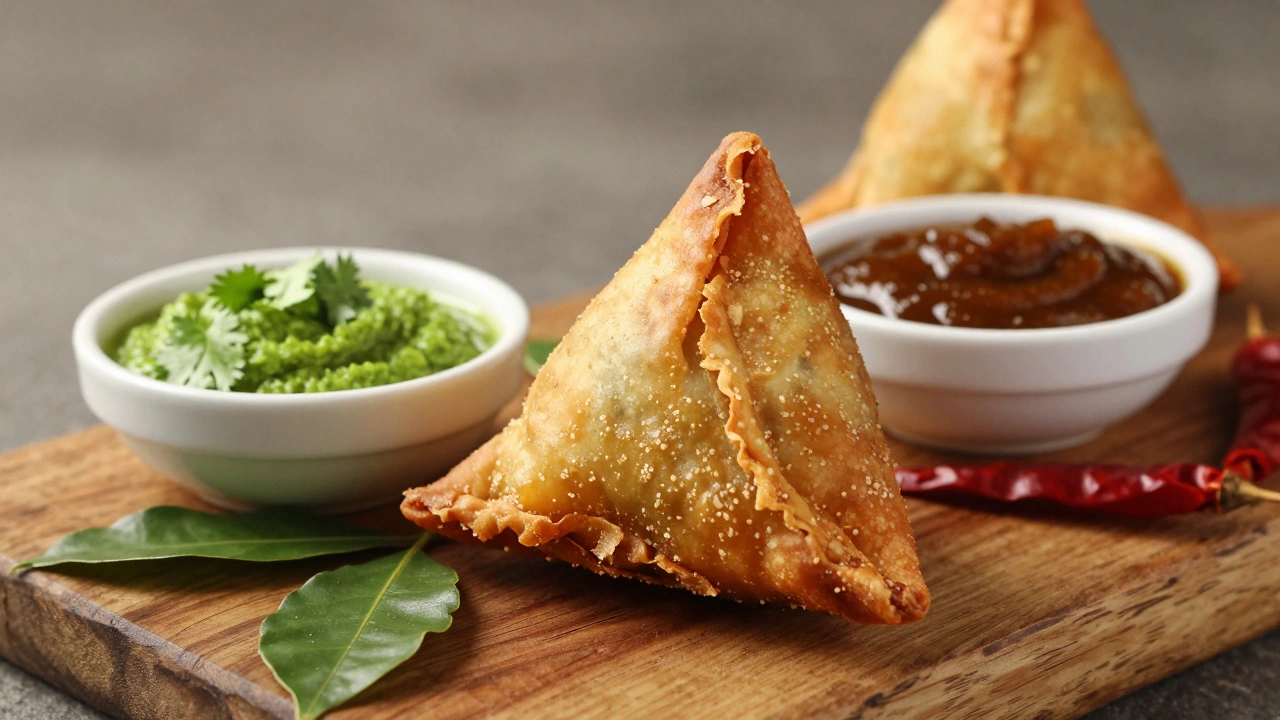
If there is one snack that every Indian recognizes, regardless of whether they are in Mumbai, Delhi, or Kolkata, it is the Samosa. This is likely the first answer you will get if you ask an Indian person what their favorite snack is. A samosa is a deep-fried pastry, usually triangular or tetrahedral in shape, filled with spiced potatoes, peas, onions, and sometimes lentils or meat.
The samosa is more than just a snack; it is a cultural staple. It is eaten for breakfast, lunch, dinner, and late-night cravings. The magic lies in the contrast: the outer layer is golden, crisp, and oily, while the inside is soft, steaming, and heavily spiced with cumin, coriander, and black pepper. In many parts of India, you cannot buy a samosa without a side of green chutney (made from cilantro and green chilies) and a red tamarind chutney (sweet and sour).
Why is it so popular? It’s portable. It’s cheap. And it’s deeply satisfying. You don’t need utensils. You pick it up with your hands, dip it, and bite. That simplicity is why it has traveled globally. You can find variations of samosas in Pakistan, Bangladesh, Nepal, Sri Lanka, and even in Western countries where they are often adapted to local tastes, sometimes filled with cheese or chicken instead of potatoes.
The Water Balloon: Pani Puri vs. Golgappa
Here is where things get tricky. If you have heard of a snack that involves a small, hollow, crispy ball that you fill with flavored water and eat in one bite, you might know it by different names depending on where you are in India. This is the ultimate test of regional identity.
- Pani Puri: This is the name used in North India, including Delhi and Uttar Pradesh. "Pani" means water, and "puri" means the fried bread shell.
- Golgappa: This is the common name in West India, particularly Maharashtra and Gujarat. The name literally translates to "round apple," referring to its spherical shape.
- Puchka: In East India, specifically Kolkata and Bengal, it is called puchka.
- Fafda: Wait, no. Fafda is a different snack entirely (see below). But in some regions, the terminology gets mixed up among tourists.
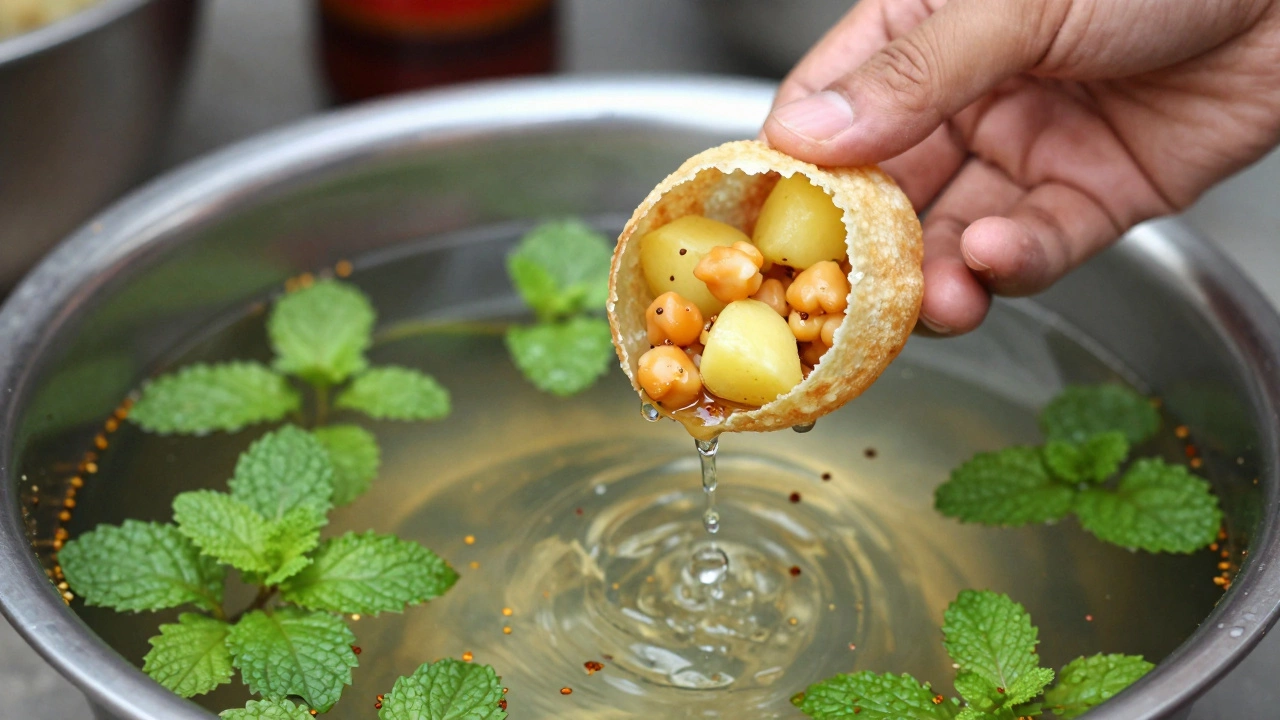
The experience of eating pani puri is unique. You take the crispy shell, break a hole in the top, stuff it with a mixture of boiled potatoes and chickpeas, and then dip it into a large bowl of spiced, mint-infused water. You must eat the whole thing in one go before the shell gets soggy. It is messy, wet, and incredibly addictive. The flavor profile is intense: the heat from green chilies, the coolness of mint, the sourness of tamarind, and the saltiness of the water all hit your tongue at once.
The Mumbai Staple: Vada Pav
If you travel to Mumbai, the financial capital of India, you will hear another name constantly: Vada Pav. Often called the "Indian Burger," this is not a burger in the traditional sense. It consists of a deep-fried potato dumpling (the vada) placed inside a soft bread roll (the pav), along with chilies, chutneys, and sometimes garlic paste.
Vada pav was born out of necessity. In the mid-20th century, laborers in Mumbai needed something cheap, filling, and easy to eat while working. The result was this powerhouse of calories and flavor. The vada itself is made from mashed potatoes mixed with mustard seeds, curry leaves, and green chilies, coated in chickpea flour batter, and deep-fried until golden. The pav is buttered and toasted, adding richness to the spicy, earthy potato center.
Unlike chaat, which is often eaten as a pre-meal appetizer or a light snack, vada pav is substantial enough to be a full meal. It is sold from nearly every street corner in Mumbai, and vendors compete fiercely on the quality of their chutneys and the crispiness of their vadas. It is a testament to how street food evolves to meet the needs of the urban population.
Regional Variations: Beyond the Basics
India is vast, and its snack culture reflects its diversity. While samosa and pani puri are nationwide, other snacks are strictly regional. Knowing these names helps you navigate local markets and appreciate the culinary depth of each state.
- Bhel Puri (Maharashtra): A mix of puffed rice, vegetables, peanuts, and chutneys. It is crunchy, light, and perfect for a hot day. Unlike the heavy samosa, bhel puri is airy and refreshing.
- Jalebi (North & East India): Technically a sweet, but often eaten as a snack with tea. These bright orange, spiral-shaped sweets are deep-fried and soaked in sugar syrup. They are best eaten fresh and hot.
- Fafda (Gujarat): Long, thin strips of gram flour batter that are deep-fried until crispy. Usually served with green chutney and kachori (a stuffed bread). This is a popular morning snack, especially during festivals.
- Maggi (Pan-India): Yes, instant noodles are considered a street food in India. Vendors cook Maggi with extra onions, tomatoes, and spices, turning a simple packet into a gourmet-style quick meal.
- Kachori (Rajasthan & Uttar Pradesh): Similar to a samosa but rounder and flatter, filled with spicy lentils rather than potatoes. It is often eaten for breakfast with pickle and yogurt.
How to Order Like a Local
Once you know the names, ordering becomes easier. However, there are nuances. In India, spice levels are not always standardized. If you are sensitive to heat, you should explicitly ask for "less spicy" or "no green chili." Many street vendors assume you want the authentic, fiery version unless told otherwise.
Also, pay attention to hygiene. Look for stalls with high turnover-where customers are constantly coming and going. This indicates fresh food and less chance of contamination. Avoid places where raw ingredients are exposed to dust or flies without covers. Most reputable vendors use gloves or tongs to handle food, especially for chaat items that are assembled fresh.
Finally, don’t be afraid to try new combinations. In many cities, vendors offer "combo" plates that include a samosa, a piece of paneer tikka, and a cup of chai. This is a great way to sample multiple flavors without committing to a large quantity of one item.
Is chaat healthy?
Chaat is generally not considered "healthy" in the traditional sense because it is often deep-fried and high in sodium and sugar from chutneys. However, it does contain vegetables, spices, and sometimes yogurt, which provide some nutrients. For a healthier option, look for chaat made with baked bases instead of fried ones, or choose dahi puri over pani puri for a creamier, less oily experience.
What is the difference between samosa and kachori?
The main differences are shape, filling, and texture. Samosas are typically triangular, filled with spiced potatoes and peas, and have a thinner, crispier crust. Kachoris are round, filled with spiced lentils (usually moong dal), and have a thicker, puffier dough. Samosas are eaten throughout the day, while kachoris are primarily a breakfast item.
Can I find Indian street food outside of India?
Yes, Indian street food has become increasingly popular worldwide. Cities with large Indian diasporas, such as London, New York, Toronto, and Sydney, have dedicated street food markets and restaurants that serve authentic chaat, samosas, and pani puri. However, the authenticity may vary, so look for places that emphasize traditional recipes and fresh ingredients.
What is the best time to eat street food in India?
Evening is the prime time for street food in India. Most vendors set up their stalls after sunset, and the atmosphere is vibrant with families and friends gathering to eat. Late-night snacks are also common, especially in cities like Mumbai and Delhi, where food carts operate until the early hours. Avoid eating street food during extreme heat if you are not accustomed to it, as hygiene standards can be challenging in high temperatures.
Is vada pav vegetarian?
Yes, traditional vada pav is completely vegetarian. The vada is made from potatoes and chickpea flour, and the pav is plain bread. However, some modern variations may include non-vegetarian fillings like chicken or mutton keema, so it’s always good to confirm with the vendor if you have dietary restrictions.