Grab and Go Breakfast Calculator
Choose a breakfast option from the list below to see how it rates on key factors for a perfect grab and go meal.
Ever rushed out the door in the morning, stomach growling, and realized you skipped breakfast? You’re not alone. In cities like Mumbai, Delhi, and Bangalore, millions of people start their day with a grab and go breakfast-something fast, filling, and easy to carry. It’s not just about convenience. It’s about surviving the chaos of traffic, late trains, and early meetings without crashing by 10 a.m.
What Exactly Is a Grab and Go Breakfast?
A grab and go breakfast is any meal you can eat while walking, commuting, or standing in line. It doesn’t need a plate, fork, or sit-down time. In India, this isn’t a Western trend-it’s a decades-old habit. Think of it as breakfast that fits in your hand, bag, or pocket. The key? It’s ready, it’s tasty, and it won’t spill all over your shirt.
Unlike a full Indian breakfast with parathas, chutney, and dal that takes 30 minutes to prepare, a grab and go version cuts the prep time to under 10 minutes. It’s often eaten cold or at room temperature. And yes, it can still be healthy, flavorful, and deeply Indian.
Why Grab and Go Breakfasts Are So Popular in India
Urban India runs on speed. The average commute time in metro cities is over 45 minutes. Add in school drop-offs, office check-ins, and last-minute work calls, and breakfast becomes a luxury-unless it’s portable.
Traditional Indian breakfasts like idli-sambar or upma are nutritious, but they’re not always practical. You need a plate, a spoon, and time to eat. A grab and go breakfast solves that. It’s designed for people who eat while holding a train pole, waiting for a bus, or sitting in a car.
Also, Indian households don’t always have time to cook fresh every morning. That’s why pre-made, shelf-stable, or quick-assemble options dominate. Many families prep items the night before-steaming a batch of idlis, boiling eggs, or rolling chillas-so breakfast is ready by 6 a.m.
Top 7 Grab and Go Breakfasts You Can Find (or Make) in India
Here are the most common, delicious, and practical grab and go breakfasts across India:
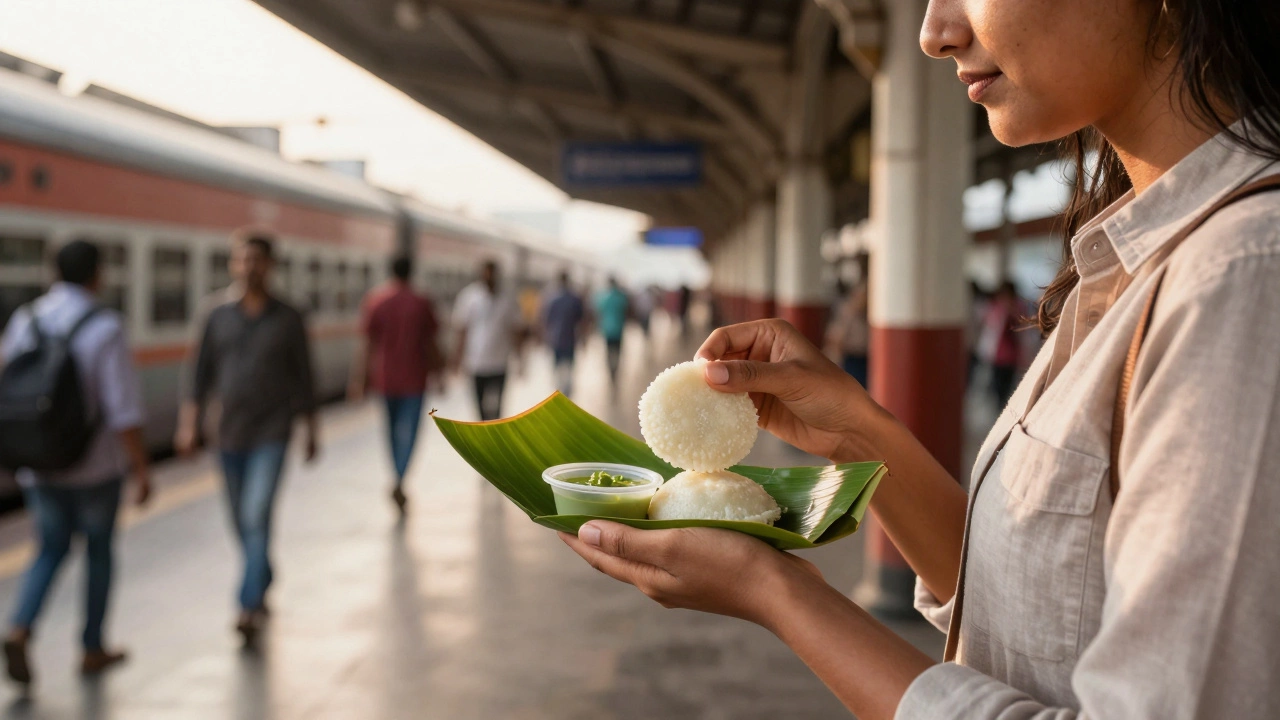
- Idli with coconut chutney - Steamed rice cakes, soft and light, wrapped in banana leaf or packed in a small container. Eat with a side of chutney in a tiny plastic cup. Popular in South India, but now found in metro cities too.
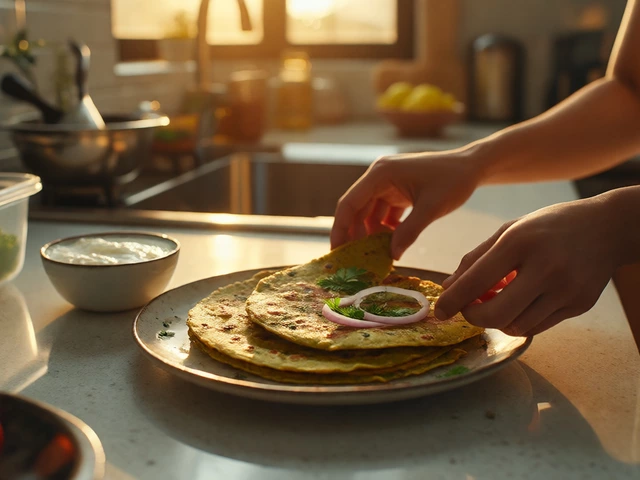
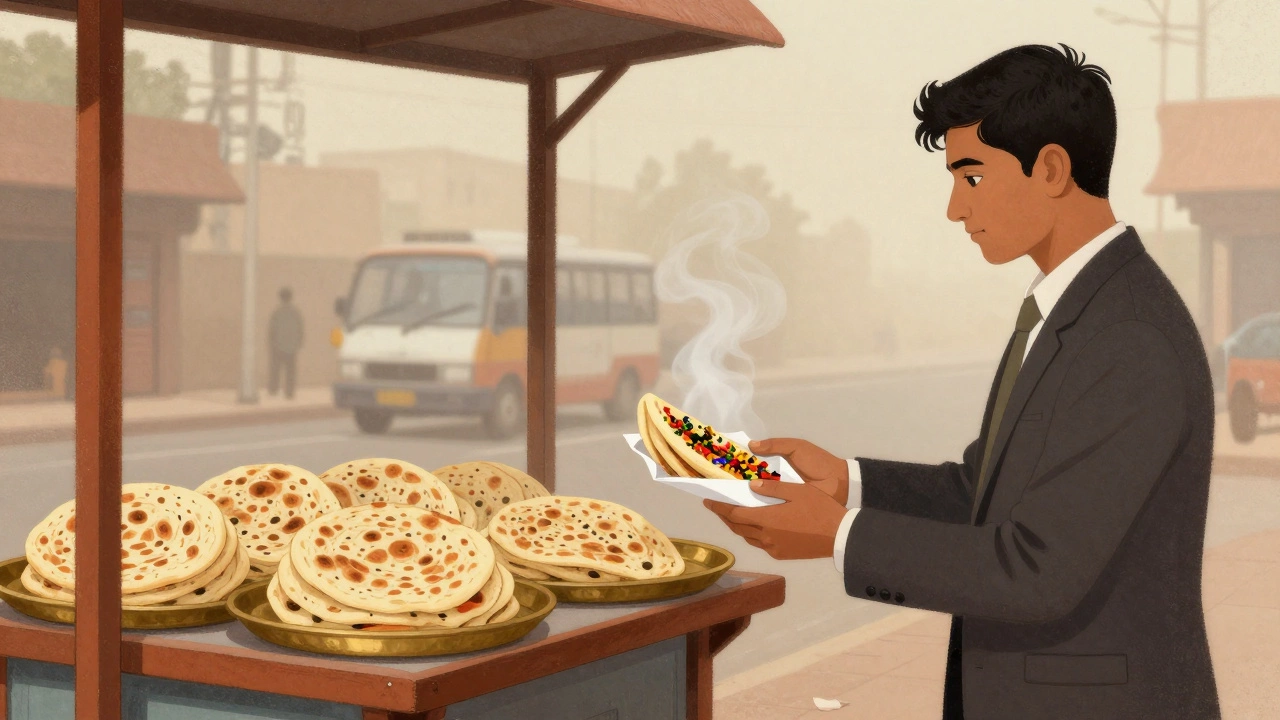
- Plain or stuffed paratha - A whole wheat flatbread, lightly oiled, filled with potato, paneer, or spinach. Wrap it in paper or foil. It’s filling, warm, and travels well. Often sold by street vendors near bus stops.
- Boiled eggs with salt and pepper - Simple, protein-packed, and ready in 10 minutes. Many households boil a batch on Sundays. Eat with a pinch of chaat masala for extra flavor.
- Upma in a thermos - Cooked semolina with veggies and mustard seeds. Keep it warm in a thermos. Eat with a spoon while commuting. Works great in winter.
- Chilla (besan pancake) - Made from chickpea flour, water, and spices. Cooked on a griddle, rolled up, and packed. High in protein, gluten-free, and doesn’t need reheating.
- Masala vada with mint chutney - Deep-fried lentil fritters, crispy outside, soft inside. Sold in paper cones near railway stations. Eat with a tangy chutney on the side.
- Breakfast smoothie + peanut butter sandwich - A newer urban option. Blend banana, oats, milk, and a spoon of peanut butter. Pair with whole wheat bread and a smear of peanut butter. Easy to carry in a reusable bottle and zip-lock bag.
What Makes a Good Grab and Go Breakfast?
Not every breakfast item works as a grab and go option. Here’s what makes one successful:
- Non-messy - No dripping sauces, runny eggs, or crumbly bread that falls everywhere.
- Stays fresh - Doesn’t get soggy or stale within 2-3 hours.
- Needs no reheating - You won’t find a microwave on the metro. It must taste good at room temperature.
- High in energy - Carbs for quick fuel, protein to keep you full, and a little fat to slow digestion.
- Easy to hold - Fits in one hand. No need for a fork or plate.
For example, a bowl of poha with oil and peanuts? Great at home. But in a car? Messy. Wrap the same poha in a banana leaf, press it flat, and roll it into a cylinder-that’s a perfect grab and go version.
How to Prep Grab and Go Breakfasts the Night Before
You don’t need to wake up 30 minutes early. With a little planning, you can have breakfast ready before your alarm even rings.
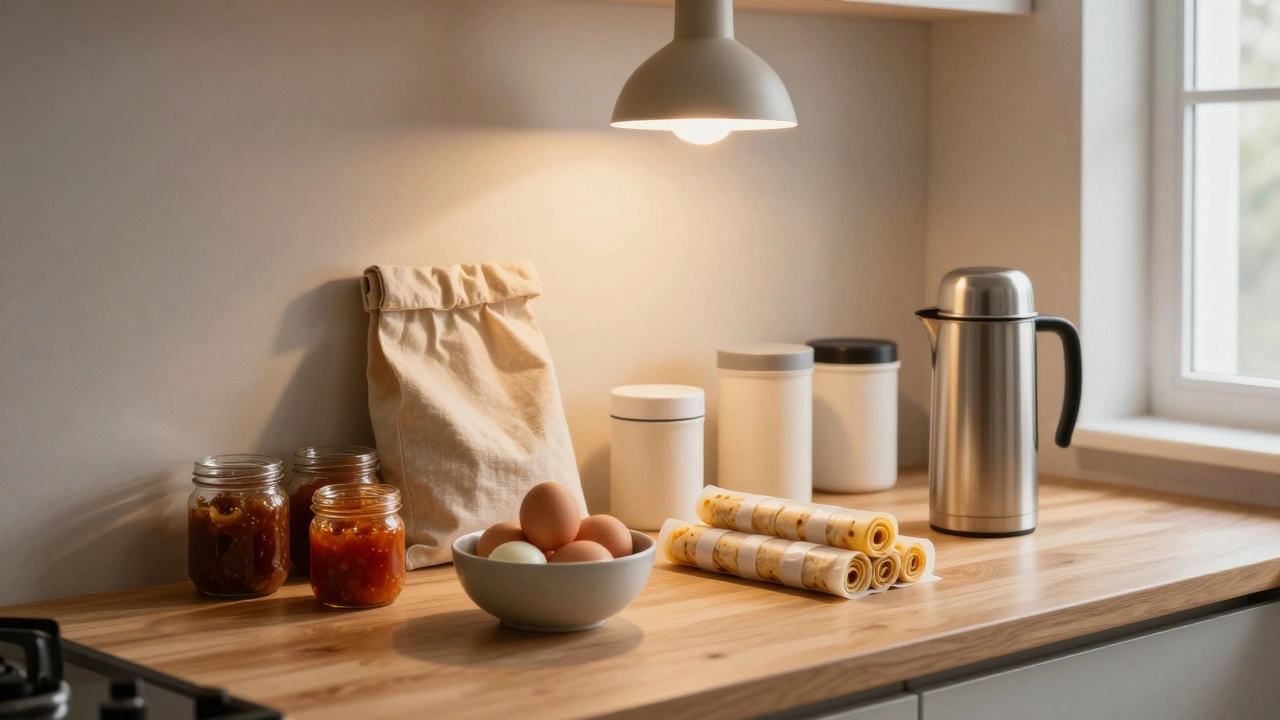
- Steam idlis or dhoklas the night before. Cool, then store in the fridge. Reheat for 1 minute in the microwave if you want it warm, or eat cold.
- Make a batch of chillas on Sunday. Keep them in an airtight container. They last 3 days in the fridge.
- Boil a dozen eggs at once. Peel and store in a container with a pinch of salt. Eat for 5 days.
- Roll parathas and freeze them. Toast in a pan for 2 minutes in the morning.
- Pre-mix dry ingredients for upma or poha-flour, spices, dried veggies-in a jar. Just add hot water in the morning.
Pro tip: Use small reusable containers with tight lids. Glass jars for chutneys, silicone wraps for sandwiches, and cloth bags for snacks keep things fresh and eco-friendly.
Where to Buy Grab and Go Breakfasts in India
You don’t have to make it yourself. India’s streets are full of breakfast vendors who specialize in portable meals:
- Train station stalls - Idlis, vadas, and boiled eggs sold in paper packets.
- Bus stop vendors - Parathas, samosas, and pakoras wrapped in newspaper.
- Office building lobbies - Small shops selling pre-packed idli plates, sandwiches, and fruit.
- Modern cafés - In cities like Pune and Hyderabad, you’ll find oatmeal jars, protein balls, and smoothie bottles labeled ‘Breakfast to Go’.
Many of these vendors have been serving the same items for decades. Their recipes haven’t changed-but the demand has. More people are buying breakfast on the move than ever before.
Why Grab and Go Breakfasts Are Healthier Than You Think
People assume quick breakfasts are unhealthy-pastries, white bread, sugary drinks. But Indian grab and go options are often the opposite.
Idlis are fermented, which aids digestion. Besan chillas are high in plant protein. Boiled eggs provide complete amino acids. Even masala vadas, though fried, are made from lentils-not refined flour.
Studies from the Indian Council of Medical Research show that people who eat traditional, minimally processed breakfasts like these have better blood sugar control and lower rates of obesity than those who skip breakfast or eat packaged cereals.
The secret? Whole ingredients. No preservatives. No added sugar. Just food that’s been eaten in India for generations.
What to Avoid
Not all ‘quick’ breakfasts are good ones. Skip these:
- Store-bought packaged parathas - Often loaded with hydrogenated oils and additives.
- White bread with jam - Low in fiber, spikes blood sugar, leaves you hungry by 10 a.m.
- Flavored yogurt cups - High in sugar, low in protein. Not a real breakfast.
- Instant noodles - Salt bombs with zero nutrition. Save for late-night cravings.
Ask yourself: Would my grandmother recognize this as food? If the answer is no, it’s probably not the best choice.
Final Thoughts: Make It a Habit
A grab and go breakfast isn’t a compromise. It’s a smart, culturally rooted solution to a modern problem. You don’t need fancy gadgets or expensive ingredients. Just a little planning, a few simple staples, and the willingness to eat breakfast like your ancestors did-on the move.
Start small. Pick one item from the list above. Prep it tonight. Eat it tomorrow morning without sitting down. Notice how your energy feels by noon. You might just find that your best meal of the day is the one you didn’t have to stop for.
Is a grab and go breakfast healthy?
Yes, if you choose the right options. Traditional Indian grab and go breakfasts like idli, chilla, boiled eggs, and upma are made from whole ingredients-no preservatives, no added sugar. They’re high in protein, fiber, and complex carbs, which keep you full and energized. Avoid packaged snacks, white bread, and sugary drinks.
Can I make grab and go breakfasts ahead of time?
Absolutely. Cook idlis, chillas, or boiled eggs in batches on weekends. Store them in the fridge for up to 3 days. Wrap parathas and freeze them. Pre-mix dry ingredients for upma or poha. In the morning, all you need is 5 minutes to assemble or reheat.
What’s the best grab and go breakfast for weight loss?
A besan chilla with mint chutney and a boiled egg. It’s high in protein and fiber, low in refined carbs, and keeps you full for hours. Skip the oil if you’re cutting calories, or use just a teaspoon. Pair with a small apple or banana for natural sugar.
Where can I buy grab and go breakfasts in India?
Look near train stations, bus stops, and office complexes. Street vendors sell idlis, vadas, parathas, and boiled eggs wrapped in paper. In cities like Bengaluru and Pune, modern cafés offer oatmeal jars and protein smoothies labeled ‘Breakfast to Go’.
Why is idli a good grab and go breakfast?
Idli is soft, light, and easy to eat without utensils. Made from fermented rice and lentils, it’s easy to digest and rich in probiotics. It travels well at room temperature, doesn’t get soggy, and pairs perfectly with coconut chutney. It’s also gluten-free and low in fat.
Are there vegetarian grab and go breakfast options in India?
Yes, almost all traditional Indian grab and go breakfasts are vegetarian. Idli, chilla, upma, vada, paratha, boiled eggs, and fruit are all plant-based or egg-based. India’s breakfast culture is built around vegetarian staples-no meat needed.
Can I eat grab and go breakfasts if I’m gluten-free?
Yes. Many Indian breakfasts are naturally gluten-free: idli (rice and lentils), chilla (besan/gram flour), upma (semolina-check if it’s pure), and boiled eggs. Avoid wheat-based parathas or packaged snacks. Always check labels if buying from stores.