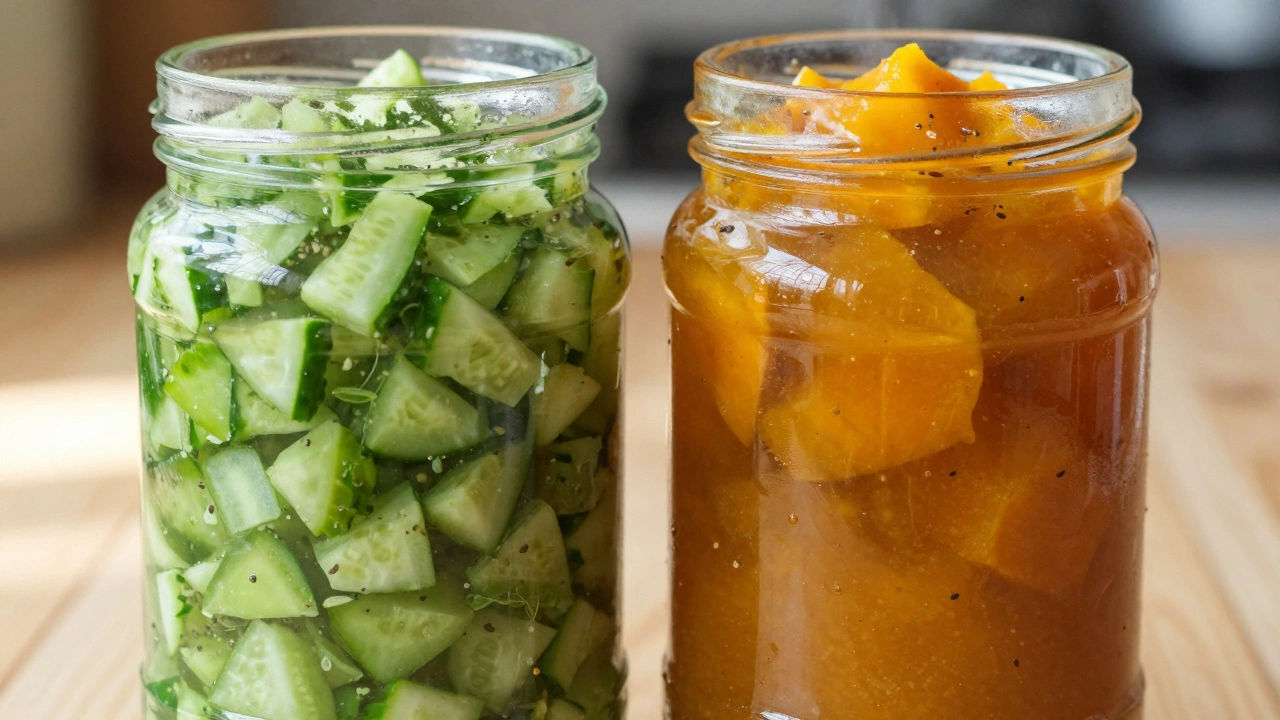
Pickle Relish vs Chutney Comparison Tool
Compare these two condiments side by side to understand their key differences. Click on any section to expand and see detailed descriptions.
Pickle Relish
Uniform, crunchy chunks with consistent texture. Typically made from chopped pickled cucumbers preserved in vinegar and sugar.
Chutney
Soft, pulpy, sometimes smooth consistency. Can range from coarse to completely blended depending on the type.
Pickle Relish
Sharp, vinegary, and salty with simple sweetness. Dominated by vinegar and salt with minimal complexity.
Chutney
Layered, complex flavor with sweet, sour, spicy, and herbal notes. Flavor changes as you chew.
Pickle Relish
Cucumbers, vinegar, sugar, salt, mustard seed. Limited spices and minimal fresh ingredients.
Chutney
Fruit, vegetables, herbs, nuts, tamarind, yogurt, coconut, and complex spice blends (ginger, cumin, coriander).
Pickle Relish
Long shelf life (months to years) due to high acidity and sugar content.
Chutney
Shorter shelf life (days to weeks) unless properly canned; best consumed fresh.
Pickle Relish
Hot dogs, burgers, sandwiches, tuna salad, fried fish. Adds crunch and sharpness.
Chutney
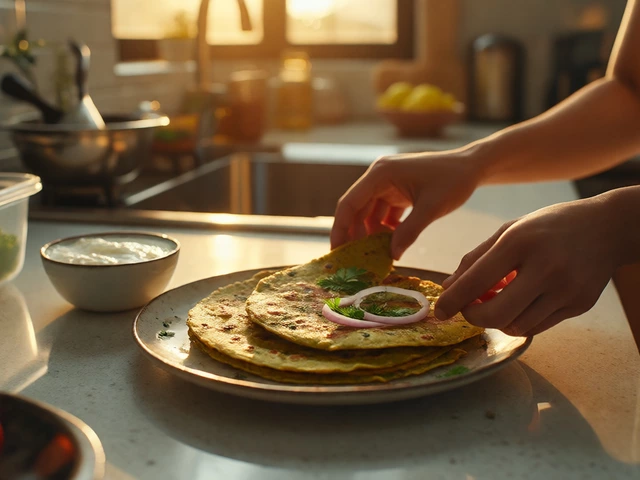
Pairs with samosas, pakoras, curries; enhances meals with layered flavors. Used as flavor enhancer.
Ever open your fridge and stare at a jar of pickle relish and a bowl of green chutney, wondering if they’re the same thing? You’re not alone. Many people use the words interchangeably-especially when topping a burger or serving it with samosas. But here’s the truth: pickle relish and chutney aren’t just similar. They’re from different worlds.
What Exactly Is Pickle Relish?
Pickle relish is a North American staple, born out of preservation needs in the 1800s. It’s made from chopped pickled cucumbers-usually dill or bread-and-butter style-mixed with vinegar, sugar, salt, and sometimes mustard seed, celery, or bell pepper. The texture is chunky but uniform, like tiny pickles in a sweet-tangy brine. You’ll find it on hot dogs, in tuna salad, or as a side to fried fish.
It’s not meant to be complex. Its job is to add a sharp, crunchy punch. The sugar balances the vinegar, but the dominant flavor is salt and acid. No spices beyond the basics. No fresh herbs. No garlic. No chili. It’s engineered for shelf life, not nuance.
What Is Chutney, Really?
Chutney comes from India, where it’s been made for over 2,000 years. The word comes from the Sanskrit word chatni, meaning "to lick." That tells you everything: it’s meant to be eaten with your fingers, licked off your spoon, and savored slowly.
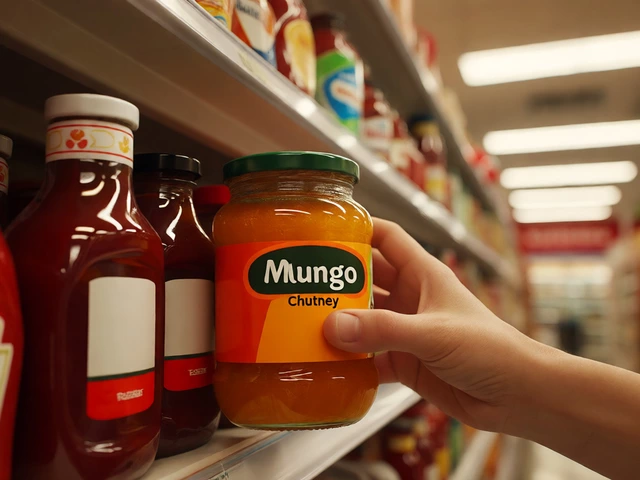
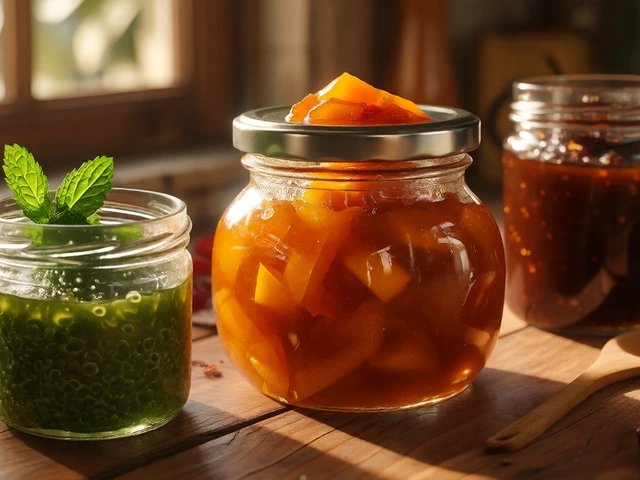
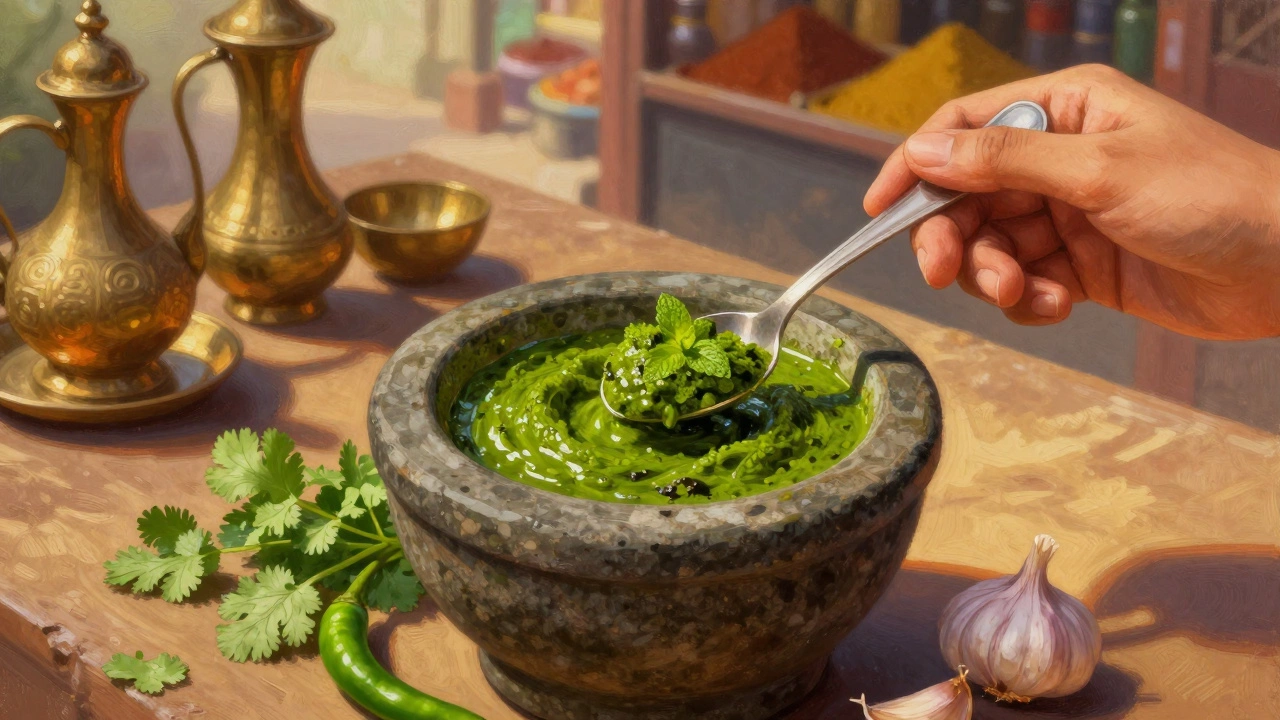
True chutney isn’t just one thing. It’s a family of condiments made from fruit, vegetables, herbs, or even nuts. Mango chutney? Sweet, tart, spiced with ginger and cumin. Mint chutney? Fresh cilantro, green chilies, lemon, and yogurt. Coconut chutney? Ground roasted coconut, tamarind, and mustard seeds. Each one is alive with flavor-layered, aromatic, and often fermented or slow-cooked.
Unlike relish, chutney uses fresh ingredients. It’s rarely preserved for months. In Indian homes, it’s made daily or weekly. It’s not just a topping-it’s part of the meal’s balance. A bite of spicy samosa? A spoon of cool mint chutney. A piece of tandoori chicken? A swipe of sweet tamarind chutney.
Why People Confuse Them
The confusion starts with appearance. Both are spoonable. Both are served cold. Both come in jars. And in some American supermarkets, you’ll find "Indian-style chutney" labeled as "mango relish." That’s marketing, not tradition.
There’s also the sugar factor. Some American chutneys-like those sold by Trader Joe’s or in gourmet stores-are sweetened heavily to appeal to Western palates. They look like relish. But they still have real ingredients: fresh ginger, garlic, lime juice, spices. That’s what sets them apart. They’re not just pickled vegetables in syrup. They’re cooked-down fruit and herbs with layered spice.
Try this test: put a spoonful of pickle relish and a spoonful of mango chutney side by side. The relish will hit your tongue with vinegar and salt. The chutney? It will bloom-first sweet, then tangy, then spicy, then herbal. It changes as you chew. Relish doesn’t do that.
Can You Substitute One for the Other?
Technically? Yes. But you’ll lose something.
If you’re making a burger and only have mango chutney? Go ahead. It’ll be sweet, funky, and delicious. But you won’t get that crisp, vinegary crunch that relish gives. On the flip side, if you’re serving pakoras and only have pickle relish? It’ll taste off. Too acidic. Too one-note. No warmth. No depth. It’s like putting salt on ice cream.
There’s one exception: sweet onion relish. In some Southern U.S. kitchens, they make a slow-cooked onion relish with vinegar, sugar, and a pinch of cayenne. That’s closer to a chutney. But even then, it’s missing the fresh herbs and toasted spices that define real Indian chutneys.
The Cultural Divide
Pickle relish is a product of industrial food culture. It’s made in factories, sold in bulk, and lasts a year. It’s convenient. It’s cheap. It’s not meant to be special.
Chutney is a craft. In India, families have their own recipes passed down through generations. A grandmother might grind coriander seeds by hand. A mother might roast dried mango powder over a low flame. These aren’t recipes-they’re rituals. Chutney is tied to seasonality, region, and memory. A coconut chutney in Kerala tastes different than one in Tamil Nadu. A tamarind chutney in Delhi isn’t the same as one in Hyderabad.
When you eat chutney, you’re tasting a place. A season. A person’s hands.

How to Tell Them Apart at a Glance
- Texture: Relish = uniform, crunchy chunks. Chutney = soft, pulpy, sometimes smooth.
- Flavor: Relish = vinegar + sugar + salt. Chutney = sweet + sour + spicy + herbal + earthy.
- Ingredients: Relish = cucumber, vinegar, sugar, spices. Chutney = fruit, herbs, nuts, spices, tamarind, yogurt, coconut, lime.
- Shelf life: Relish = months to years. Chutney = days to weeks (unless canned properly).
- Use: Relish = burger, sandwich, salad. Chutney = snack pairing, meal accompaniment, flavor enhancer.
What If You Want to Make Your Own?
If you’re curious, try making a simple mint chutney. You’ll see the difference instantly.
- Wash a cup of fresh mint leaves and a handful of cilantro.
- Add 1 green chili (or more if you like heat), 1 clove of garlic, a teaspoon of grated ginger.
- Squeeze in half a lemon, a pinch of salt, and a tablespoon of sugar.
- Pulse in a blender until smooth. Add a splash of water if needed.
- Let it sit for 10 minutes. Taste. Adjust. Eat with samosas.
Now make a quick pickle relish: chop 2 pickles, mix with 2 tablespoons vinegar, 1 tablespoon sugar, 1 teaspoon mustard seed, and a pinch of salt. Let it sit for an hour. Taste it. It’s sharp. It’s clean. It’s simple.
One is a shortcut. The other is a story.
Final Answer: Is Pickle Relish a Chutney?
No. Pickle relish is not a chutney. They share a job-adding flavor to food-but they were born from different needs, different cultures, and different kitchens. One is about preservation. The other is about celebration.
If you’re looking for authentic chutney recipes, don’t look to the pickle aisle. Look to fresh herbs, ripe fruit, and spices you can smell before you grind them. That’s where chutney lives.
Next time you reach for a jar, ask yourself: Do I want crunch? Or do I want depth?
Can I use pickle relish instead of chutney in Indian dishes?
You can, but you’ll miss the complexity. Indian dishes are built on balance-sweet, sour, spicy, bitter. Pickle relish only gives you sour and sweet. It lacks the herbal, earthy, and aromatic layers that chutney brings. For authenticity, stick to real chutney.
Is mango chutney the same as mango relish?
Not really. Mango relish is usually just chopped mango pickled in vinegar and sugar. It’s crunchy and sharp. Mango chutney is slow-cooked with spices like cumin, ginger, and black salt. It’s soft, layered, and often fermented slightly. The texture, flavor, and method are completely different.
Why does my chutney turn brown?
Chutneys with fruit-especially mango or tamarind-can darken over time due to oxidation or caramelization during cooking. This is normal. It doesn’t mean it’s spoiled. To keep it bright, store it in an airtight container in the fridge and use it within a week. Adding a squeeze of lemon juice can slow the browning.
Can I make chutney without sugar?
Yes. Traditional Indian chutneys often use jaggery, dates, or ripe fruit for natural sweetness. You can skip sugar entirely and rely on the fruit’s natural sugars. Mint chutney, for example, is often made without any sweetener at all. Taste as you go-balance comes from lemon, salt, and spice, not just sugar.
What’s the best way to store homemade chutney?
Store it in a clean, dry glass jar in the fridge. Use a clean spoon each time to avoid contamination. Most fresh chutneys last 5-7 days. For longer storage, freeze in ice cube trays. Once frozen, pop them into a bag. They’ll keep for 3 months. Thaw overnight in the fridge.