Indian Main Meal Planner
Select a region to reveal its traditional main meal timing, staple ingredients, and cultural dining tips.
North
Punjab, Haryana, UPSouth
Tamil Nadu, Kerala, KarnatakaEast
West Bengal, OdishaWest
Maharashtra, GujaratAsk someone in Mumbai what their main meal is, and they’ll likely point to a heavy lunch. Ask someone in Delhi or Kolkata, and the answer might shift toward an elaborate dinner. India doesn’t have one single "main meal" for its 1.4 billion people. Instead, the biggest plate of the day depends entirely on where you are, when you work, and what your family eats.
If you’re trying to understand Indian eating habits-maybe you’re planning a trip, hosting friends, or just curious about global food cultures-you need to look past the stereotype of the daily curry. The reality is a fascinating mix of climate, tradition, and modern life. Let’s break down who eats what, when, and why.
The North-South Divide: Lunch vs. Dinner
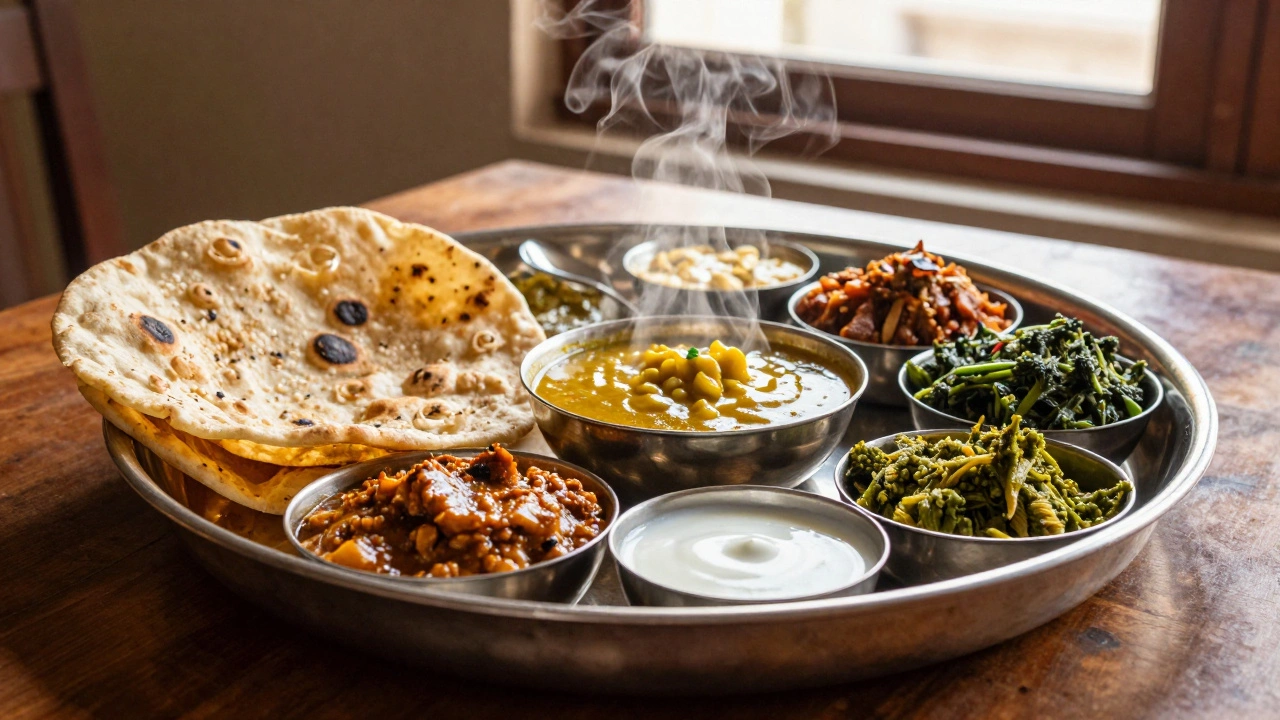
In most of Northern India, including states like Punjab, Haryana, and Uttar Pradesh, Lunch is the undisputed main meal of the day. It usually happens between 12:30 PM and 2:00 PM. This meal is designed to fuel you through the hottest part of the day. You’ll typically find a Thali is a traditional platter containing rice, lentils (dal), vegetables, bread (roti/chapati), yogurt, and pickles.
Why lunch? Historically, many families were agrarian or worked in heat-intensive jobs. Eating a large, carb-heavy meal midday provided sustained energy. Dinner in the North tends to be lighter-perhaps just dal and roti, or leftover rice-to ensure it doesn’t sit heavy before sleep.
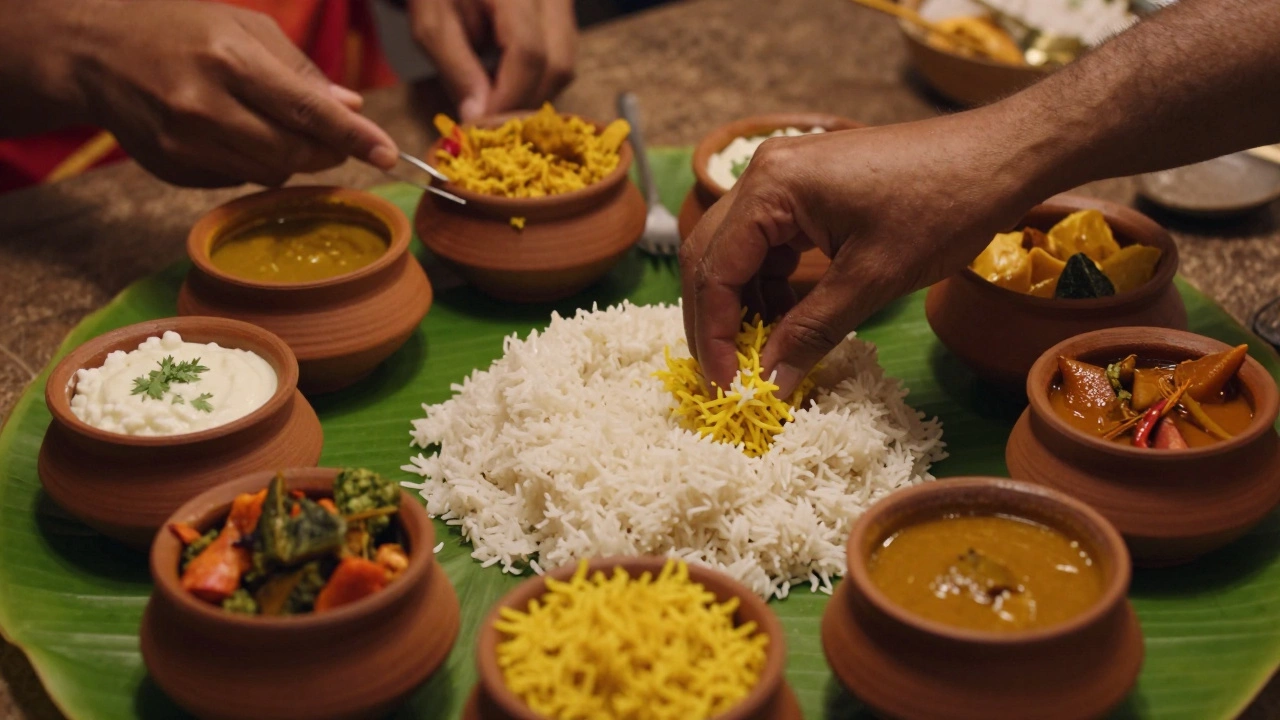
Southern India tells a different story. In states like Tamil Nadu, Kerala, and Karnataka, Dinner is often the largest and most elaborate meal. Here, the day starts with a light breakfast of idli or dosa. Lunch might be a simple sambar-rice combo. But dinner? That’s when the Sadhya is a grand vegetarian feast served on a banana leaf with multiple rice-based dishes, curries, and sweets. comes out. The cooler evenings make it comfortable to digest heavier meals, and social gatherings often revolve around the evening table.
Regional Variations: What’s on the Plate?
To truly grasp the "main meal," you have to look at specific regions. The ingredients change drastically based on local agriculture.
| Region | Main Meal Time | Key Components | Signature Dish |
|---|---|---|---|
| North (Punjab/Haryana) | Lunch | Wheat Roti, Dal, Sabzi | Daal Makhani |
| South (Tamil Nadu/Kerala) | Dinner | Rice, Coconut, Curd | Biryani or Sadhya |
| East (West Bengal/Odisha) | Lunch/Dinner | Rice, Fish, Mustard Oil | Fish Curry Rice |
| West (Maharashtra/Gujarat) | Lunch | Rice, Pulao, Thali | Vada Pav / Poha |
In West Bengal and Odisha, rice is non-negotiable. The main meal, whether lunch or dinner, centers around steamed white rice paired with fish curry made in mustard oil. Wheat is rarely used here. Meanwhile, in Maharashtra, the main meal might feature a Thali that includes a variety of small portions including puri, bhaji, and salad., reflecting the state’s diverse culinary history influenced by Portuguese and Maratha rulers.
The Urban Shift: How Work Changes Meals
Tradition is powerful, but modern life is rewriting the rules. In major cities like Bangalore, Hyderabad, and Mumbai, the definition of a "main meal" is blurring due to work schedules.
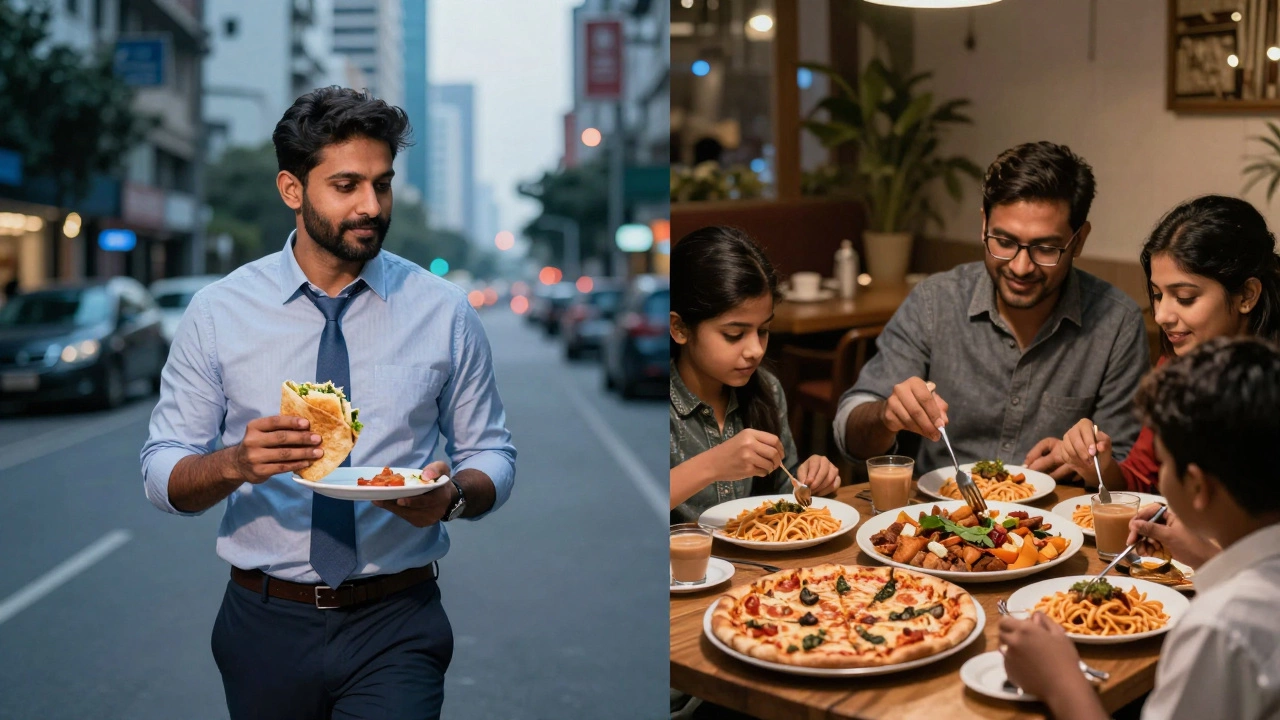
Many professionals now skip heavy lunches because they don’t have time to sit down for an hour-long thali. Instead, they opt for quick bites-Dosa is a thin crepe made from fermented rice and lentil batter, sandwiches, or even salads. This pushes the "main meal" status to dinner, regardless of regional tradition. Even in the North, urban dwellers are shifting toward larger dinners because that’s the only time they can cook or eat properly.
This shift has also introduced fusion foods. You’ll find more pizza, pasta, and burgers being eaten as main meals among younger demographics. However, the core preference for home-cooked, spice-rich food remains strong during weekends and holidays.
Breakfast: The Quick Starter
While not the "main" meal, breakfast sets the tone for the day. It’s usually light and quick. Common options include:
- Poha: Flattened rice cooked with turmeric, onions, and peanuts (popular in Maharashtra).
- Idli: Steamed rice cakes served with chutney and sambar (South India).
- Paratha: Stuffed flatbread with potato, paneer, or spinach (North India).
- Cutlet & Tea: Fried vegetable patties with strong chai (Kerala/Tamil Nadu).
These dishes are designed for speed and digestion. They rarely contain heavy meats or rich gravies, saving those flavors for later.
Vegetarian vs. Non-Vegetarian Preferences
India is famous for its vegetarian cuisine, but the main meal composition varies widely. In Gujarat and parts of Rajasthan, the main meal is almost always vegetarian, focusing on complex carbohydrates and legumes. In contrast, coastal regions like Goa and Kerala, as well as the Northeast, incorporate meat and seafood into daily main meals.
Even within vegetarian households, the "main" component changes. In the North, the Dal is lentil soup that serves as a primary protein source. is king. In the South, rice takes center stage, with curries acting as accompaniments rather than equals. Understanding this balance helps you appreciate why one region might call a bowl of rice "food" while another calls a plate of rotis "sustenance."
How to Eat Like a Local
If you want to experience the true main meal of India, follow these tips:
- Eat with your hands: In many homes, especially in the South and East, eating with the right hand is traditional. It connects you to the texture and temperature of the food.
- Mix everything: Don’t eat each dish separately. Mix rice with dal, sabzi, and ghee to create balanced bites.
- Respect the timing: If invited for lunch in the North, expect a full spread. If invited for dinner in the South, expect the same.
- Drink water wisely: Drinking large amounts of water during the main meal can dilute digestive juices. Sip slowly instead.
Frequently Asked Questions
Is lunch or dinner the main meal in India?
It depends on the region. In Northern India, lunch is typically the main meal. In Southern India, dinner is often the largest and most elaborate meal. Urban areas are seeing a shift toward dinner as the main meal due to work schedules.
What do Indians eat for breakfast?
Indian breakfasts are usually light and quick. Popular options include poha (flattened rice), idli (steamed rice cakes), dosa (fermented crepes), paratha (stuffed flatbread), and upma (semolina porridge). These are often accompanied by tea or coffee.
What is a typical Indian thali?
A thali is a platter that includes a variety of dishes. Typically, it contains rice, roti (bread), dal (lentils), one or two vegetable curries, yogurt, pickles, papad, and sometimes a sweet dessert. It provides a balanced meal in one sitting.
Do Indians eat meat every day?
Not necessarily. While many Indians eat meat, especially chicken, mutton, and fish, a significant portion of the population is vegetarian due to religious, cultural, or personal reasons. Meat consumption varies greatly by region and community.
Why is rice so important in South Indian meals?
Rice has been a staple crop in South India for centuries due to the region's climate and soil. It forms the base of most meals, providing essential carbohydrates. Dishes like sambar, rasam, and various curries are designed to be eaten with rice.
What is the difference between North and South Indian food?
North Indian food relies heavily on wheat (roti), dairy (ghee, paneer), and richer gravies. South Indian food focuses on rice, coconut, tamarind, and fermented batters (idli/dosa). Spices also differ, with the North using cumin and coriander, and the South using mustard seeds, curry leaves, and asafoetida.
Is it common to eat late dinners in India?
Traditionally, dinners are eaten early, often before 8 PM, to aid digestion. However, in urban areas and among younger generations, late dinners have become more common due to social events and work commitments.
What drinks are served with the main meal?
Water is commonly served. In some regions, buttermilk (chaas) or lassi (yogurt drink) is served after the meal to aid digestion. Tea and coffee are usually reserved for breakfast or breaks, not during the main meal.