Tata Sampan Flavor & Health Checker
Select the cap color of the bottle you want to analyze.
0g
Total Sugar Content
Daily Limit Context:
- 🍬 Equivalent to 0 teaspoons of sugar
- ⚠️ 0% of recommended daily limit
Best Served With:
Pani Puri
The sharp sweetness cuts through the spicy water perfectly.
Pro Tip:
Drink immediately after breaking the seal for maximum fizz.
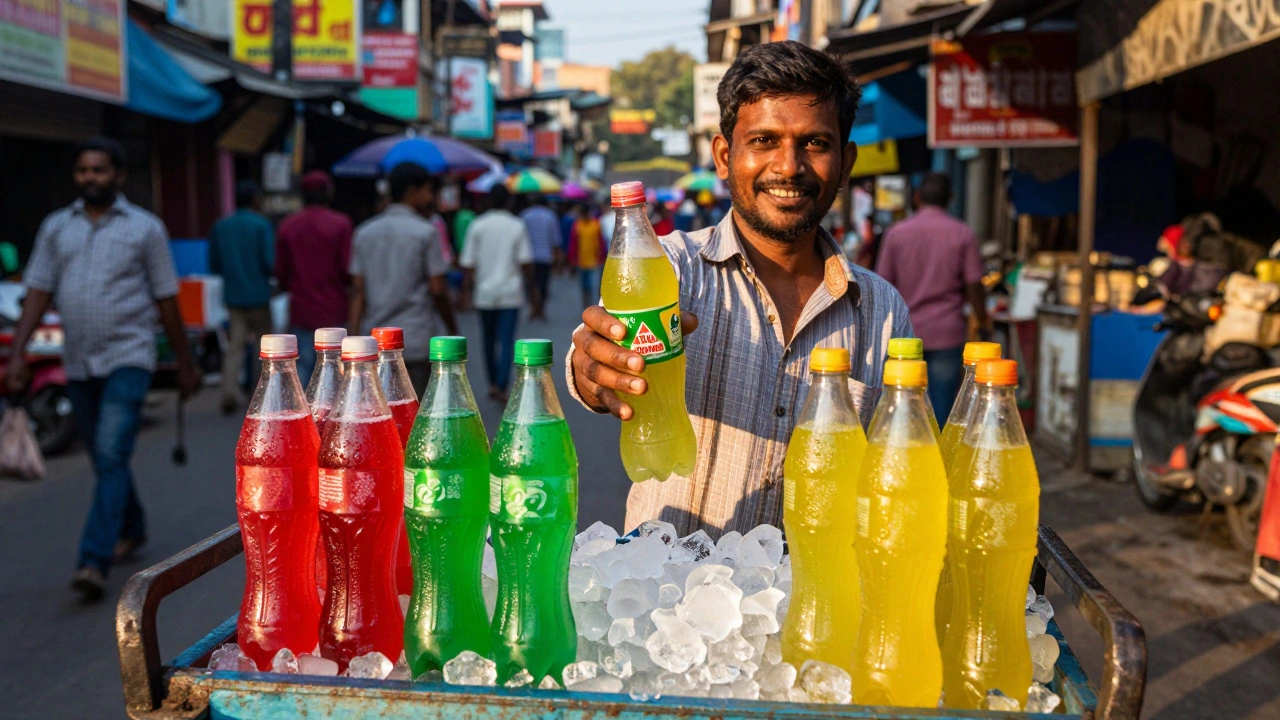
You’re walking down a busy street in Mumbai or Delhi. It’s hot, humid, and you’re thirsty. You spot a vendor with bright red syrup and ice cubes. He shouts, "Tata Sampan!" You pause. Does Tata mean daddy? Is this some weird family nickname for a soda?
The short answer is no. "Tata" does not mean daddy in the context of Indian street food. In fact, it has nothing to do with family titles at all. This confusion happens because English speakers hear "Tata" and think of the famous Indian conglomerate, TATA Group, or perhaps the Irish word for goodbye. But in the world of Indian street snacks, "Tata" is just a brand name that became a generic term for a specific type of drink.
What Exactly Is Tata Sampan?
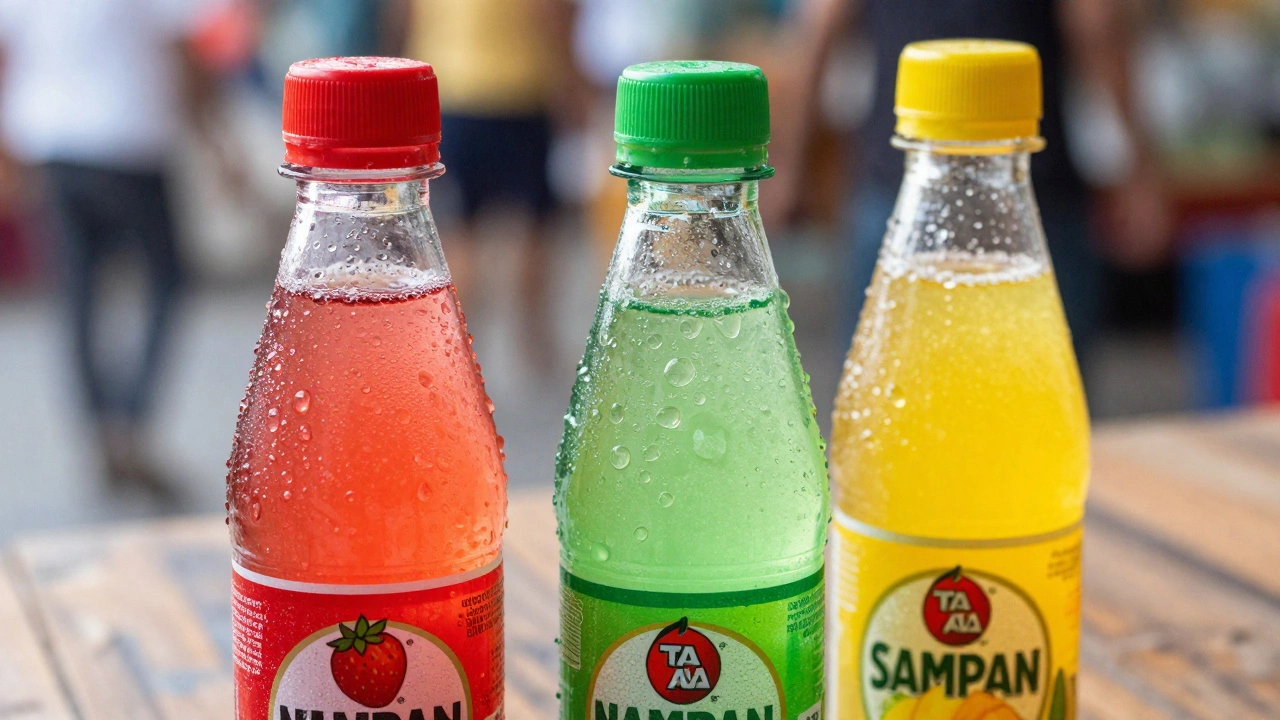
To understand why people ask if Tata means daddy, we first need to look at what the product actually is. Tata Sampan is a popular carbonated soft drink sold in small plastic bottles across India. It’s known for its vibrant colors-red, green, yellow-and its intense sweetness. If you’ve ever tried a local Indian cola or fruit soda from a roadside stall, you’ve likely had Tata Sampan or one of its many clones.
The drink consists of three main ingredients: sugar, water, and artificial flavoring. Unlike Western sodas that might use high-fructose corn syrup or complex blends, Tata Sampan relies on simple cane sugar and strong synthetic flavors like mango, orange, or lime. The carbonation is usually fizzy but not aggressive. It’s designed to be refreshing in extreme heat, which is why you see it everywhere during summer months.
Vendors sell these drinks in tiny 100ml to 200ml bottles. They cost very little, often just a few rupees. This makes them accessible to everyone, from students to laborers. The packaging is iconic: clear plastic with a colored cap matching the flavor inside. Red cap means strawberry or cherry. Green cap means lime or apple. Yellow cap means mango or orange.
Where Did the Name "Tata" Come From?
This is where the mystery starts. People assume "Tata" must mean something profound, like "father" or "daddy." But the reality is much simpler. The name comes from the Tata Group, one of India's largest multinational conglomerates. Founded by Jamsetji Tata in 1868, the company started with textiles and expanded into steel, automobiles, software, and beverages.
In the mid-20th century, Tata entered the beverage market. They produced carbonated drinks under various labels. Over time, "Tata" became synonymous with branded soft drinks in rural and semi-urban India. Even when other companies started making similar products, people still called them "Tata" because it was the most recognizable name. It’s similar to how people call all tissue paper "Kleenex" or all band-aids "Band-Aids" in the West.
So, when you hear "Tata Sampan," you’re hearing two words. "Tata" refers to the brand origin. "Sampan" is a Hindi word meaning "mixed" or "combined." Together, they describe a mixed-flavored soda originally associated with the Tata brand. There is no linguistic connection to "daddy" here. The confusion likely stems from tourists or non-native speakers mishearing the word or guessing based on phonetic similarities.
Why Do People Think It Means Daddy?
Language barriers create funny misunderstandings. In some Indian languages, "Tata" can sound like a term of endearment or a casual way to address an older man. For example, in Bengali, "Tata" is used to say goodbye, similar to "Ta-ta" in British English. Some visitors might have heard vendors calling out "Tata!" as a greeting or farewell and assumed it meant "Daddy."
Another theory involves the visual presentation. Vendors often serve these drinks with a smile, sometimes adding extra ice or a splash of chutney. Customers might feel treated like royalty or children being pampered. This emotional connection could lead someone to jokingly ask, "Is Tata my daddy?" It’s a playful misconception, not a factual one.
Also, consider the global fame of the Tata Group. When foreigners hear "Tata," they think of cars (Tata Nano) or steel. They don’t expect it to be linked to cheap soda. So when they see "Tata" on a bottle next to a picture of a smiling child, their brains try to make sense of it. "Daddy" becomes a convenient guess. It’s a case of cognitive dissonance meeting cultural curiosity.
The Rise of Generic "Tata" Drinks
Here’s the twist: Most "Tata Sampan" you buy today isn’t actually made by the Tata Group anymore. Over the decades, smaller manufacturers copied the formula and packaging. They used similar colors, bottle shapes, and even names. In many states, local brands dominate the market. You might find "Royal Sampan," "City Cola," or "Super Fizz." Yet, customers still call them "Tata."
This phenomenon shows how powerful brand recognition can be. Even if the original company stops producing a product, the name lives on. It becomes a category descriptor. Just like "Xerox" for photocopying, "Tata" now means any cheap, colorful, sugary soda bought from a street vendor.
If you want authentic Tata-branded drinks, you’ll mostly find them in supermarkets or larger stores. On the streets, it’s a free-for-all of local producers. Quality varies wildly. Some are safe and tasty. Others use questionable additives. Always check the seal on the bottle before buying.
How to Enjoy Tata Sampan Like a Local
If you’re visiting India and want to experience this street food staple, here’s how to do it right. First, go during peak hours. Late afternoon is best. The sun is setting, the air is still warm, and vendors are stocking up on fresh ice.
Look for cleanliness. A good vendor will have clean hands, a sanitized counter, and sealed bottles. Avoid places where the syrup looks cloudy or the caps are loose. Taste matters too. Authentic Tata Sampan should hit your tongue with immediate sweetness followed by a sharp citrus or fruity note. It shouldn’t taste metallic or overly chemical.
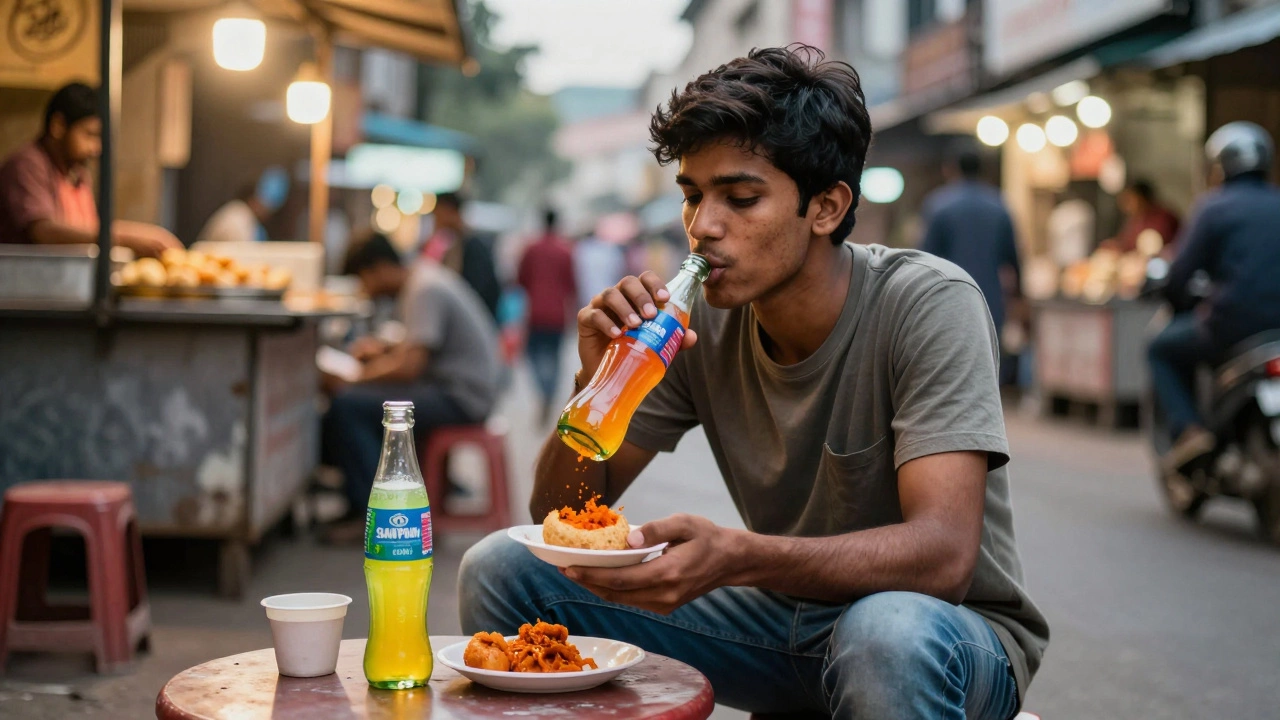
Pair it with spicy food. These drinks are designed to cut through heat. Try one with Pani Puri, crispy hollow shells filled with spiced water and potatoes. Or enjoy it alongside Vada Pav, a spicy potato fritter in a bread bun. The contrast between fiery spice and icy sweet soda is magical. It’s a balance that defines Indian street cuisine.
- Choose wisely: Stick to well-known local brands if possible. Ask locals which ones they trust.
- Check expiration: Bottles should have clear date stamps. Old stock tastes flat and unsafe.
- Don’t overdo it: High sugar content means one bottle is enough. Two might give you a crash later.
- Try variations: Some vendors mix Tata Sampan with milk to make a creamy shake. It’s surprisingly good.
Health Considerations and Sugar Content
Let’s talk about the downside. Tata Sampan is loaded with sugar. A single 200ml bottle can contain 30-40 grams of sugar. That’s nearly the entire daily recommended limit for adults. Regular consumption leads to weight gain, diabetes risk, and dental issues. It’s not a health drink; it’s a treat.
Artificial colors and preservatives are also common. While generally recognized as safe in small amounts, long-term exposure isn’t ideal. Children especially should limit intake. Parents often use these drinks as rewards, which reinforces unhealthy habits.
If you crave the taste but worry about health, look for alternatives. Many shops now offer "Zero Sugar" versions. They use stevia or aspartame instead of cane sugar. The flavor is slightly different, less rich, but much lighter. You can also dilute regular Tata Sampan with sparkling water. It cuts the sweetness while keeping the fizz.
| Brand | Sugar per Bottle (g) | Primary Flavor | Price Range (INR) |
|---|---|---|---|
| Tata Sampan | 35 | Mango/Lime | 5-10 |
| Royal Cola | 40 | Cola | 5-12 |
| Coca-Cola (Local) | 38 | Classic | 20-30 |
| Frooti (Mango Drink) | 45 | Mango | 10-15 |
Note that prices vary by city. Metro areas charge more due to rent and logistics. Rural areas keep costs low. Always carry small change. Vendors rarely have large bills to break.
Cultural Significance of Street Drinks
Beyond taste, Tata Sampan represents community. Buying one connects you to millions of Indians who grew up drinking it. It’s nostalgic. For many, the sound of the bottle opening triggers memories of school breaks, cricket matches, and family gatherings.
Vendors become neighborhood fixtures. You know their names, their schedules, their favorite teams. They remember your usual order. This personal touch is missing in big chain stores. Street food culture thrives on human interaction. The drink is just the medium.
In literature and film, Tata Sampan appears as a symbol of simplicity. Directors use it to show everyday life. Actors sip it while waiting for buses or talking to friends. It grounds scenes in reality. No fancy cocktails, no imported wines. Just plain, honest refreshment.
Does Tata mean daddy in Hindi?
No, "Tata" does not mean daddy in Hindi or any major Indian language. It is derived from the Tata Group, a business conglomerate. The confusion arises from phonetic similarity and cultural misunderstandings.
Is Tata Sampan safe to drink?
Generally yes, if bought from reputable vendors with sealed bottles. However, quality control varies. Check for cloudiness, broken seals, or expired dates. Those with diabetes or sugar sensitivities should avoid it due to high sugar content.
What is the difference between Tata Sampan and Coca-Cola?
Tata Sampan is cheaper, sweeter, and uses artificial fruit flavors. Coca-Cola has a distinct cola taste, lower perceived sweetness, and global branding. Tata Sampan is typically sold in smaller, single-use plastic bottles for immediate consumption.
Can I make Tata Sampan at home?
You can mimic the taste using sugar, water, lemon juice, and food coloring. Add carbonated water for fizz. It won’t match the exact chemical profile but will satisfy the craving for sweet, tangy refreshment.
Why is Tata Sampan so colorful?
Bright colors attract attention and signal flavor. Red suggests berry, green implies lime, yellow indicates mango. Visual appeal helps vendors stand out in crowded markets. It also appeals to children, boosting sales.