Chutney Thickener Selector Tool
Answer three quick questions about your chutney to get a personalized recommendation for the best thickening method.
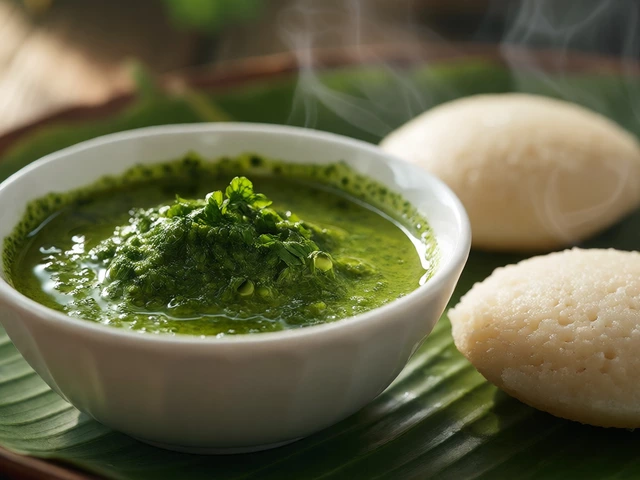
Have you ever poured your freshly blended mint or tamarind chutney onto a plate of samosas, only to watch it slide right off like water? It’s frustrating. You spent time chopping, roasting, and blending, but the texture is all wrong. The solution isn’t just adding more ingredients blindly; it’s understanding what a thickening agent for chutney actually does and which one fits your specific recipe.
A thickening agent is any ingredient that increases the viscosity of a liquid without changing its fundamental flavor profile too drastically. In the context of Indian condiments, this usually means turning a watery puree into a spoonable, clingy sauce that stays put on your food. Whether you are making a quick cilantro dip or a slow-cooked mango relish, knowing how to control thickness is the difference between a good chutney and a great one.
Why Does Your Chutney Need Thickening?
Before grabbing a packet of starch, it helps to understand why your mixture might be thin in the first place. Most fresh chutneys rely on high-water-content vegetables like cucumbers, tomatoes, green chilies, and herbs. When you blend these with even a splash of lemon juice or vinegar, the cellular structure breaks down, releasing free water. This results in a separation where the liquid sits at the bottom and the pulp floats on top.
Thickening serves two main purposes here. First, it creates emulsion stability, keeping the oil (if used) and water bound together so the chutney doesn't look separated and unappetizing. Second, it improves mouthfeel. A thicker chutney coats the palate better, delivering a more intense burst of flavor with every bite rather than washing away instantly. If you are serving this as a table condiment, you want it to have body. If it's for dipping pakoras, it needs to hold its shape slightly when scooped.
The Natural Approach: Reducing and Cooking
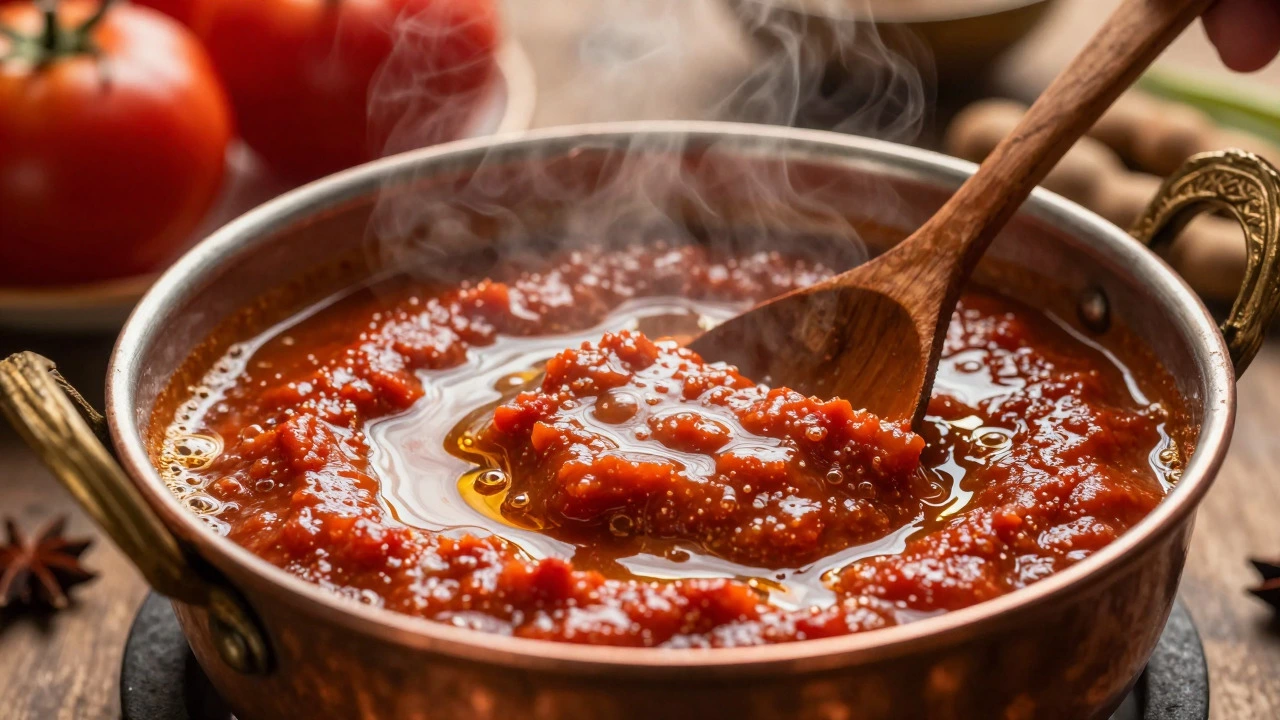
The most traditional method for thickening chutney involves no added agents at all-just heat and time. This technique works best for fruit-based chutneys like mango, tomato, or tamarind, and even some herb-based ones if you don't mind losing the bright raw color.
When you simmer a chutney, water evaporates, leaving behind concentrated solids and pectins. Pectin is a natural fiber found in fruits that acts as a gelling agent. For example, a raw tomato chutney might be very runny, but after cooking it down for 15-20 minutes until the oil begins to separate from the masala, it naturally thickens into a rich paste. This process also caramelizes sugars, deepening the flavor complexity significantly.
If you are working with fresh herb chutneys like coriander or mint, you can still use heat carefully. Sautéing the onions, ginger, and garlic base before blending helps reduce moisture. Alternatively, after blending, you can return the mixture to the pan and cook it on low heat for 5-7 minutes, stirring constantly. Be careful not to overcook delicate herbs, or they will turn brown and lose their fresh aroma. This method is ideal if you plan to store the chutney in the fridge for several days, as cooked chutneys generally have a longer shelf life than raw ones.
Cornstarch Slurry: The Quick Fix
If you need an immediate fix for a chutney that is already blended and too thin, a cornstarch slurry is your best friend. Cornstarch is a pure carbohydrate derived from corn kernels, and it has powerful thickening properties when heated. Unlike flour, it thickens quickly and remains clear, which is crucial for maintaining the vibrant green of a mint chutney or the red of a tomato dip.
To use it correctly, you must create a "slurry." Never add dry cornstarch directly to hot liquid, as it will clump instantly. Instead, mix one teaspoon of cornstarch with one tablespoon of cold water (or coconut milk for a richer texture) in a small bowl until smooth. Stir this mixture into your simmering chutney. Within 30 seconds to a minute, the mixture will bubble and thicken noticeably. Remember, cornstarch-thickened sauces tend to thin out slightly as they cool, so aim for a consistency that looks slightly thinner than your final goal while it's still hot.
This method is particularly useful for large batches served at parties where presentation matters. It provides a glossy finish that looks professional. However, keep in mind that cornstarch can give a slightly gelatinous mouthfeel if overused. Use it sparingly-a little goes a long way.
Xanthan Gum: The Modern Alternative
For those who follow gluten-free diets or prefer modern culinary techniques, xanthan gum is a powerful tool. It is a polysaccharide produced by fermenting sugar with the bacteria Xanthomonas campestris. Just a tiny amount-often less than half a teaspoon for a cup of chutney-can dramatically increase viscosity without any heat required.
Xanthan gum works by creating a network that traps water molecules, preventing them from flowing freely. This makes it excellent for cold chutneys that shouldn't be cooked, such as a raw onion-chili chutney or a yogurt-based raita-style dip. Because it doesn't require heating, you preserve the raw, enzymatic freshness of the ingredients. The downside is that it can sometimes leave a slight aftertaste if used in excess, and it may cause the chutney to feel slightly slimy if not blended thoroughly. Always sprinkle it slowly into a running blender to ensure even distribution.
Using Ingredients Already in Your Pantry
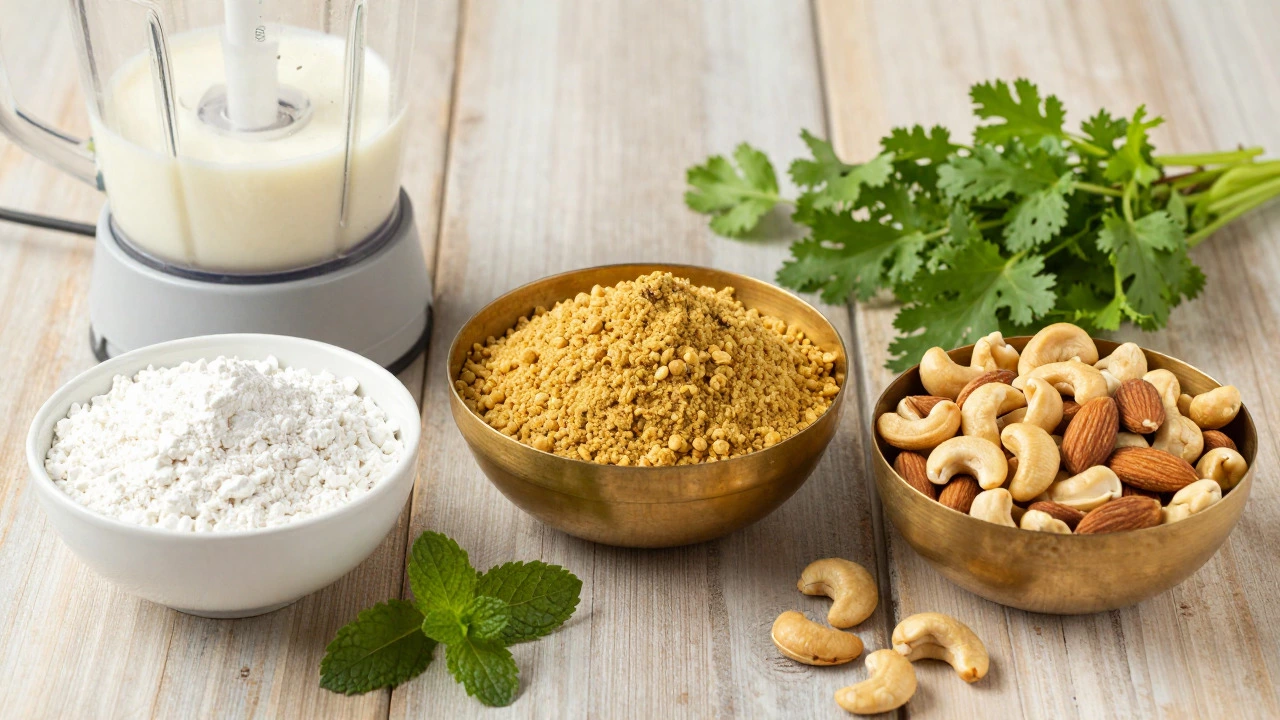
Sometimes the best thickener is an ingredient you likely already have, which adds flavor while fixing texture. Roasted gram flour (besan) is a staple in Indian kitchens. When toasted lightly in a dry pan until golden, besan absorbs moisture effectively. You can stir a tablespoon of roasted besan into your chutney towards the end of cooking. It adds a nutty depth that complements tangy flavors like tamarind or lime perfectly.
Another option is grated vegetables. Adding finely grated cauliflower or potato to a chutney before blending introduces starches that break down and thicken the mixture naturally. This is common in certain regional variations of chutney where bulk and substance are desired. Similarly, nuts like cashews or almonds, when soaked and ground into a fine paste, provide creaminess and body. A cashew paste is often used in South Indian chutneys to balance the sharpness of green chilies while providing a luxurious, thick texture.
| Agent | Heat Required? | Flavor Impact | Best For |
|---|---|---|---|
| Cornstarch | Yes | Neutral | Glossy, clear chutneys; large batches |
| Xanthan Gum | No | Mild earthy note if overused | Cold dips, gluten-free needs |
| Roasted Gram Flour | Yes (for toasting) | Nutty, savory | Tangy tamarind or tomato chutneys |
| Reduction/Cooking | Yes | Concentrated, caramelized | Fruit-based and long-storage chutneys |
| Cashew Paste | No (if soaked) | Creamy, rich | South Indian style chutneys |
Common Mistakes to Avoid
One frequent error is adding too much liquid initially. Many recipes call for water to help the blender blades move. Try to minimize this. Use ice cubes instead of water if you want a colder temperature, or use a splash of yogurt or coconut milk, which contribute fat and solids that aid in emulsification. Fat molecules help coat the solid particles, preventing them from settling and creating a smoother, thicker suspension.
Another mistake is ignoring the power of acid. Lemon juice and vinegar not only add brightness but also affect the setting of pectins in fruit chutneys. If you are making a mango or apple chutney, adding the acid early in the cooking process can help the natural pectins activate, leading to a firmer set once cooled. Conversely, adding too much salt too early can draw out more water from vegetables via osmosis, making your chutney thinner. Season at the end if possible.
Storage and Texture Changes
It is important to note that chutney texture changes over time. Fresh herb chutneys will continue to release water as they sit in the refrigerator, a process known as syneresis. To counteract this, you can stir in a teaspoon of olive oil or sesame oil before storing. The oil forms a barrier and helps re-emulsify the mixture when you shake the jar later. Cooked chutneys, especially those thickened with cornstarch or reduced naturally, tend to firm up further as they cool due to starch retrogradation. If your stored chutney seems too thick, simply warm it gently or whisk in a teaspoon of water to loosen it back up.
Understanding these dynamics allows you to troubleshoot almost any chutney issue. Whether you prefer the clean taste of a reduction, the convenience of cornstarch, or the richness of nut pastes, choosing the right thickening agent ensures your condiment performs exactly as intended-clinging to your snacks and enhancing your meal rather than pooling at the bottom of the plate.
Can I use flour to thicken chutney?
Yes, you can use all-purpose flour, but it must be cooked thoroughly to remove the raw flour taste. Toast the flour in a pan until light brown, then mix it with cold water to make a slurry before adding it to the simmering chutney. However, flour can make the chutney cloudy and opaque, whereas cornstarch keeps it clearer. Roasted gram flour (besan) is often preferred in Indian cooking because it adds a complementary nutty flavor.
Why did my cornstarch chutney become watery again?
Cornstarch loses its thickening power if it is overheated or if acidic ingredients like lemon juice or vinegar are added before the starch has fully gelatinized. Acid breaks down the starch chains. To prevent this, ensure the chutney has reached a rolling boil after adding the cornstarch slurry to activate it, and add acidic components either before thickening or very carefully afterwards. Additionally, cornstarch-thickened sauces naturally thin out slightly as they cool down.
Is xanthan gum safe for chutneys?
Yes, xanthan gum is generally recognized as safe (GRAS) by food safety authorities worldwide. It is widely used in gluten-free baking and commercial sauces. For home use, just remember that a little goes a long way. Start with 1/8th of a teaspoon per cup of liquid. Overusing it can result in a slimy texture and a distinct chemical aftertaste that might overpower delicate herb flavors.
How do I thicken a chutney without cooking it?
If you want to keep the raw, fresh flavor of your chutney, avoid heat-based thickeners like cornstarch or reduction. Instead, use mechanical or ingredient-based methods. Blend in soaked cashews or almonds to create a creamy base. Add grated cauliflower or potato, which absorb liquid. You can also use xanthan gum or guar gum, which thicken without heat. Finally, straining the chutney through a fine-mesh sieve to remove excess water is an effective physical method.
Does yogurt work as a thickener for chutney?
Yogurt adds creaminess and body, but it is not a strong thickener in the same way starches are. In fact, if heated too vigorously, yogurt can curdle and separate, making the texture grainy rather than smooth. It is best used in cold chutneys or raitas. To maximize its thickening potential, use Greek yogurt or strain regular yogurt to remove whey (making hung curd). This concentrates the solids, giving the chutney a denser, richer consistency.