Pickle Relish vs Chutney: What’s the Difference and Why It Matters
When you think of chutney, a spicy, tangy condiment from South Asia made with fruits, vegetables, and spices, often fresh or lightly cooked. Also known as chatni, it’s a daily companion to dosas, idlis, and parathas across India. Many people assume it’s just like pickle relish, a chopped, vinegar-based condiment from Western kitchens, usually made with cucumbers, onions, and sweet or sour flavors. Also known as sweet relish, it’s the green topping on hot dogs and burgers in the U.S.. But they’re not interchangeable. Chutney is alive with fresh herbs, roasted spices, and fermented notes. Pickle relish is preserved, crunchy, and designed to last months. One is made in minutes for today’s meal. The other is stored for months to stretch flavor through winter.
Indian chutney doesn’t rely on vinegar alone—it uses tamarind, lime, jaggery, or even yogurt for acidity. Think mint chutney with raw green chilies and cilantro, or coconut chutney ground with roasted lentils. It’s served fresh, often within hours of making. Pickle relish? It’s boiled, bottled, and shelf-stable. Its texture is uniform, its flavor predictable. Chutney changes with the season—tomato chutney in summer, mango chutney in monsoon. Relish? It tastes the same year-round because it’s made to be identical every time.
The confusion comes from how both are used: they’re spooned onto food, they’re tangy, they’re called "sauces." But chutney enhances the meal—it’s part of the dish’s soul. Relish is a garnish—it adds crunch and a quick hit of sour. You’d never use sweet pickle relish on a dosa. And you’d never put store-bought relish in a biryani like you would with a homemade tamarind chutney.
That’s why Indian kitchens don’t have a "relish jar." They have chutney bowls—small, daily, and varied. Some are spicy, some sweet, some creamy. Some are eaten right away. Others are sun-dried or pickled for longer use. But even the pickled versions—like mango pickle—are different from relish. They’re whole or chunky, spiced with mustard seeds and fenugreek, and meant to be eaten in tiny spoonfuls to wake up the palate.
When you cook Indian food, knowing the difference matters. Using the wrong one changes the whole dish. A recipe asking for "chutney" isn’t asking for sweet relish. And if you’re trying to recreate a street food snack from Mumbai or Chennai, you need the real thing—fresh, spicy, and alive with flavor.
Below, you’ll find real posts from home cooks who’ve tested these differences. They’ve made chutneys from leftover mangoes, figured out why their relish turned out bland, and discovered why Indian meals don’t need ketchup when they have tamarind chutney. You’ll see how one spoonful of the right condiment can turn an ordinary meal into something unforgettable.
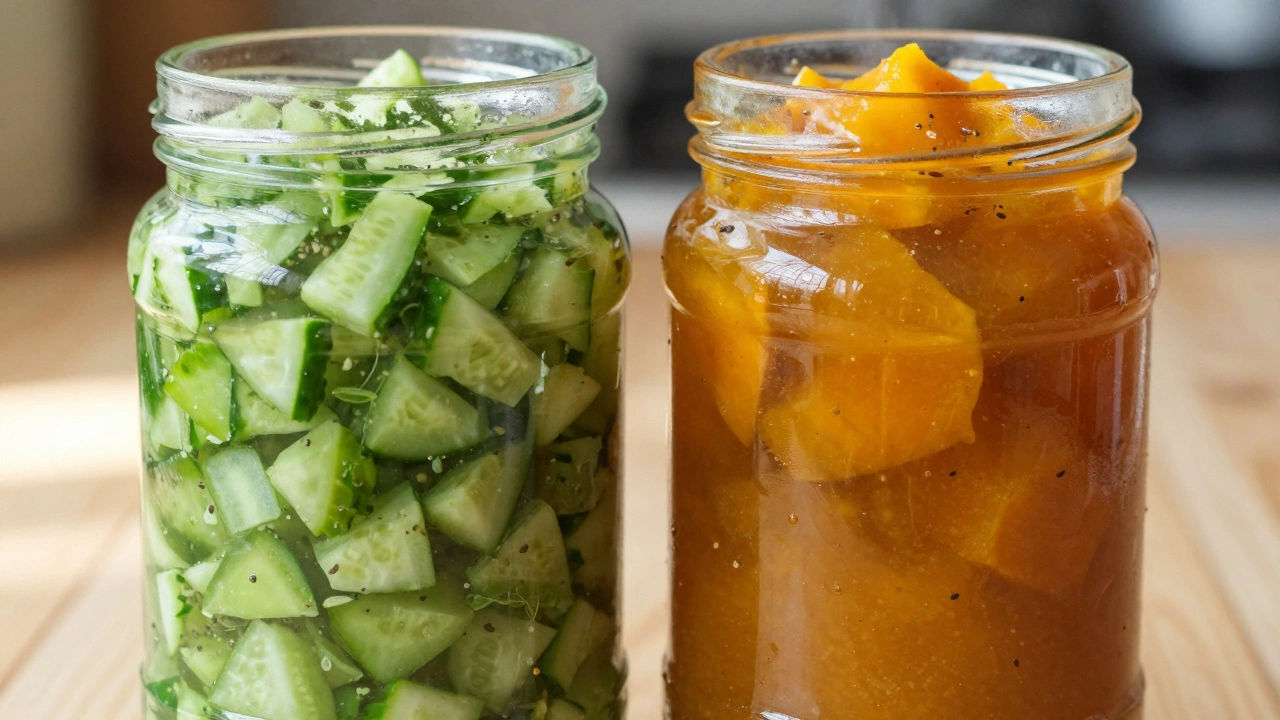
Is Pickle Relish a Chutney? The Real Difference Between Two Condiments
Pickle relish and chutney look similar but are worlds apart. One is a preserved condiment; the other is a living blend of spices, herbs, and fruit. Learn the real difference and why they shouldn’t be swapped.
Read More