Nutritional Value of Indian Cuisine: What Makes It So Healthy?
When you think about the nutritional value of Indian cuisine, a diverse, spice-driven food system built on legumes, whole grains, and fermented foods. Also known as traditional Indian diet, it’s not just about flavor—it’s one of the most balanced eating patterns on the planet. Unlike fad diets that cut out entire food groups, Indian meals naturally combine carbs, protein, fiber, and healthy fats in every plate. Think of a simple bowl of dal, a lentil stew packed with plant-based protein and iron. Also known as lentil curry, it’s eaten daily across India because it’s cheap, filling, and keeps blood sugar steady. This isn’t coincidence. It’s centuries of wisdom built into everyday cooking.
What really sets Indian cuisine apart is how it uses food as medicine. Fermented foods like idli, steamed rice and lentil cakes that boost gut health with live probiotics. Also known as South Indian breakfast, they’re eaten with coconut chutney and sambar—both low in sugar and high in fiber. Then there’s jaggery, a minimally processed cane sugar that retains minerals like iron and magnesium. Also known as gur, it’s the sweetener in traditional desserts, not refined white sugar. Even paneer, the fresh cheese, delivers high-quality protein without the additives found in store-bought versions. And let’s not forget spices—turmeric for inflammation, cumin for digestion, hing for gut balance. These aren’t just flavor boosters; they’re active health ingredients.
The nutritional value of Indian cuisine doesn’t come from supplements or superfoods. It comes from simple, whole ingredients cooked in ways that preserve their benefits. You won’t find many Indian households eating processed snacks or sugary cereals for breakfast. Instead, they start the day with poha, upma, or dosa—low-glycemic, fiber-rich meals that give steady energy. Even sweets like ragi laddus or date halwa use natural sweeteners and whole grains. This isn’t trendy nutrition. It’s how people have eaten for generations.
What you’ll find in the posts below isn’t just recipes. It’s proof. From the protein content of different dals to why idli is healthier than toast, from how to make paneer without chemicals to which Indian sweets won’t spike your blood sugar—you’ll see the science behind the plate. No fluff. No gimmicks. Just real food, real numbers, and real results.
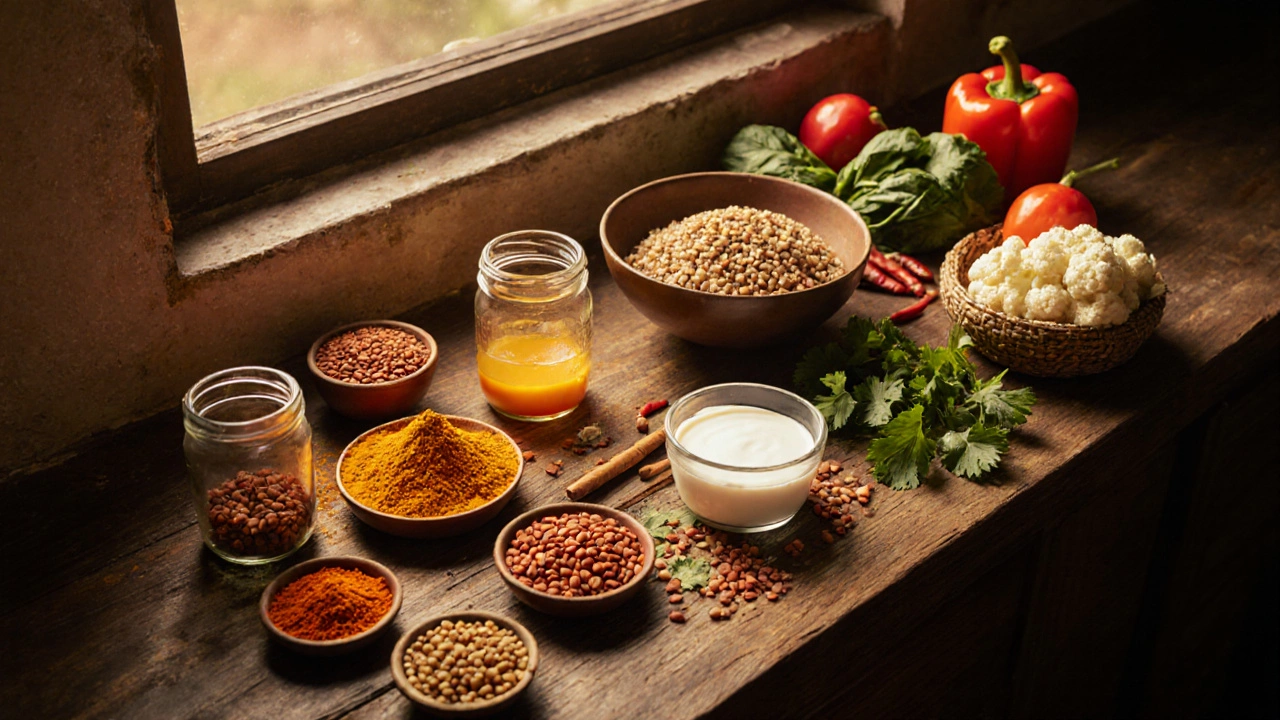
Is Indian Food Healthy? A Deep Dive into Nutrition and Easy Recipes
Explore the real health impact of Indian cuisine, learn nutrient‑rich ingredients, cooking hacks, and quick low‑calorie recipes to enjoy Indian flavors without the guilt.
Read More