Indian Vegetarian Regional Dish Finder
Select a region to see dishes
Once you select a region, you'll see popular vegetarian dishes from that area.
Vegan Tip
Most traditional Indian vegetarian dishes include dairy. To order vegan, simply ask for "no ghee, no yogurt" (also known as "vegan" in many cities). Many South Indian dishes like sambar and dosa are naturally vegan.
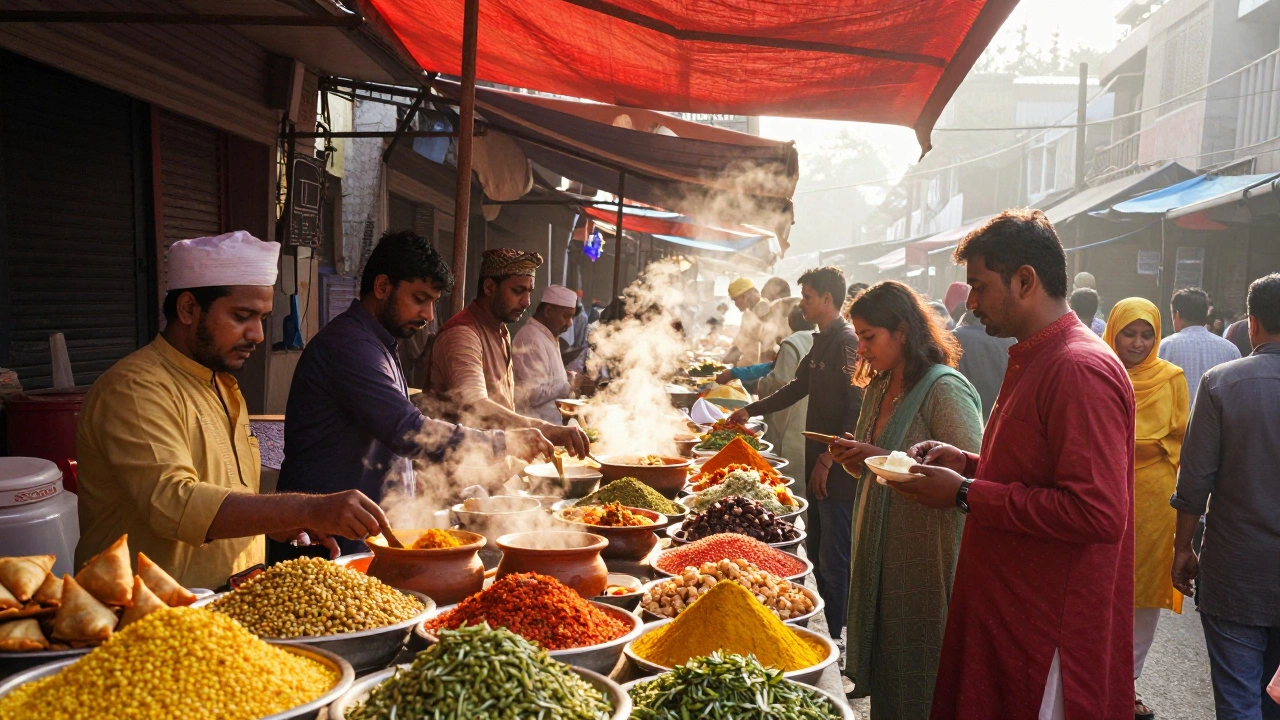
If you’re a vegetarian, you’ve probably heard the buzz: India is the place where plant-based eating isn’t just an option-it’s the norm. And it’s not just about tofu salads or quinoa bowls. In India, vegetarianism isn’t a trend. It’s woven into daily life, religious tradition, and street-corner food stalls alike. Walk through any market in Delhi, Mumbai, or Varanasi, and you’ll find dozens of dishes made without meat, fish, or eggs-many of them for centuries. This isn’t a niche diet. It’s the backbone of a food culture that feeds over 400 million vegetarians, more than the entire population of the United States.
Why India Stands Alone
There are vegetarian countries. There are countries with lots of vegetarian options. But India is the only one where more than a third of the population chooses vegetarianism by culture, not convenience. A 2021 survey by the National Family Health Survey found that 38% of Indians identify as vegetarian. That’s not a small group. That’s nearly 500 million people. And it’s not just Hindus-Jains, many Sikhs, and large portions of the Buddhist and Parsi communities also avoid meat. Even in cities where meat is widely available, vegetarian meals dominate restaurant menus and home kitchens.
Compare that to Germany, where vegetarianism is growing fast but still only covers about 10% of the population. Or the U.S., where around 5% of people are vegetarian. India doesn’t just have more vegetarians-it has more variety. You won’t find a single vegan burger chain that offers as many distinct dishes as a single street vendor in Jaipur.
The Food That Makes It Real
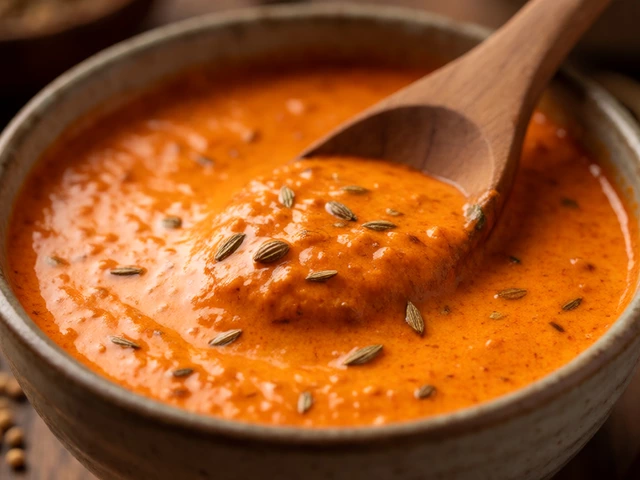
When people think of Indian food, they often imagine creamy curries with chicken or lamb. But the real heart of Indian vegetarian cuisine is in the spices, legumes, grains, and vegetables that have been perfected over thousands of years. Take dal-lentils cooked slowly with turmeric, cumin, and garlic. It’s not a side dish. It’s a daily staple, served with rice or roti. In South India, you’ll find sambar, a tangy lentil stew with tamarind and drumstick vegetables. In the North, chana masala-spiced chickpeas cooked with onions, tomatoes, and coriander-fills bowls at every dhaba.
Paneer, the fresh Indian cheese, is another game-changer. Unlike Western cheeses, paneer doesn’t melt. It holds its shape, making it perfect for frying, grilling, or simmering in sauces. Dishes like paneer tikka masala or palak paneer (spinach with cheese) are rich, satisfying, and completely plant-based. And they’re not rare. You’ll find them on menus from roadside stalls to five-star hotels.
Then there’s the snacks. Samosas filled with spiced potatoes and peas. Pakoras-onion, spinach, or cauliflower battered in chickpea flour and fried until crisp. Chaat-a mix of crispy fried dough, yogurt, tamarind chutney, and spices. These aren’t occasional treats. They’re breakfast, lunch, and dinner for millions. And they’re all naturally vegan unless you add yogurt or ghee.
It’s Not Just Food-It’s a System
What makes India unique isn’t just the dishes. It’s the infrastructure. Restaurants don’t need to label themselves as vegetarian. They’re assumed to be-unless they say otherwise. In many cities, you’ll find entire streets dedicated to vegetarian food. In Mumbai’s Girgaon, there’s a stretch of over 50 vegetarian-only eateries. In Varanasi, you won’t find a single meat vendor on the main ghats. Even hotels in tourist areas often have separate vegetarian kitchens to avoid cross-contamination.
And the ingredients? They’re fresh, local, and affordable. Markets overflow with seasonal vegetables-bitter gourd, eggplant, okra, yam, and jackfruit. Spices like cumin, coriander, fenugreek, and asafoetida (hing) are used not just for flavor, but for digestion and balance. You won’t need to search for specialty stores. Everything you need is right there, sold by the kilo.
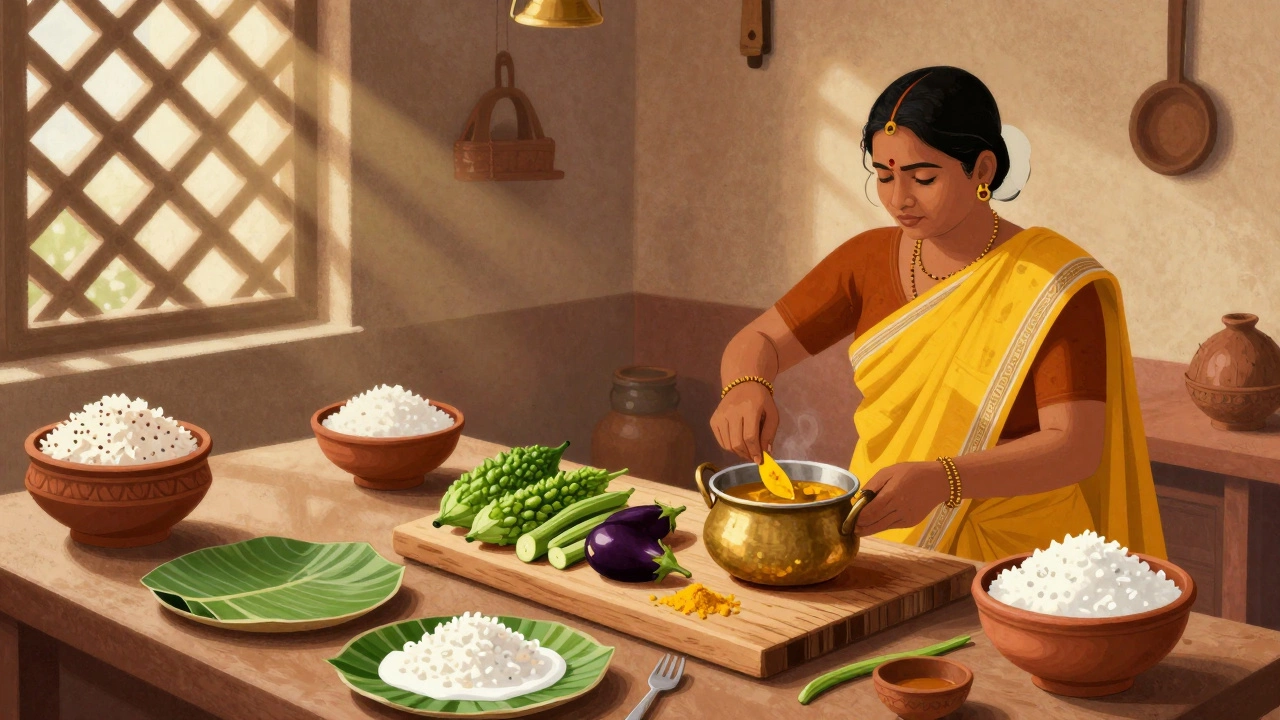
What About Dairy? Isn’t That a Problem?
Yes, most traditional Indian vegetarian food includes dairy-ghee, yogurt, milk, paneer. But here’s the thing: you don’t have to eat it. India’s vegetarianism is rooted in non-violence toward animals, not veganism. That means dairy is acceptable, but not mandatory. In many homes, especially in South India, meals are made without dairy altogether. Coconut milk replaces cream in curries. Cashew paste thickens sauces. And plant-based oils like mustard and sesame are standard.
Want a fully vegan meal? Ask for “no ghee, no yogurt”. In cities like Chennai or Bengaluru, servers understand. In smaller towns, they might need a little explanation-but they’ll adapt. Many street vendors even keep separate pots for vegan cooking. It’s not a hassle. It’s normal.
Travelers’ Real Experiences
One traveler from Australia told me she ate vegetarian food every day for six months in Rajasthan without once seeing meat on her plate. Another from Canada said he went to a small village in Odisha and was served seven different lentil dishes over three days-all made with ingredients grown within five miles of the house.
Even in places where meat is common, like Punjab, vegetarian options are everywhere. You’ll find makki di roti with sarson ka saag (corn flatbread with mustard greens), or aloo gobi (potato and cauliflower curry) at every wedding and festival. In fact, many religious ceremonies require vegetarian food by tradition. That means even at large events, the vegetarian table is the biggest one.
It’s Not Perfect-But It’s the Closest
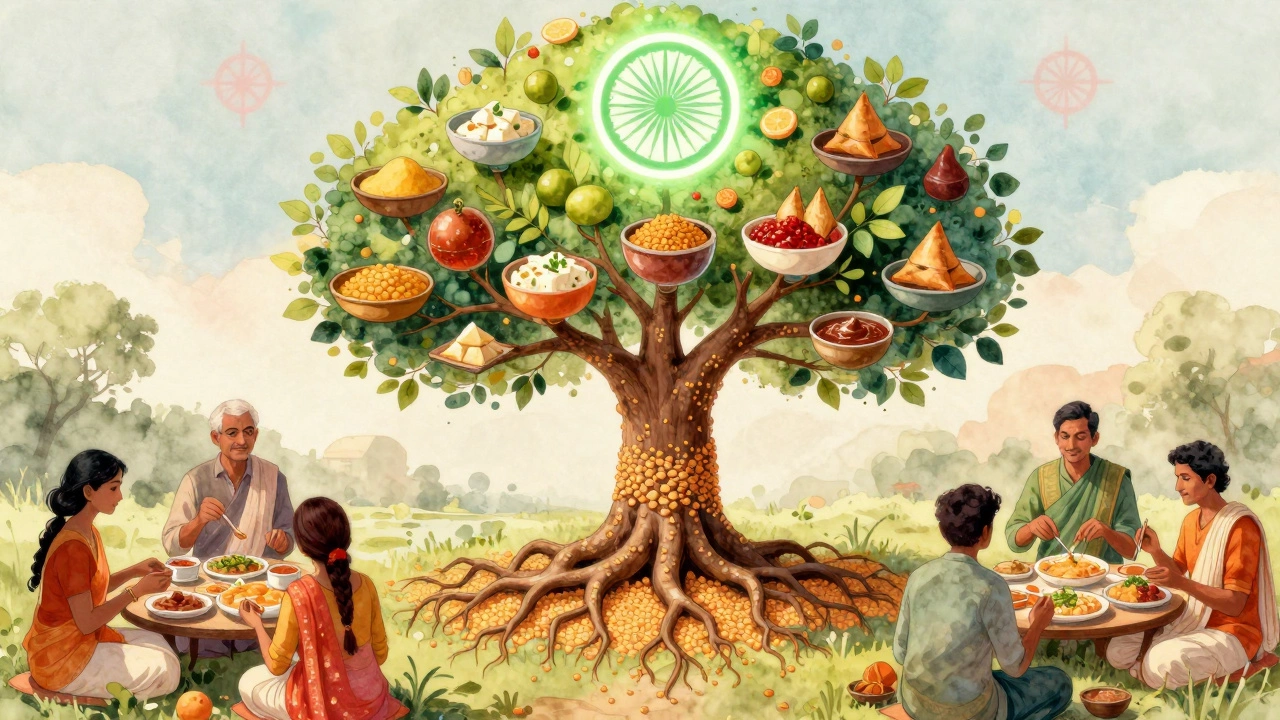
Is India flawless for vegetarians? No. In some areas, especially near airports or tourist hotspots, you’ll find fake vegetarian labels-dishes with hidden meat stock or gelatin. But these are exceptions, not the rule. Most places take pride in their vegetarian identity. And if you’re unsure, look for the green sign. In India, a green circle means vegetarian. Red means non-vegetarian. It’s standardized across restaurants, trains, and even airline meals.
And unlike other countries where vegetarianism is trendy, in India, it’s not a choice you make to be healthy or ethical. It’s simply how life works. You don’t have to convince anyone. You don’t have to explain yourself. You just eat.
What You Can’t Find Elsewhere
Try finding a country where:
- There are over 200 types of lentils and legumes used in everyday cooking
- Vegetarian snacks are sold on every corner, 24 hours a day
- Street food vendors have been making the same dish for three generations
- There are entire festivals built around plant-based food
- Vegetarianism is taught in schools as part of cultural identity
Nowhere else on Earth does this exist at this scale. Japan has shojin ryori. Thailand has Buddhist vegetarian days. But neither has the daily, widespread, deeply rooted vegetarian food culture that India does.
Final Thought: It’s Not About Being Perfect-It’s About Being Welcome
Being a vegetarian in India doesn’t mean you’re special. It means you’re normal. You don’t need to ask for substitutions. You don’t need to carry your own snacks. You don’t need to fear hidden ingredients. You just walk in, point, and eat. And that’s rare.
If you’re looking for a place where vegetarian food isn’t an afterthought-it’s the main event-India is the only answer. Not because it’s the most vegan-friendly. But because it’s the only place where vegetarianism isn’t a choice. It’s the default.
Is India the only country where most people are vegetarian?
Yes. India is the only country where over a third of the population-nearly 500 million people-identify as vegetarian. No other country comes close in terms of both scale and cultural integration of vegetarianism into daily life.
Are all Indian dishes vegetarian?
No. Many popular dishes like butter chicken or biryani contain meat. But in most regions, especially in the south and west, vegetarian meals dominate menus. Even in meat-eating households, vegetarian dishes are served daily. You’ll always find options.
Can vegans eat well in India?
Absolutely. Many traditional Indian dishes are naturally vegan-dal, chana masala, aloo gobi, and rice-based meals. Just ask for no ghee, no yogurt, and no paneer. In cities like Bengaluru or Mumbai, vegan options are clearly marked. Even in smaller towns, cooks are used to adapting meals.
What’s the easiest Indian vegetarian dish to try first?
Start with dal tadka-lentils tempered with cumin, garlic, and dried red chilies. It’s simple, nutritious, and served everywhere. Pair it with basmati rice and a side of cucumber raita (ask for no yogurt if vegan). It’s the perfect introduction to Indian flavors.
Do Indian restaurants outside India serve authentic vegetarian food?
Many don’t. Outside India, Indian restaurants often adapt for Western tastes-adding cream, butter, or cheese to make dishes richer. To get authentic vegetarian food, look for restaurants run by South Indian or Jain communities. They’re more likely to stick to traditional, dairy-free, or minimally processed recipes.