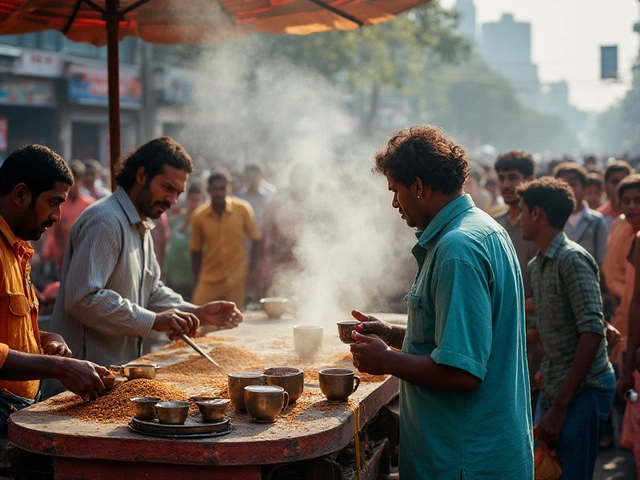
Dosa Batter: How to Make, Store, and Use the Perfect South Indian Fermented Batter
When you think of a perfect dosa batter, a fermented mix of rice and lentils used to make crispy South Indian pancakes. Also known as idli dosa batter, it’s the foundation of one of India’s most loved breakfasts—light, tangy, and packed with natural probiotics. This isn’t just batter. It’s a living mixture that changes over time, thanks to wild yeast and lactic acid bacteria that turn simple ingredients into something magical.
What makes dosa batter different from regular batter? It’s all in the fermentation. Unlike quick-rise baking mixes, dosa batter needs time—usually 8 to 12 hours in warm weather, sometimes longer in winter. The right batter rises gently, smells slightly sour like yogurt, and bubbles when you stir it. That’s the sign it’s ready. If it doesn’t, your rice-to-lentil ratio might be off. Most recipes use 3 parts rice to 1 part urad dal, but some add fenugreek seeds for extra fluffiness. You don’t need fancy tools—just a blender, a warm spot, and patience.
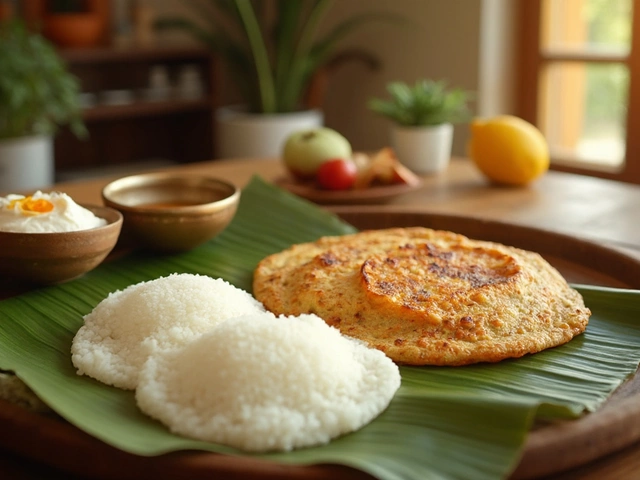
Once you’ve mastered the basics, you’ll start noticing how dosa batter connects to other Indian staples. The same batter can become idli, steamed rice-lentil cakes that are soft, steamed, and perfect for coconut chutney. Or you can turn it into pancake-style dosas, thin, crisp crepes cooked on a hot griddle. Some even use leftover batter to make uttapam or pesarattu. It’s versatile because fermentation unlocks nutrients and makes digestion easier—something traditional cooks have known for centuries.
Storing dosa batter is simple. Keep it in a glass or food-safe plastic container, cover it loosely, and refrigerate. It lasts up to a week. If it gets too sour, just add a pinch of salt and a splash of water. Don’t throw it out if it separates—just stir it back together. Many home cooks in South India make a big batch on weekends and use it all week. That’s the real secret: consistency over perfection.
You’ll find plenty of tips in the posts below—how to fix runny batter, why your dosas stick to the pan, what temperature kills fermentation, and how to make it vegan without compromising texture. Whether you’re trying to recreate a taste from childhood or cooking for the first time, the right batter makes all the difference. No need for store-bought mixes. Real dosa batter starts with rice, lentils, water, and time. And once you get it right, you’ll never go back.
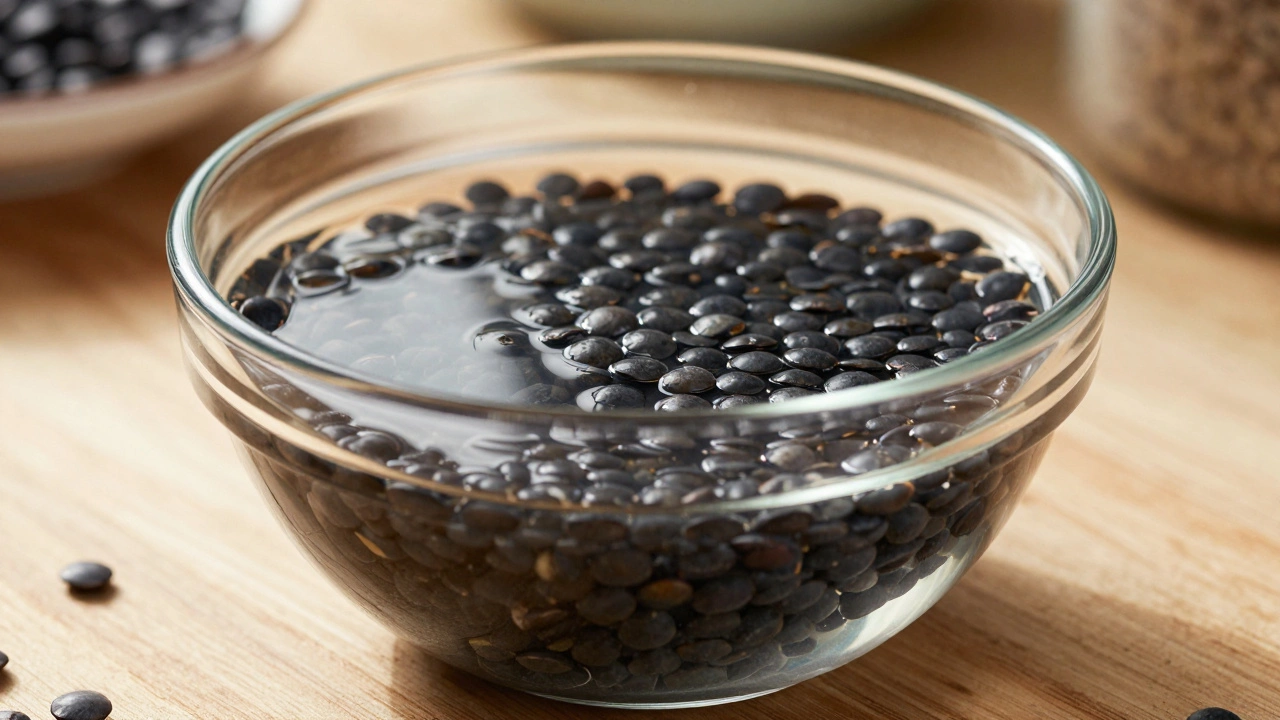
How Many Hours to Soak Urad Dal for Dosa? The Ultimate Guide
Learn the exact soaking time for urad dal to make perfect dosa batter. Discover why 4-6 hours matters for fermentation, texture, and crispiness.
Read More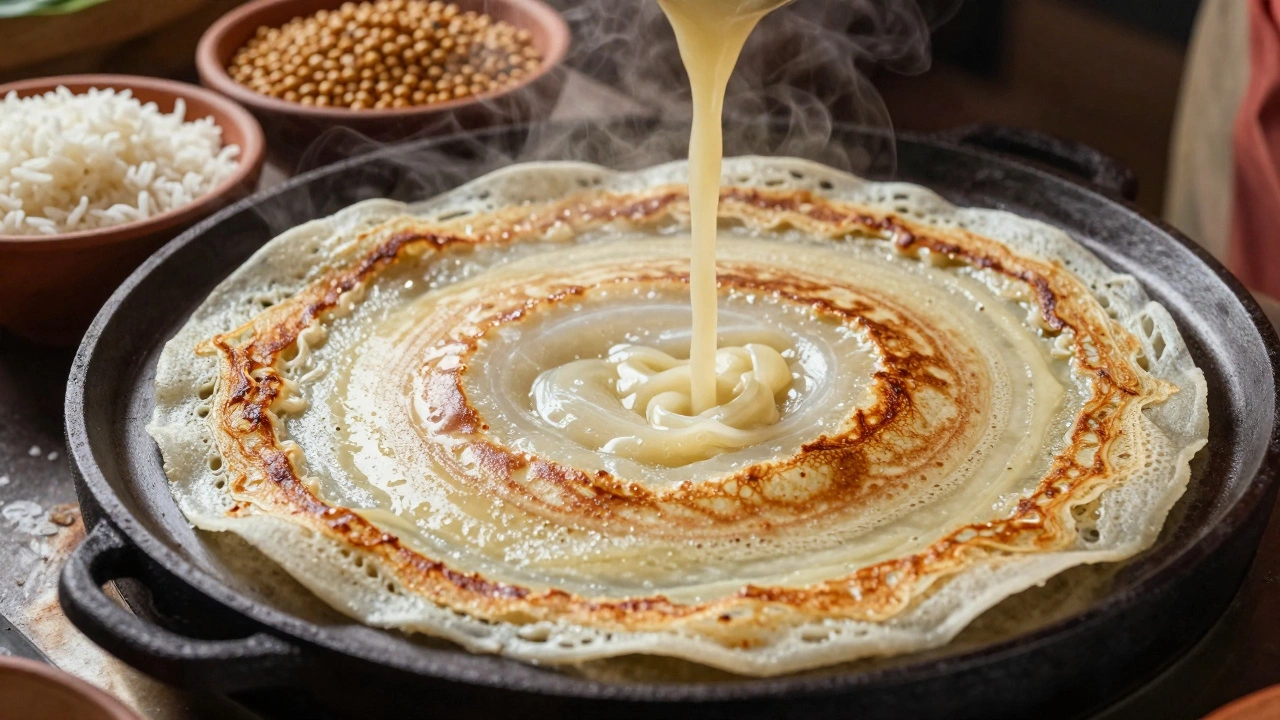
Why Do We Add Rice in Dosa Batter? The Science Behind the Perfect Crispy Dosa
Rice in dosa batter isn't just tradition-it's science. It creates crispness, controls fermentation, and gives dosa its signature texture. Learn why skipping rice ruins dosa and how to get it right every time.
Read More
Is Dosa Healthier or Rice? Real Talk for Your Plate
When you’re torn between dosa and rice for your next meal, the choice isn’t just about taste. This article compares dosa and plain rice from a health and nutrition angle, unpacking carbs, proteins, and even gut benefits. You’ll get to know what actually happens when you swap out rice for dosa or vice versa. We’ll also dive into why dosa batter matters and what to tweak for better health. Expect real answers and a few surprises if you thought one was the clear winner.
Read More
Baking Soda in Dosa Batter: The Simple Science Behind Softer, Fluffier Dosas
Ever wondered why some dosa batters turn out super soft and others fall flat? This article unpacks how baking soda works a little magic in dosa batter, making the texture lighter and the dosas crispier. From the science to everyday kitchen tips, you'll find practical answers on getting the perfect dosa. Get ready to learn what makes your favorite South Indian breakfast so addictive. No need for complicated tricks—just a pinch of baking soda is enough to change the game.
Read More
How Long Does Urad Dal Need to Soak for Perfect Dosa Batter?
Soaking urad dal is the first big step to getting your dosa batter just right. Timing matters—too little and the dal stays hard, too much and the batter turns sour. This article breaks down the ideal soaking time, tests what really works, and gives practical tips that save you from rookie mistakes. You'll also spot ways to tweak soaking to fit tight schedules. Every useful detail you need for light, crispy dosas—no confusing jargon.
Read More
Why Fenugreek is Added to Dosa Batter
Fenugreek plays a crucial role in dosa batter by enhancing fermentation and offering nutritional benefits. It adds a unique flavor and helps the batter rise, resulting in crispy, fluffy dosas. This article explores the science behind fenugreek's effects and offers practical tips for its use in dosa preparation.
Read More
Can I Make Dosa if Batter Is Not Fermented?
Think you can't make dosa without fermented batter? Think again! While fermentation adds a unique flavor and a fluffy texture, there are quick hacks for when time is not on your side. Dive into methods that help you make delicious dosas using unfermented batter. Learn interesting facts, tips, and steps to adapt your batter with ease. Discover the joys of flexibility in Indian cooking.
Read More
Why Dosa Batter Turns Sour: A Closer Look
Ever wondered why your dosa batter becomes sour? Dive into the science behind its fermentation process and discover tips to control the sourness. Understand how temperature, timing, and ingredients play a role. Learn how to adjust your methods to achieve the perfect balance for your dosa. With these insights, whipping up a batch of delicious and balanced dosas becomes straightforward.
Read More
Perfect Fermentation Time for Dosa Batter
Dosa batter fermentation is key to making those crispy dosas we all love. It usually takes about 8 to 12 hours, but factors like climate and ingredient freshness can impact this. In colder climates, the process might take longer, while a warm, humid environment speeds it up. This piece delves into tips for achieving the perfect fermentation, troubleshooting common issues, and understanding how fermentation affects dosa taste and texture.
Read More
Optimal Urad Dal and Rice Ratio for Perfect Dosa Batter
Crafting the perfect dosa is an art, and understanding the ideal ratio of urad dal to rice is crucial for achieving that crispy, golden exterior with a soft interior. This article delves into the specifics of dosa batter preparation, offering detailed insights into the commonly recommended ratios. Additionally, it provides practical tips and interesting facts that will elevate your dosa-making skills to the next level. Whether you are a seasoned cook or a beginner, this guide will be an invaluable resource in your culinary journey.
Read More