Dosa Fermentation Simulator Interactive Tool
Ever wondered why your dosa turns out crisp and golden while your neighbor’s is soft and pale? The secret often lies in the batter. One common question that pops up in kitchens across India is whether adding curd to dosa batter changes the game. It does-and significantly. Curd, or yogurt, isn’t just a flavor enhancer; it’s a biological catalyst that alters the structure, taste, and final texture of your dosa. Let’s break down exactly what happens at the molecular level and how you can use this knowledge to perfect your breakfast.
The Science of Fermentation: Why Curd Matters
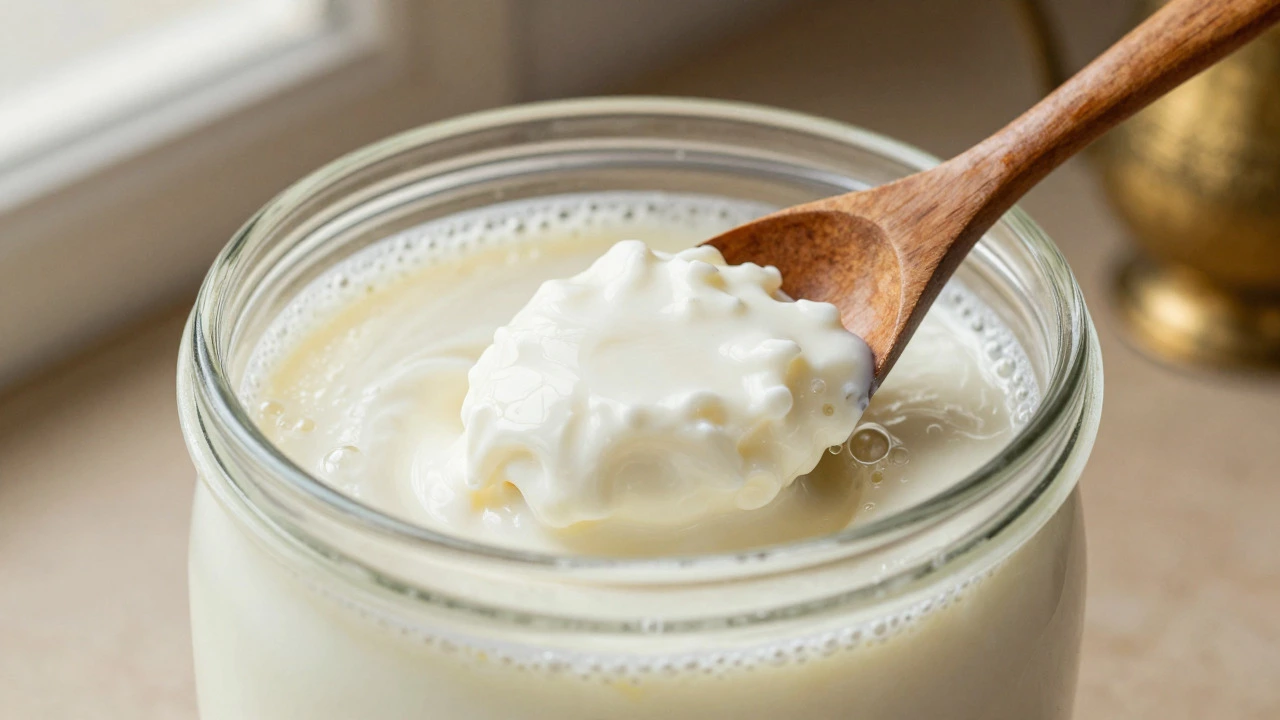
Dosa batter relies on a symbiotic relationship between two main ingredients: rice and urad dal (black gram). When soaked and ground, these grains release starches and proteins. However, they don’t create the fluffy, airy structure needed for a good dosa on their own. That job belongs to natural fermentation. When you add curd to the batter, you are introducing billions of live Lactobacillus bacteria. These microbes consume the sugars left in the batter and produce lactic acid and carbon dioxide gas. This process lowers the pH of the batter, making it tangy, and creates tiny air bubbles that expand during cooking. Without sufficient acidity, the gluten-like network in the batter remains tight, resulting in a dense, flat crepe. With curd, the acidity weakens the protein bonds just enough to allow those air pockets to form, giving you the signature spongy interior and crispy exterior.
How Curd Changes Texture and Crispness
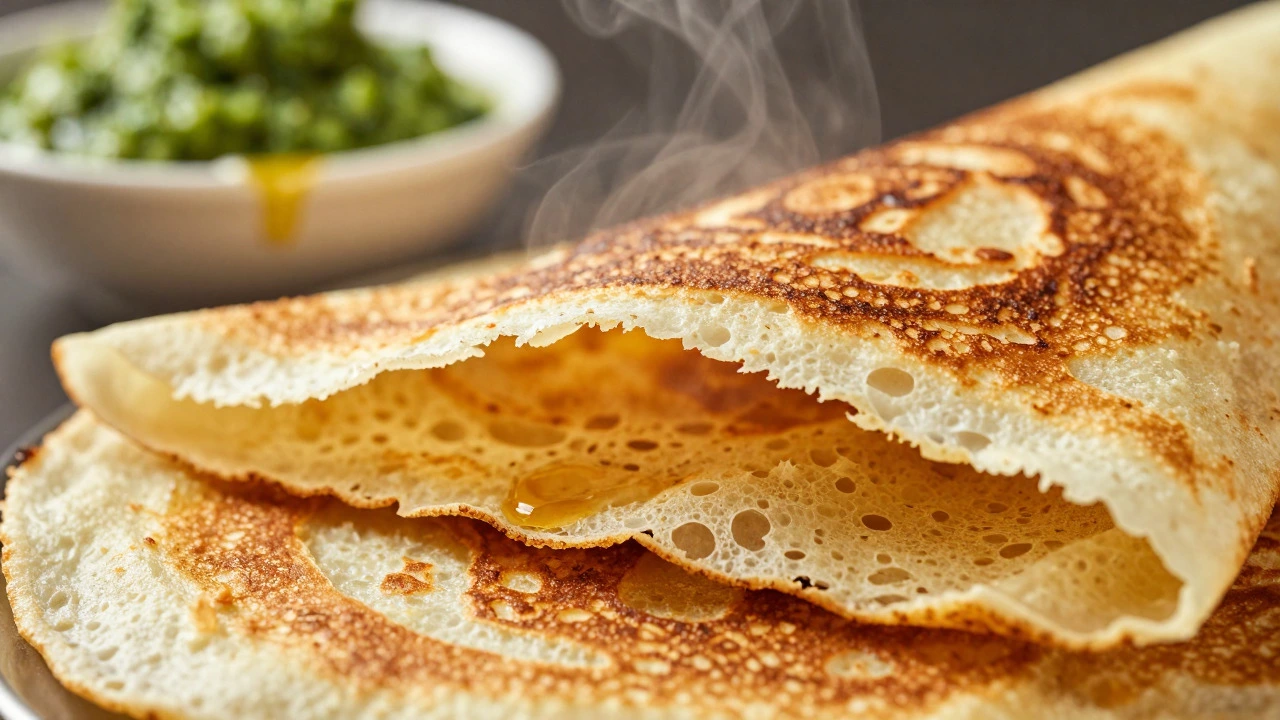
If you’ve ever tried making a dosa with just water and salt, you might have noticed it lacks that satisfying crunch. Adding curd improves this dramatically. The lactic acid produced during fermentation interacts with the starch granules in the rice. As the batter ferments, the starch gelatinizes slightly even before hitting the hot tawa (griddle). This pre-gelatinization helps the surface set quickly when cooked, creating a barrier that traps steam inside. The result? A dosa that shatters crisply when bitten into, rather than tearing apart. Furthermore, the fat content in full-fat curd adds richness, which coats the starch particles and prevents them from clumping together too tightly. If you use low-fat or skimmed curd, you might notice the dosa becomes drier and less pliable. For the best texture, stick to full-fat plain curd.
Taste Profile: Tangy vs. Neutral
Beyond texture, curd fundamentally shifts the flavor profile. Traditional South Indian dosas are known for their subtle tanginess. This comes directly from the fermented batter. If you skip the curd or use very little, the dosa tastes neutral-essentially like a plain flour pancake. While not bad, it lacks depth. The lactic acid provides a bright, sour note that cuts through the richness of ghee or coconut chutney. Interestingly, the amount of curd you add dictates the intensity of this tang. A small spoonful gives a mild hint, while a larger quantity creates a distinctly sour bite. Some cooks prefer this stronger tang, especially when pairing the dosa with sweet coconut chutney. Others find it overpowering and prefer a milder base. Experimenting with ratios is key here. Start with one tablespoon of curd per cup of batter and adjust based on your preference.
Fermentation Time and Temperature Control
Adding curd doesn’t mean you can rush the process. In fact, the presence of active cultures means the batter ferments faster than if you relied solely on wild yeast from the environment. In warm climates, like much of India, a batter with curd might be ready in 6 to 8 hours. In cooler regions, such as parts of Europe or North America, it may take 10 to 14 hours. If you ferment it too long, the batter can become overly sour and thin, losing its structural integrity. If you ferment it too short, it won’t rise properly. A good rule of thumb is to check the batter after 8 hours. It should have risen to twice its original volume and smell pleasantly sour, like fresh bread. If it smells sharp or alcoholic, it has over-fermented. You can slow down the process by placing the jar in the refrigerator overnight, but remember to take it out an hour before cooking to let it come to room temperature. Cold batter doesn’t spread well on the tawa.
Common Mistakes to Avoid
Many home cooks make a few predictable errors when incorporating curd into their batter. First, using flavored or sweetened curd. Vanilla or fruit-flavored yogurts will ruin the delicate balance of flavors. Always use plain, unsweetened curd. Second, adding curd to hot batter. If you grind your rice and dal on high speed, the mixture can get warm. Adding cool curd to hot batter can shock the bacteria and kill some of them, reducing fermentation efficiency. Let the ground batter cool to room temperature before stirring in the curd. Third, overmixing. Once you add the curd, stir gently. Overmixing can break down the air bubbles formed during grinding, leading to a denser dosa. Use a wooden spoon or your hand to fold the curd into the batter until just combined.

Comparing Batter Types: With and Without Curd
To visualize the differences, consider the following comparison. A batter made without curd relies entirely on natural wild fermentation, which is slower and less consistent. The resulting dosa is often thicker, less crispy, and has a milder flavor. A batter with curd ferments faster, produces more air bubbles, and yields a thinner, crisper dosa with a distinct tang. Here is a quick breakdown:
| Attribute | Batter with Curd | Batter without Curd |
|---|---|---|
| Fermentation Speed | Faster (6-8 hours in warmth) | Slower (12-18 hours) |
| Texture | Crispy, airy, spongy | Denser, chewier, flatter |
| Flavor | Tangy, sour notes | Neutral, mild |
| Rise Volume | Significant (doubles in size) | Moderate (slight rise) |
| Consistency Control | Easier to manage | Harder to predict |
Pro Tips for Perfect Dosas Every Time
Want to take your dosa game to the next level? Try these expert tips. First, use freshly ground batter whenever possible. Pre-ground batter loses its ability to absorb water and ferment properly. If you must buy pre-ground, look for brands that include a starter culture. Second, experiment with rice varieties. Idli rice, which is parboiled, absorbs more water and creates a softer dosa. Sona Masoori or regular white rice creates a crispier, harder dosa. Combining both types gives you the best of both worlds. Third, don’t forget the salt. Add salt only after the batter has started to ferment. Adding it too early can inhibit bacterial growth. Finally, heat your tawa evenly. A cold spot on the griddle will cause the dosa to tear instead of lifting cleanly. Test the heat by sprinkling a drop of water; if it sizzles and evaporates immediately, the tawa is ready.
Frequently Asked Questions
Can I use Greek yogurt instead of regular curd?
Yes, but strain it first. Greek yogurt is thicker and contains more protein, which can make the batter heavier. Strain it through a cheesecloth for a few hours to remove excess whey, then use it like regular curd. The result will be a slightly denser but very creamy dosa.
How much curd should I add to my batter?
A general ratio is one to two tablespoons of curd per cup of dry rice and dal mixture. Start with one tablespoon for a mild tang and increase to two if you prefer a stronger sour flavor. Adjust based on the thickness of your curd; thicker curds require a bit more water to reach the right batter consistency.
Why is my dosa batter still thick after adding curd?
If the batter is too thick, it won’t spread thinly on the tawa. Add water gradually, one teaspoon at a time, until it reaches a pourable consistency, similar to heavy cream. Remember, the batter will thin out slightly during fermentation, so aim for a medium-thick consistency initially.
Does curd make dosa healthier?
Yes, indirectly. The fermentation process breaks down complex carbohydrates and proteins, making them easier to digest. It also increases the bioavailability of certain B vitamins and probiotics. However, the calorie count remains similar unless you use low-fat curd, which may compromise texture.
Can I store curd-included batter in the fridge?
Yes, refrigeration slows down fermentation. Store the batter in an airtight container in the fridge for up to 24 hours. Before cooking, let it sit at room temperature for 30 minutes to an hour. This allows the batter to loosen up and ensures it spreads easily on the hot tawa.