Not all rice is created equal when it comes to biryani. You can marinate the meat for hours, fry the onions to golden perfection, and layer in spices until your kitchen smells like a street stall in Lucknow-but if you pick the wrong rice, your biryani will fall flat. The rice isn’t just a side dish. It’s the foundation. It holds the flavor, absorbs the steam, and gives each bite that satisfying, separate-grain texture that makes biryani unforgettable.
Why Rice Matters More Than You Think
Most home cooks think biryani is all about the spices. But the truth? The rice does the heavy lifting. It’s the canvas. If the rice turns mushy, clumps together, or lacks aroma, no amount of saffron or cardamom can save it. You need rice that stays firm, doesn’t stick, and carries the scent of the spices without turning soggy.
Think of it like baking bread. You can add all the herbs you want, but if you use the wrong flour, your loaf will be dense and lifeless. Same here. The right rice expands just right, so each grain stays distinct. That’s why professional chefs in Hyderabad, Delhi, or Kolkata won’t even start without checking the rice first.
The Top 3 Rices for Biryani
After testing over a dozen varieties across seven different biryani styles-from Hyderabadi dum to Kolkata-style with boiled eggs-the three that consistently win are:
- Basmati rice (aged, long grain)
- Jeera Samba rice (South Indian short grain)
- Ambemohar rice (Maharashtrian fragrant variety)
Let’s break them down.
1. Aged Basmati Rice: The Gold Standard
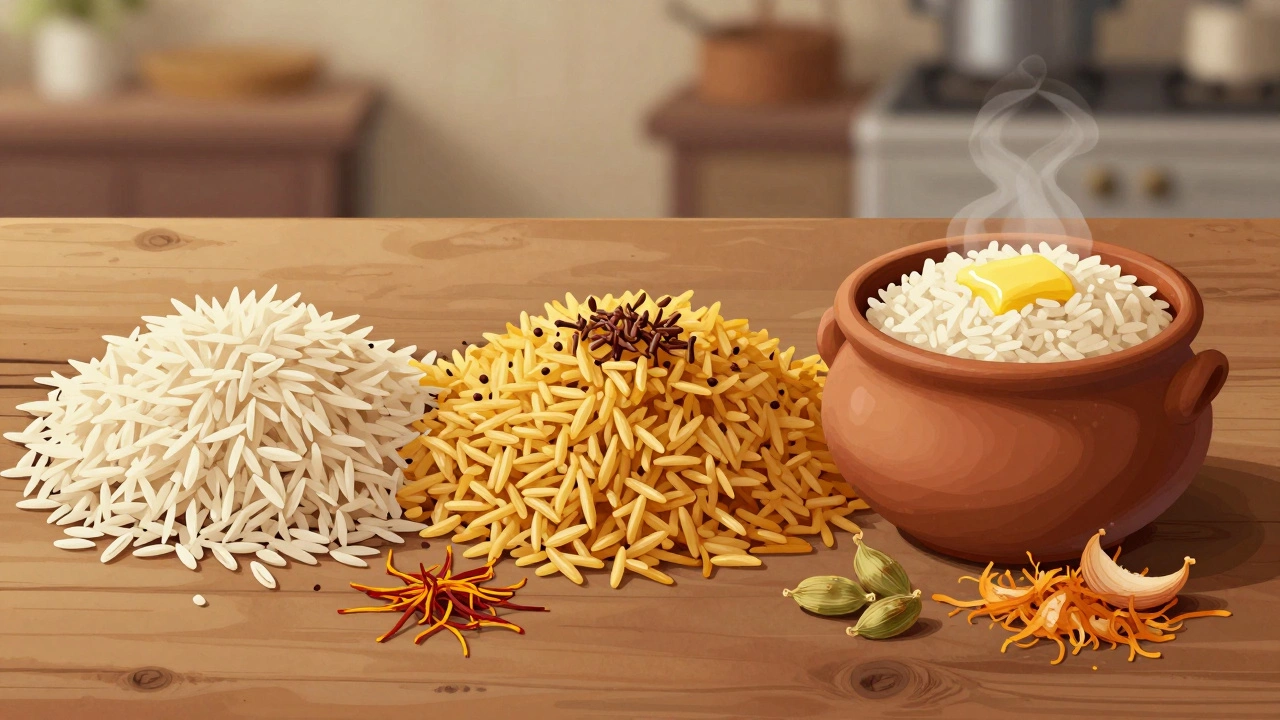
If you’re making a classic North Indian or Hyderabadi biryani, aged basmati is non-negotiable. It’s the most widely used for good reason. When cooked properly, it elongates to nearly twice its length, stays fluffy, and releases a nutty, popcorn-like aroma that lingers in the air.
Look for aged basmati-at least 12 months old. Fresh basmati has too much moisture and cooks unevenly. Aged basmati dries out just enough so the grains don’t burst during steaming. Brands like India Gate, Kohinoor, and Daawat are reliable. You’ll pay a bit more, but it’s worth it. One kilo of good aged basmati costs around £4.50 in UK supermarkets, but you’ll use less because it expands so much.
Pro tip: Soak it for 30 minutes before cooking. It helps the grains cook evenly and prevents sticking. Don’t rinse it too hard-you want to keep some of the surface starch to help the spices cling.
2. Jeera Samba Rice: The South Indian Secret
If you’ve ever had a Tamil Nadu-style biryani with fried cashews and boiled eggs, you’ve tasted jeera samba. This short-grain rice is grown in Tamil Nadu and Andhra Pradesh. It’s not as long or aromatic as basmati, but it’s stickier, chewier, and holds up better in wetter biryanis.
Jeera samba absorbs masalas deeply. It’s perfect for biryanis with lots of gravy or coconut milk. It also turns slightly golden when fried with cumin seeds-hence the name “jeera” (cumin). You won’t find this in most UK supermarkets, but Indian grocers in Birmingham, Leicester, or Southall stock it. Look for labels that say “Jeera Samba” or “Kichadi Rice.”
Use it if you like your biryani to have a bit of bite. It’s not fluffy-it’s substantial. Some chefs say it’s the only rice that works with chicken biryani that’s slow-cooked in a clay pot.
3. Ambemohar Rice: The Fragrant Wildcard
From Maharashtra, this rice is often called the “mango rice” because of its sweet, fruity aroma. It’s not as common outside India, but it’s a favorite in home kitchens in Pune and Mumbai for festive biryanis. It’s short to medium grain, cooks quickly, and has a naturally buttery texture.
Ambemohar doesn’t need soaking. It’s naturally aromatic, so you can cut back on saffron and cardamom without losing flavor. It’s also cheaper than aged basmati. If you want a biryani that smells like a summer orchard and feels creamy but still separate, this is your pick.
It’s harder to find in the UK, but online Indian stores like DesiMart or BigBasket UK ship it. Try it once with lamb biryani and you’ll see why it’s a cult favorite.
What to Avoid
Here’s what you should never use for biryani:
- Regular white rice (like Uncle Ben’s or supermarket long grain)-it turns to paste
- Arborio or risotto rice-too starchy, too creamy
- Brown rice-takes too long to cook, doesn’t absorb flavor evenly
- Instant or parboiled rice-pre-cooked grains break apart in steam
I once tried making biryani with supermarket “long grain rice” because I was in a rush. The result? A sticky, clumpy mess that smelled like boiled water with turmeric. No amount of garnish fixed it. Don’t make that mistake.
How to Cook Rice for Biryani
Even the best rice fails if you cook it wrong. Here’s the foolproof method:
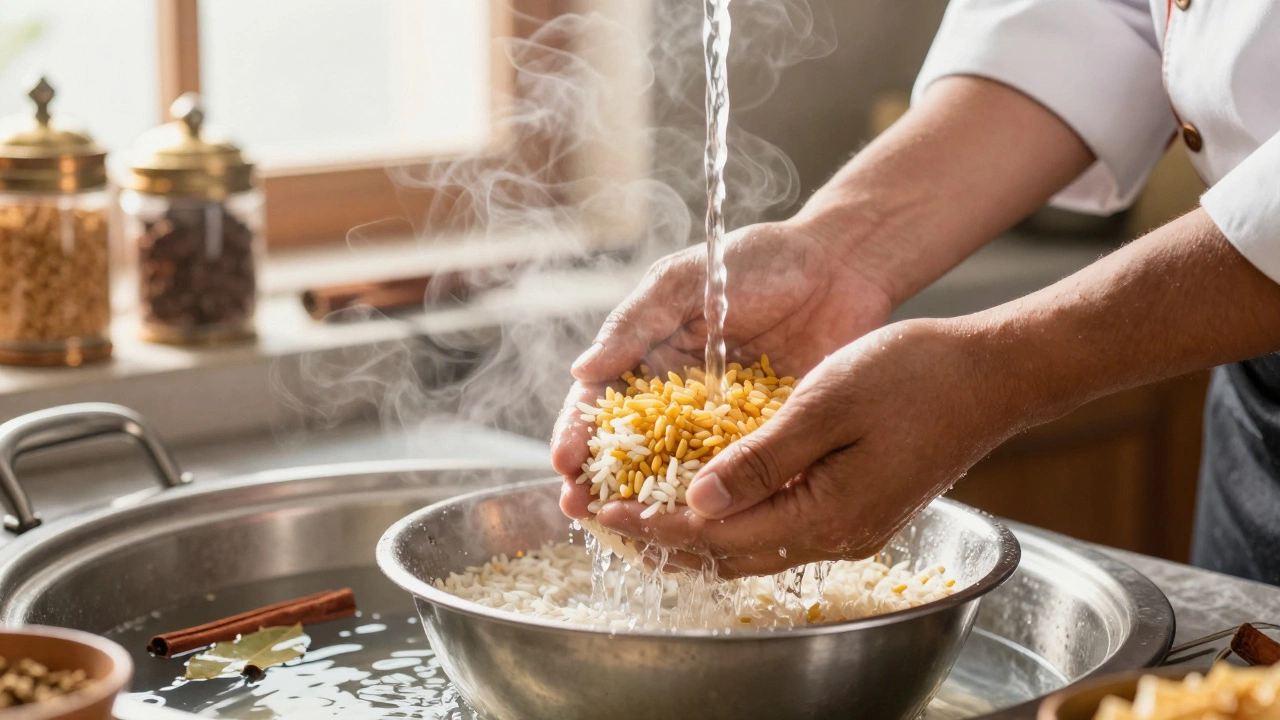
- Wash the rice 2-3 times until the water runs mostly clear. Don’t scrub-it’s not rice flour.
- Soak for 30 minutes (except Ambemohar).
- Boil water with salt, a bay leaf, and a whole cinnamon stick. Use 6 cups water per cup of rice.
- Add rice and cook until 70% done. The grains should be soft on the outside but still hard in the center. This takes 4-6 minutes for basmati.
- Drain immediately. Don’t rinse. The residual starch helps the rice bind to spices later.
- Let it cool slightly before layering with meat and spices.
That 70% rule is key. Undercook it. You’ll finish cooking it in the dum (steam). If you cook it fully before layering, it’ll turn to mush under the lid.
Which Rice for Which Style?
Here’s a simple guide:
| Biryani Style | Best Rice | Why |
|---|---|---|
| Hyderabadi | Aged Basmati | Long, fluffy grains that stay separate under heavy spice |
| Kolkata | Aged Basmati | Works with boiled eggs and subtle sweetness |
| Tamil Nadu / South Indian | Jeera Samba | Chewy texture holds up to coconut and curry leaves |
| Maharashtrian | Ambemohar | Natural sweetness complements dried fruits and nuts |
| Awadhi (Lucknow) | Aged Basmati | Delicate spices need a clean, aromatic base |
Where to Buy the Right Rice in the UK
You don’t need to order from India. Most Indian grocery stores in the UK carry the right options:
- Aged basmati: Available at Tesco, Sainsbury’s, and Asda in the international aisle. Look for “aged” or “extra long grain” on the label.
- Jeera Samba: Check Patel Brothers, Bhatia’s, or Desi Bazaar in London, Birmingham, or Manchester.
- Ambemohar: Order online from BigBasket UK or DesiMart. It’s less common but worth the effort.
If you’re unsure, ask the shopkeeper: “Which rice do you use for biryani?” Most will point you to the right bag.
Final Tip: Taste Before You Layer
Before you put the rice into your biryani pot, taste a grain. It should be tender but still firm-like al dente pasta. If it’s too soft, drain it longer. If it’s too hard, cook it another minute. This one step makes the difference between a good biryani and a great one.
There’s no magic rice. But there’s the right rice for your style. Choose based on flavor, texture, and tradition-not price or convenience. Your guests will notice.
Can I use jasmine rice for biryani?
Jasmine rice is too sticky and has a floral aroma that clashes with traditional biryani spices. It works for Thai dishes, but not for Indian biryani. You’ll end up with a sweet, clumpy mess instead of distinct, fragrant grains.
Is basmati rice the only option?
No. While basmati is the most popular, jeera samba and ambemohar are authentic alternatives used across India. The best rice depends on the regional style you’re making. Basmati works for North Indian biryanis, but South Indian versions often use jeera samba.
Should I rinse the rice before cooking?
Yes, rinse it 2-3 times to remove excess starch. But don’t rinse until the water is completely clear. You want to keep a little surface starch so the spices stick to the grains during layering. Too much rinsing makes the rice too slippery and less flavorful.
Can I use brown basmati rice?
Not really. Brown basmati takes 40-50 minutes to cook and won’t absorb flavors the same way white rice does. It also has a nuttier taste that overpowers the delicate spices in biryani. Stick with aged white basmati for best results.
How much rice do I need for one biryani?
For a standard biryani serving 4-5 people, use 2 cups of uncooked rice. That’s about 400-450 grams. The rice expands to nearly triple its volume, so you don’t need much more. Always cook it separately before layering.