Everyday Indian Meal Builder
Create Your Normal Indian Meal
Build an authentic Indian home-cooked meal using the components described in the article. Every meal is simple, affordable, and made with common ingredients.
Your Normal Indian Meal
A typical Indian home-cooked meal consists of simple, affordable components that fill you up and work together well.
Grain:
Protein:
Vegetable:
Condiment:
Side:
This combination creates a balanced, nutritious meal that's common in Indian homes. Dal provides protein, rice or roti offers carbohydrates, and the vegetable adds nutrients. The condiment adds brightness, and yogurt helps digestion.
When people ask, "What is a normal Indian dish?" they’re often thinking of spicy curries, fancy restaurant meals, or elaborate biryanis. But in most Indian homes, dinner isn’t about perfection. It’s about comfort. It’s about what’s on the table because it’s easy, affordable, and fills everyone up. The truth? A normal Indian dish is rarely a single thing. It’s a plate of rice, a spoonful of dal, a side of sabzi, and maybe a piece of roti. That’s it.
There’s No Single "Normal" Dish
| Component | Typical Form | Why It’s Common |
|---|---|---|
| Grain | Rice or roti | Staple carbs that fill you up and balance flavors |
| Protein | Dal (lentils) or chana | Cheap, high-protein, and cooks fast |
| Vegetable | Simple sabzi (like potatoes, cauliflower, spinach) | Uses seasonal veggies, minimal prep |
| Condiment | Onion, lemon, or pickle | Adds brightness and cuts through heaviness |
| Side | Plain yogurt or raita | Calms spice, aids digestion |
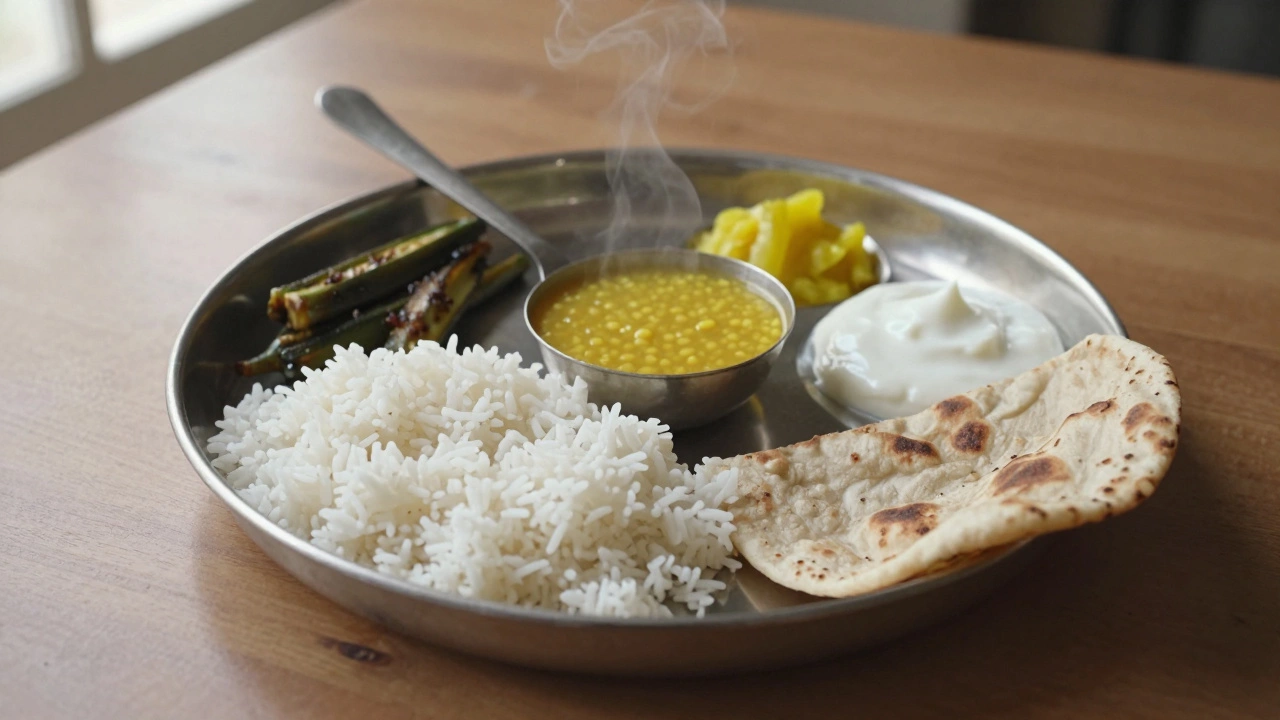
Forget the idea that Indian food means ten different curries. In a typical household, dinner might be rice with toor dal (split pigeon peas), a stir-fried bhindi (okra), and a spoon of lemon pickle. That’s it. No spices layered for hours. No cream, no butter, no fancy garnishes. Just food that works.
Dal Is the Real Star
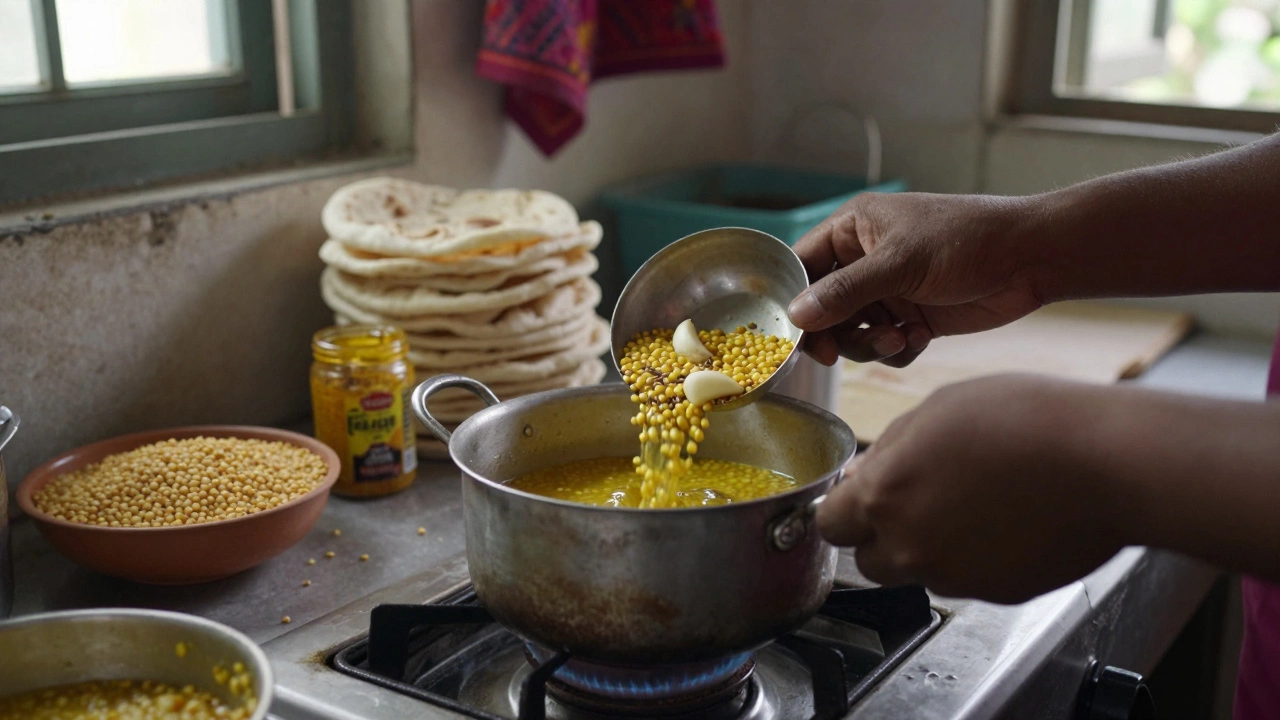
Ask any Indian parent what they cook on a tired Monday night. Nine out of ten will say dal. Not the fancy dal makhani you get in restaurants. The real one: toor dal or masoor dal cooked with turmeric, garlic, and a quick tadka of cumin and dried chilies. It’s done in 25 minutes. You can make a big pot and eat it for three meals.
Dal isn’t just protein. It’s the glue that holds the plate together. It’s soft, mild, and forgiving. Kids eat it. Elderly people eat it. People who don’t like spice eat it. You can add a tomato or a handful of spinach and call it a meal. It’s the most common dish in Indian homes-not because it’s fancy, but because it’s reliable.
Rice or Roti? Both, Actually
North India leans toward roti. South India leans toward rice. But even there, it’s not either/or. In most homes, both are available. Why? Because texture matters. Roti is chewy. Rice is soft. Some people like one. Others like both. A normal meal often includes one, sometimes both.
Roti isn’t made from fancy atta. It’s made from whole wheat flour, water, and salt. Rolled by hand. Cooked on a tawa. No oven. No fancy equipment. Rice? Just rinsed, boiled, and fluffed. That’s all. No fried onions. No saffron. No coconut milk. Just plain.
The Sabzi That Never Changes
Vegetables in Indian homes aren’t about variety. They’re about repetition. Why? Because it’s easier. Potatoes. Cauliflower. Spinach. Okra. Bottle gourd. These are the five you’ll see over and over.
Take aloo gobi-potatoes and cauliflower fried with cumin, turmeric, and a little chili. It’s not gourmet. It’s not Instagram-worthy. But it’s in 90% of homes. Why? Because it keeps well. You can make it Sunday and eat it Tuesday. You can add it to leftover rice. You can serve it cold. It’s flexible. That’s what makes it normal.
Yogurt Isn’t Just a Side-It’s a Necessity
Most Indian meals end with a spoon of plain yogurt. Not Greek yogurt. Not flavored. Just plain, full-fat dahi. It’s not optional. It’s part of the meal.
Why? Because Indian food can be spicy. It can be heavy. Yogurt cools things down. It helps digestion. It’s cheap. It lasts. You don’t need to buy it daily. A small pot lasts a week. You can mix it with grated cucumber and salt to make raita. Or just eat it plain. Either way, it’s normal.
What’s Missing? The Myths
Here’s what you won’t find in a normal Indian kitchen:
- Curry powder (it’s not a thing in India)
- Coconut milk in everyday cooking (it’s regional, not universal)
- Paneer as a daily protein (it’s for guests or weekends)
- Three different curries on one plate (that’s restaurant logic)
- Spices stored in fancy jars (most use bulk spices in cloth bags)
Indian food isn’t about complexity. It’s about rhythm. It’s about knowing what works, repeating it, and making it work again tomorrow.
What a Normal Indian Meal Actually Looks Like
Picture this: A steel thali (plate). On the left: a mound of warm rice. On the right: a ladle of dal. In the center: a few pieces of sautéed okra. In a small corner: a spoon of lemon pickle. On the side: a dollop of yogurt. A piece of roti on the edge. That’s it. No garnish. No drizzle. No spice blend labeled "curry masala." Just food.
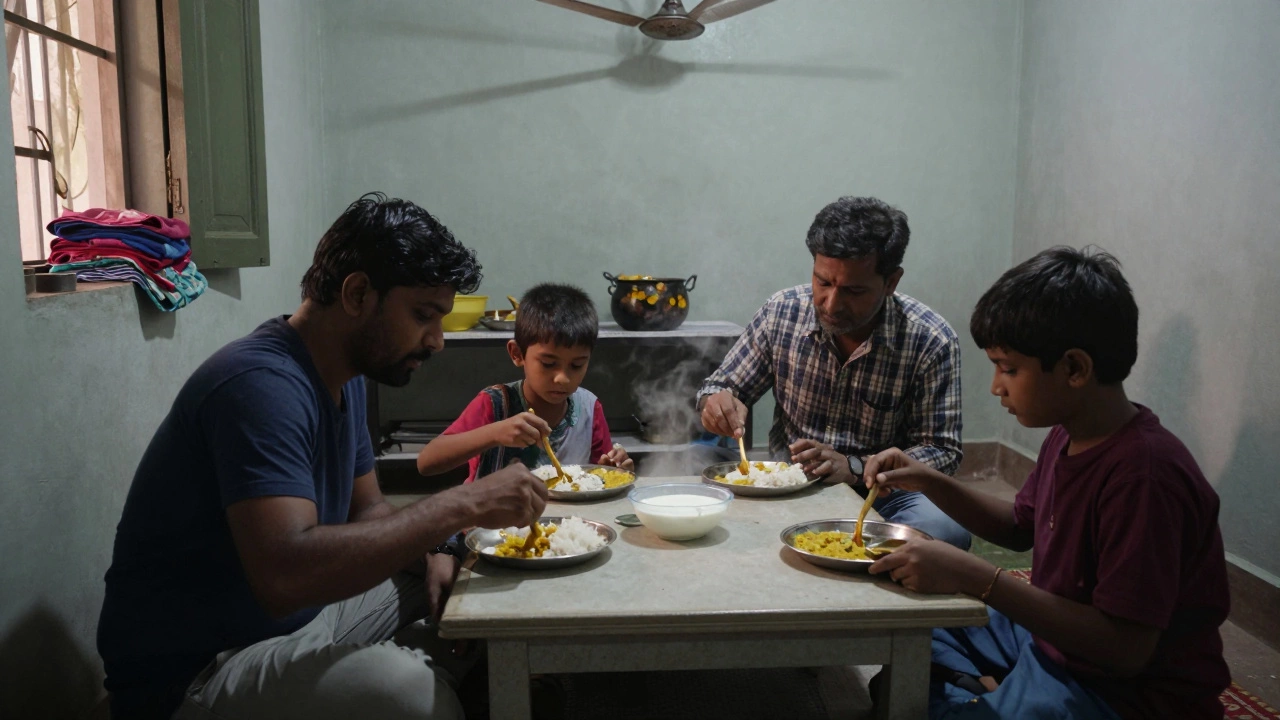
This meal costs less than $1 to make. It takes 30 minutes. It feeds four people. It’s eaten with hands. It’s cleaned up with a damp cloth. It’s not Instagrammable. But it’s real. And it’s normal.
Why This Matters
When you think of Indian food, you’re probably thinking of what’s served in restaurants or on TV. But that’s not the food most Indians eat. The real food is quieter. Slower. Simpler. It’s made in small kitchens with one burner. It’s eaten after a long day. It’s passed down without a recipe.
If you want to cook normal Indian food, stop looking for complex recipes. Start with dal. Add rice or roti. Throw in one vegetable you have. Finish with yogurt. That’s the pattern. Repeat. Adapt. Make it yours.
Is curry a normal Indian dish?
No, "curry" as a term doesn’t exist in Indian homes. It’s a British word used to describe any spiced stew. In India, you’ll hear "sabzi," "dal," or "korma"-not "curry." The dishes are specific, not grouped under one label.
Do Indians eat spicy food every day?
Not necessarily. Spice level varies by region and household. Many families keep meals mild for kids or elders. Chili is added on the side or in the tadka, so people can control the heat. The goal isn’t to burn your mouth-it’s to flavor the food.
What’s the most common Indian dish for breakfast?
In most homes, it’s simple: rice with dal, or roti with butter and sugar. In the north, paratha with yogurt. In the south, idli with sambar. No one makes elaborate meals daily. Breakfast is quick, filling, and often leftovers.
Are Indian meals vegetarian by default?
Many are, but not all. Vegetarian meals are common because they’re cheaper and fit religious habits in many families. But chicken, fish, and eggs appear regularly in coastal and non-vegetarian households. The norm is flexibility, not strict rules.
Can I make normal Indian food without special ingredients?
Absolutely. You don’t need 15 spices. Start with cumin, turmeric, coriander, chili powder, and mustard seeds. Use onions, garlic, tomatoes, lentils, rice, and whatever vegetables are cheap. That’s all you need to make a real Indian meal.