Traditional Indian Sweeteners: Natural Sugars, History, and Healthy Swaps
When you think of Indian sweets, you think of rich, sticky, fragrant desserts—but behind every bite is a traditional Indian sweetener, a natural, unrefined sugar used for centuries in Indian cooking, from village kitchens to temple offerings. Also known as jaggery, gur, or khandsari, these sweeteners aren’t just sugar replacements—they’re cultural anchors, tied to seasons, rituals, and regional identity. Unlike white sugar, which is stripped of everything but sweetness, traditional Indian sweeteners keep minerals, molasses, and subtle earthy notes. They’re not just sweet—they’re complex.
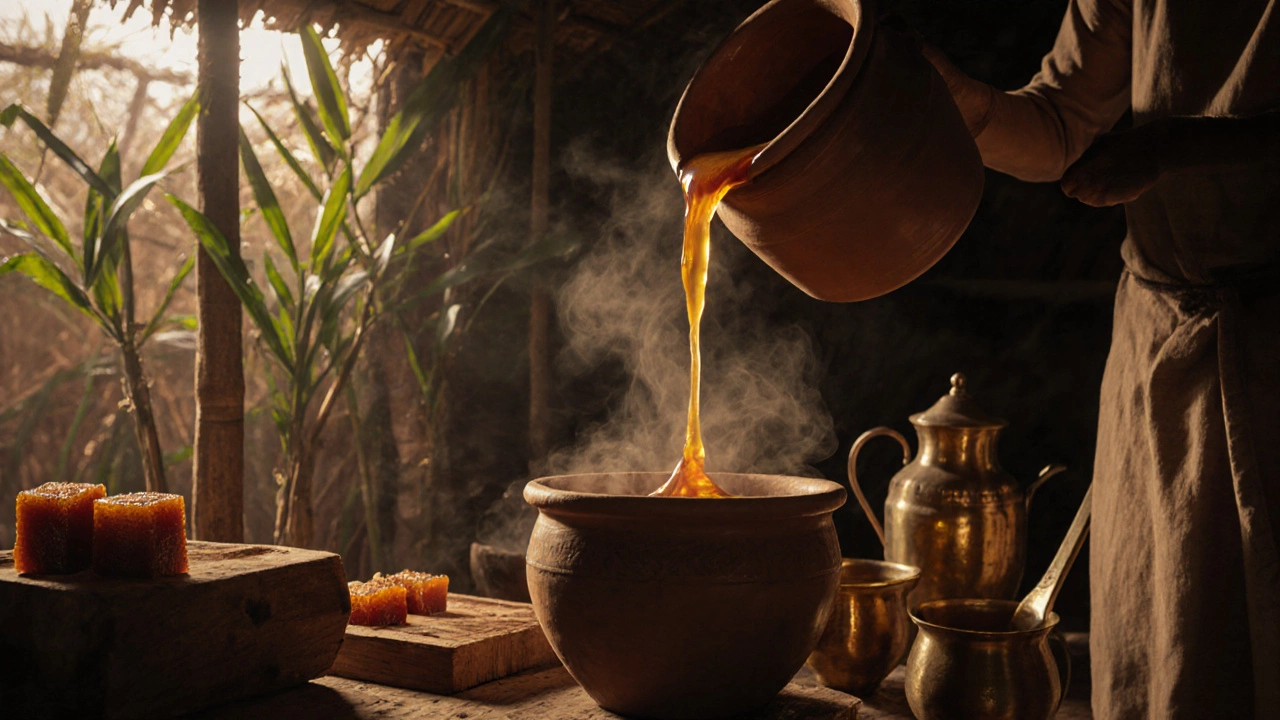
Take jaggery, a concentrated cane juice product made by boiling sugarcane syrup until it solidifies. It’s the backbone of most North Indian sweets like gur wale ladoo and gur ki roti. In South India, khandsari, a less refined, granulated form of jaggery, shows up in chikki and payasam. Then there’s honey, used in Ayurvedic sweets and as a natural preservative in dried fruit desserts. These aren’t trendy substitutes—they’re the original sweeteners, passed down for generations. Even today, families in rural India make jaggery at home during winter harvests, boiling sugarcane juice over wood fires. It’s slow, labor-intensive, and deeply personal.
Modern health trends are bringing these sweeteners back—not because they’re low-calorie, but because they’re less processed. Jaggery has iron, potassium, and antioxidants. Honey offers enzymes and trace pollen. Stevia, though newer to Indian kitchens, is gaining ground as a zero-calorie alternative in diabetic-friendly desserts. But none of them replicate the deep, caramel-like richness of unrefined cane or palm jaggery. That’s why you still see jaggery in ladoos at weddings, and why temple prasadam almost always uses it.
What you’ll find in the posts below are real, practical insights: how jaggery changes the texture of halwa, why honey doesn’t work in all sweets, how khandsari differs from regular sugar, and which traditional sweeteners actually help with digestion. You’ll also learn why some Indian families avoid refined sugar entirely—and how to swap it without losing flavor. This isn’t about dieting. It’s about understanding what makes Indian sweets taste the way they do—and why that matters.
What Sweetener Is Used in Indian Sweets? Traditional Sugars and Alternatives Explained
Indian sweets use more than just sugar-jaggery, khoya, and palm syrup are traditional sweeteners that give unique flavor and texture. Learn what's really in your favorite desserts.
Read More