Curry Spices: The Essential Flavors Behind Indian Curries
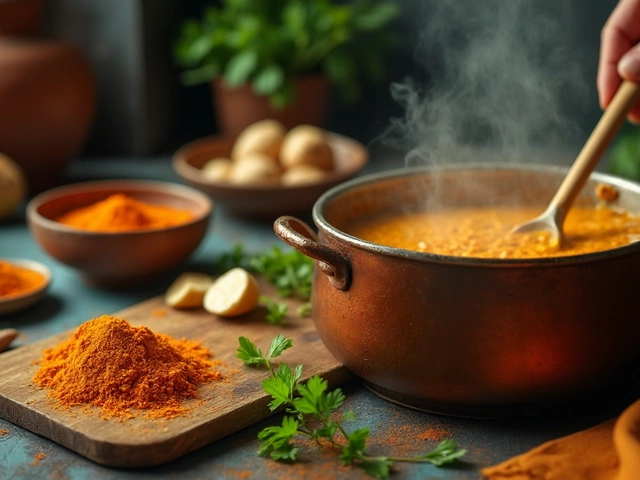
When you think of curry spices, a dynamic mix of ground seeds, roots, and pods that form the backbone of Indian cooking. Also known as Indian spice blend, these aren’t just seasonings—they’re the soul of every pot, transforming simple ingredients into deeply layered dishes. Unlike one-size-fits-all spice packets you might find abroad, real Indian curry spices are mixed fresh, adjusted by region, and often toasted to unlock their full aroma. This isn’t about adding heat—it’s about building balance: warmth from cumin, earthiness from turmeric, sweetness from coriander, and a smoky depth from fenugreek.
Every curry starts with a base, and that base is almost always cumin, a seed that sizzles in hot oil to release its nutty, slightly bitter scent. Then comes turmeric, the golden root that gives curries their color and a mild, peppery earthiness. It’s not just for looks—it’s anti-inflammatory, stable under heat, and pairs perfectly with black pepper. Next up is garam masala, a warming blend of cinnamon, cardamom, cloves, and black pepper, added at the end to preserve its fragrance. You won’t find this in a single jar labeled "curry powder"—it’s a personal recipe, passed down or tweaked over years. These spices don’t just flavor food; they tell stories. In South India, mustard seeds pop in oil before the rest. In the North, dried red chilies are fried for color. In home kitchens across India, the order you add them matters as much as what you add.
What makes these spices so powerful isn’t their individual strength—it’s how they talk to each other. Turmeric and black pepper? A match made in the kitchen. Cumin and coriander? They hold hands in every tadka. Even the smallest pinch of asafoetida (hing) can lift an entire dish, though you’ll rarely find it in Western "curry powder." These aren’t just ingredients—they’re a language. And once you learn the grammar, you can cook any Indian curry without a recipe.
Below, you’ll find real stories from home cooks who’ve mastered these spices—not by following a book, but by tasting, adjusting, and sometimes burning a batch or two. You’ll see how dal gets its depth, how coconut milk stays smooth in curry, and why some spices are worth the smell—even if it makes your kitchen feel like a temple. No fluff. Just the spices that make Indian food unforgettable.
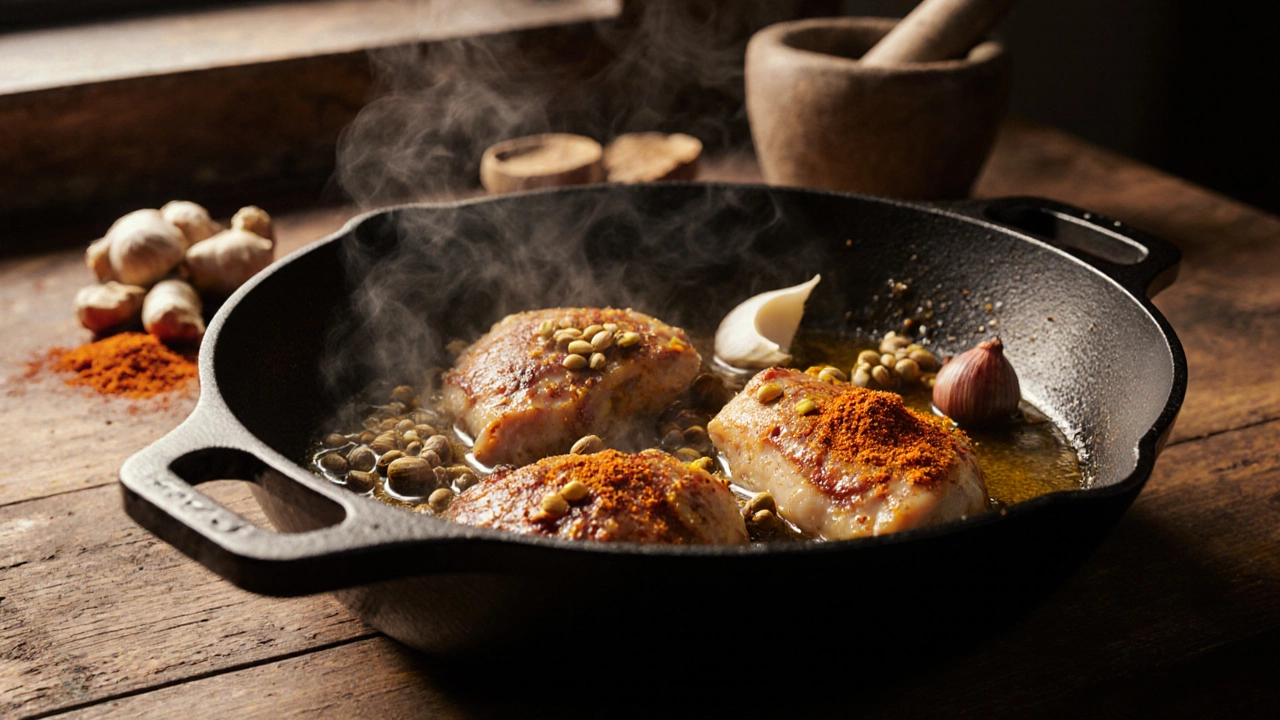
What Makes Chicken Curry More Tasty? 7 Simple Secrets That Actually Work
Learn the 7 simple secrets that transform ordinary chicken curry into something rich, deep, and unforgettable-no fancy ingredients needed. Just better timing, better spices, and better technique.
Read More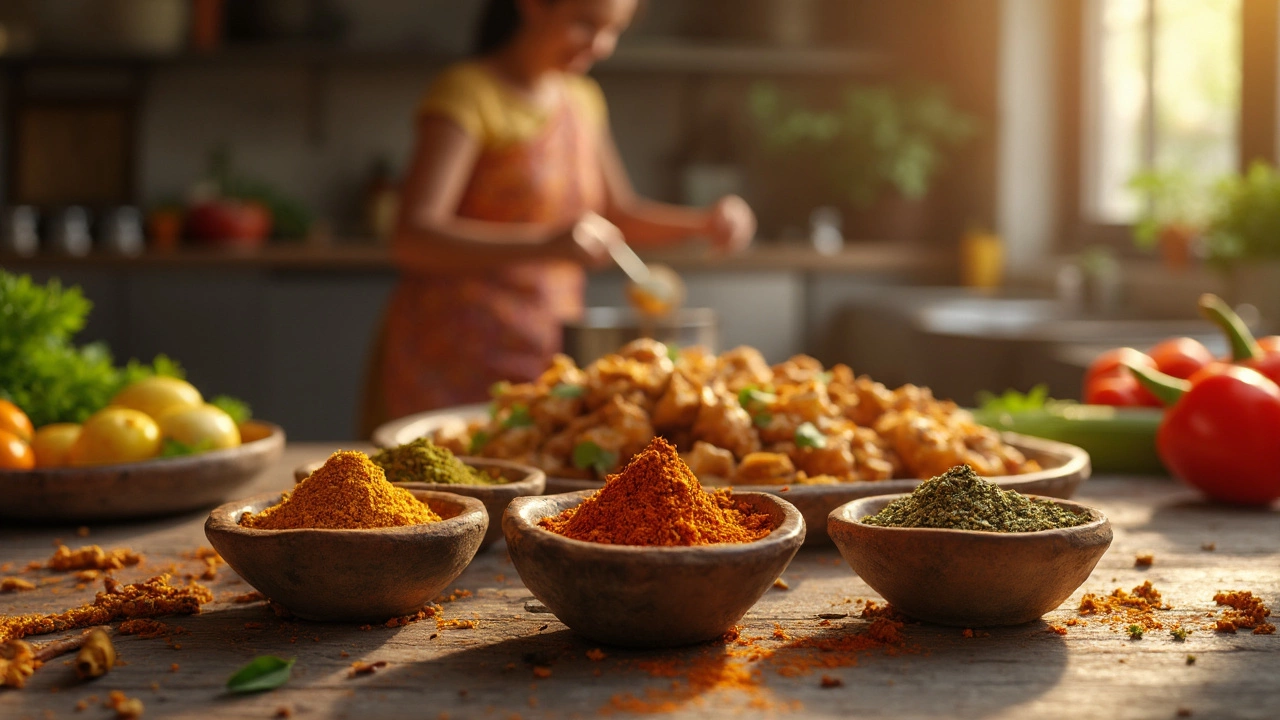
Curry Spices: The 4 Essentials Every Chicken Curry Needs
Wondering what gives chicken curry its signature flavor? It all comes down to four main spices that form the heart of most curry recipes. This article breaks down each spice, explains what they taste like, shares why they matter, and gives you tips on using them. If you're planning to cook chicken curry at home, knowing these basics will make all the difference. Expect practical advice, clear explanations, and a few fun facts to spice up your kitchen routine.
Read More
Unveiling the Rich Flavors of Chicken Curry
Chicken curry is a flavorful dish celebrated for its depth and complexity. The article delves into the elements that contribute to the richness of curry, from the choice of spices to cooking methods that enhance taste. Learn about the roles of key ingredients that give curry its unique character. With practical tips and intriguing facts, discover how to bring your chicken curry to life with delicious, distinguished flavors.
Read More