Coconut Milk in Curry: How to Use It Without Curdling and Get Rich Flavor
When you add coconut milk, a creamy liquid made from grated coconut flesh and water, commonly used in South and Southeast Asian cooking. Also known as coconut cream when thicker, it adds depth and richness to curries without dairy. But if you’ve ever seen your coconut milk separate into oily chunks in a curry, you know it’s not as simple as pouring it in. The trick isn’t about the brand or temperature alone—it’s about how you handle heat, acid, and timing.
Coconut milk behaves differently than cow’s milk. It doesn’t contain casein, so it won’t curdle the same way when you add lemon juice or tamarind. But it does split when exposed to rapid heat or prolonged boiling after being added. That’s why recipes often say to stir it in at the end. The real secret? Add it gently after your spices have bloomed and your protein is nearly cooked. Keep the heat medium-low, and never let it boil hard. If your curry has a lot of acid—like tomatoes, yogurt, or tamarind—stir in a spoonful of cornstarch slurry first. It acts like a buffer. Many home cooks skip this, then wonder why their sauce looks broken. It’s not broken—it’s just unbalanced.
People in Kerala, Thailand, and the Philippines have used coconut milk in curries for centuries. They don’t overthink it. They know that stirring slowly, letting it simmer gently, and using full-fat coconut milk (not the light kind) makes all the difference. You don’t need fancy tools. Just a heavy-bottomed pot and patience. If you’ve ever tried to make a creamy chicken curry with coconut milk and ended up with oil floating on top, you’re not alone. That’s why we’ve collected real-tested tips from cooks who’ve nailed it—no guesswork, no theory, just what works in the kitchen.
Below, you’ll find posts that show exactly how to use coconut milk in chicken curry, what to do if it splits, how to thicken it without flour, and even why some Indian cooks avoid it in certain dishes. These aren’t generic advice pieces—they’re fixes from people who’ve been there. Whether you’re making a vegan curry, a traditional Tamil stew, or just trying to make your weeknight meal feel special, the answers are here.
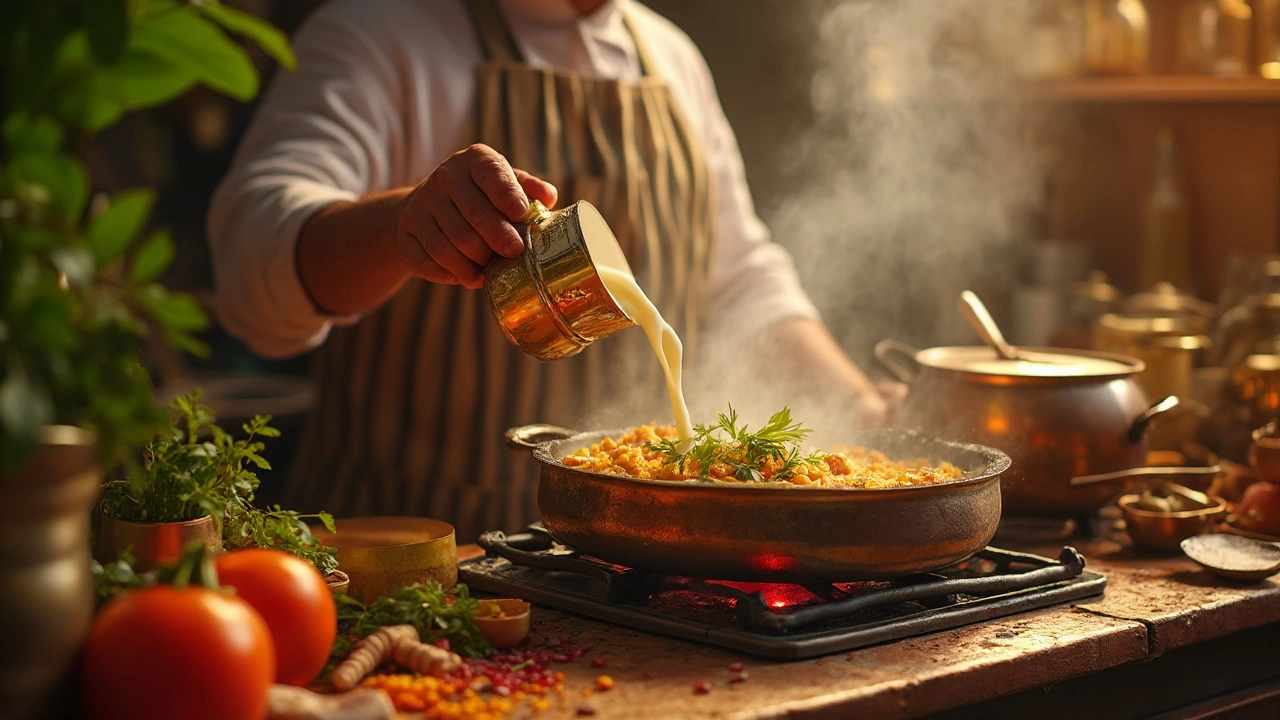
Best Liquids for Perfect Curry: Broth, Coconut Milk, and More
Find out which liquids to add to curry for perfect flavor and texture. Learn about coconut milk, broths, and secret tips to make your curry irresistible.
Read More