Biryani Spices: The Essential Blend for Authentic Indian Flavor
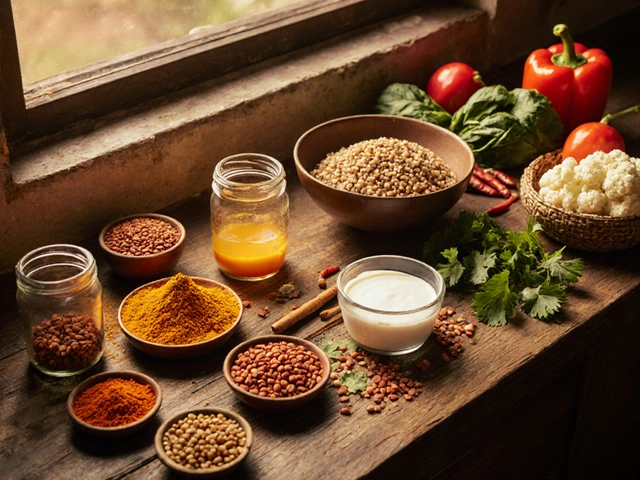
When you think of biryani spices, a layered mix of whole and ground spices that give biryani its deep, aromatic flavor. Also known as biryani masala, it’s not just a seasoning—it’s the soul of the dish. Unlike plain curry powders, biryani spices are carefully balanced to build complexity: earthy cumin, floral cardamom, smoky cloves, sweet cinnamon, and the warm bite of black pepper. These aren’t random additions—they’re a ritual passed down through generations, where each spice plays a role in creating that signature fragrance that fills the kitchen before you even light the stove.
What makes biryani spices different from other Indian blends? It’s the whole spices, intact seeds and pods toasted in ghee or oil to release their oils. Whole spices like bay leaves, star anise, and mace are the quiet backbone of the mix. They don’t dissolve—they infuse. You’ll find them in every authentic recipe, from Hyderabadi to Lucknowi biryani. Then there’s the ground spice base, usually a mix of coriander, red chili, and turmeric. Ground spices are added later, to preserve their brightness. The trick? Toast the whole ones first, then stir in the powders just before the rice goes in. Too early, and they burn. Too late, and they taste raw.
Some cooks swear by adding saffron soaked in warm milk—it’s not a spice, but it’s non-negotiable for color and luxury. Others use rose water or kewra water for that final floral lift. These aren’t just garnishes; they’re flavor anchors. And while you might see recipes calling for garam masala, real biryani builders skip the pre-made blends. They make their own, adjusting ratios for heat, sweetness, or smokiness based on regional style or personal taste. The spice mix changes from kitchen to kitchen, but the goal stays the same: every grain of rice should carry a whisper of the whole blend.
You’ll find posts here that break down exactly which spices go into each regional version, how to toast them without burning, and how to store the blend so it stays fresh for months. Some will show you how to substitute hard-to-find spices with pantry staples. Others will walk you through layering the spices with rice and meat so the flavor seeps in evenly. No fluff. No guesswork. Just clear, tested methods that work in real kitchens.
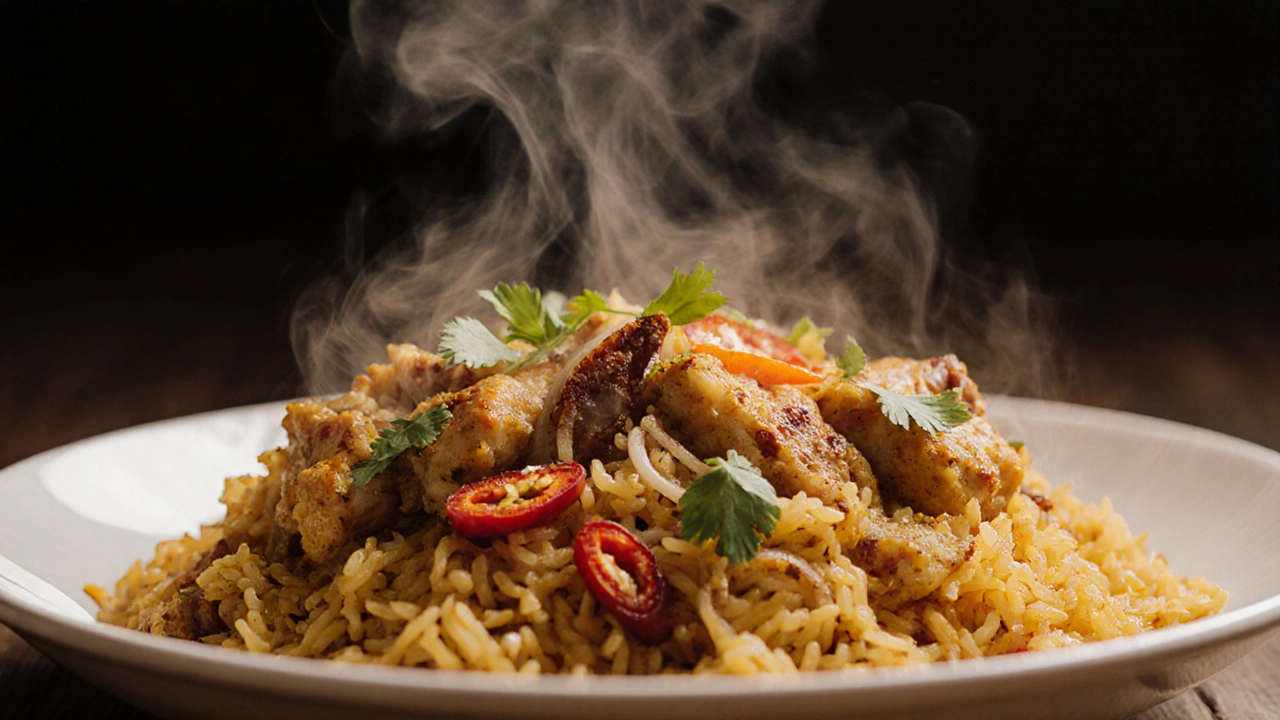
Why Is Biryani So Spicy? Uncover the Heat Behind the Dish
Explore why biryani feels so spicy, from the key spices and cooking methods to regional variations and tips for controlling heat.
Read More