Dal Nutrition: What Makes Lentils One of India’s Healthiest Foods
When you think of dal, a simple, spiced lentil stew that’s a daily staple across India. Also known as lentils, it’s not just comfort food—it’s one of the most nutrient-dense foods in Indian kitchens. Unlike processed snacks or fried street food, dal delivers clean energy, keeps you full for hours, and supports muscle repair without any guesswork. It’s the reason millions of Indians eat it every day—whether it’s yellow toor dal, red masoor dal, or green moong dal. And it’s not just popular in India. People in the US and Europe are starting to notice what’s been obvious here for centuries: dal is good for you.
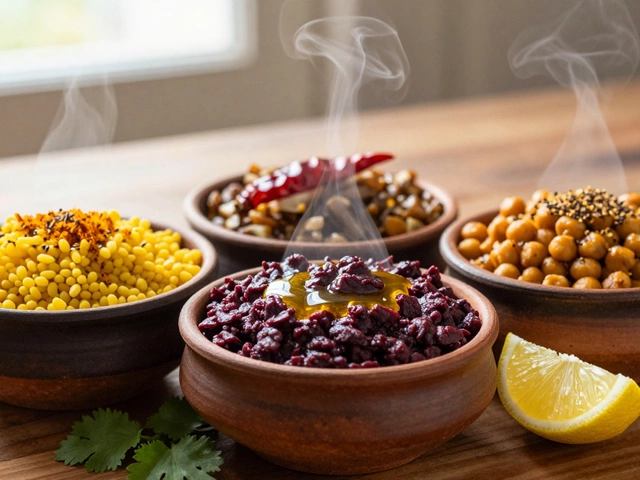
Not all dals are the same when it comes to nutrition. moong dal, made from split green mung beans is easy to digest and low on the glycemic index, making it ideal for diabetics and weight watchers. masoor dal, red lentils that cook fast and turn creamy, packs more iron than most grains and is great for boosting energy. Then there’s chana dal, split chickpeas with a nutty flavor and high fiber content, which helps balance blood sugar and keeps your gut happy. Each type has its own profile—protein, fiber, folate, magnesium—and choosing the right one depends on what your body needs.
What makes dal even better is how it’s cooked. Traditional recipes use minimal oil, rely on turmeric and cumin for flavor, and avoid heavy cream or butter. That means you get the full nutritional punch without the empty calories. Pair it with brown rice or whole wheat roti, and you’ve got a complete protein meal that rivals meat in amino acid balance. Even if you’re not vegetarian, adding dal to your diet is one of the easiest ways to improve your daily nutrition.
There’s no magic here. No supplements. No expensive superfoods. Just humble lentils, cooked right, eaten often. And that’s why you’ll find articles here about which dal is healthiest, how to cook it for maximum nutrition, and how it fits into weight loss, pregnancy, or diabetes management. You’ll also see how dal connects to other staples like paneer, dosa, and chutney—because Indian food doesn’t work in isolation. It’s a system built on balance. Below, you’ll find real guides from home cooks who’ve tested these recipes, tracked the results, and shared what actually works.
Is It Healthy To Eat Dal Every Day? Benefits, Nutrition & Possible Downsides
Wondering if you can eat dal every day? Discover dal's health benefits, nutrients, and what happens if you make it a daily staple. Easy guide for healthy eating.
Read More