Curry Liquids: What They Are, How They Work, and Which Ones Really Matter
When you think of Indian curry, you’re really thinking about the curry liquids, the foundational liquids that carry flavor, texture, and heat in every Indian stew or sauce. Also known as curry bases, these are not just water or stock—they’re the secret engines that turn spices into soulful dishes. Without the right liquid, even the best spices fall flat. It’s not about adding more water—it’s about choosing the right carrier that lets each ingredient shine.
There are five main types of curry liquids you’ll find across Indian kitchens. coconut milk, a rich, slightly sweet cream from grated coconut, used in South Indian and Goan curries to balance heat with silkiness, is one. It’s the star in dishes like Kerala fish curry, but if you add it too fast or too hot, it splits. Then there’s yogurt, a tangy, cooling base that thickens as it cooks, essential for North Indian dishes like chicken tikka masala. Used wrong, it curdles—but with low heat and a little flour, it turns velvety. tomato base, the most common curry liquid in homes and restaurants, made from pureed tomatoes cooked down with onions and spices, gives depth and acidity. It’s the backbone of butter chicken and many dals. Then you’ve got broth, whether chicken, vegetable, or bone, used in richer, meat-heavy curries to deepen flavor without overpowering. And finally, water—yes, water—when used with slow-cooked spices, it becomes the quiet hero in simple dals and lentil stews.
What makes these liquids work isn’t just what’s in them, but how they interact with your spices. Coconut milk mutes chili heat but carries turmeric and cumin beautifully. Yogurt opens up fenugreek and garam masala. Tomato base clings to coriander and cumin seeds, releasing their oils over time. The right liquid doesn’t just moisten—it transforms. You’ll see this in the posts below: how to add coconut milk without curdling, why tomato paste beats canned tomatoes in some curries, and how yogurt can make or break a chicken curry. You’ll also find how dal—often thought of as just lentils—is really about the broth it’s cooked in. And how paneer soaks up yogurt-based sauces like a sponge, while chicken needs a thicker base to hold its flavor.
These aren’t just ingredients—they’re tools. And once you understand how each curry liquid behaves, you stop following recipes and start building flavors. The next time you make curry, ask yourself: what’s carrying the spice? Is it creamy? Tangy? Earthy? That choice changes everything. Below, you’ll find real, tested tips from home cooks who’ve learned this the hard way—no fluff, just what works in the kitchen.
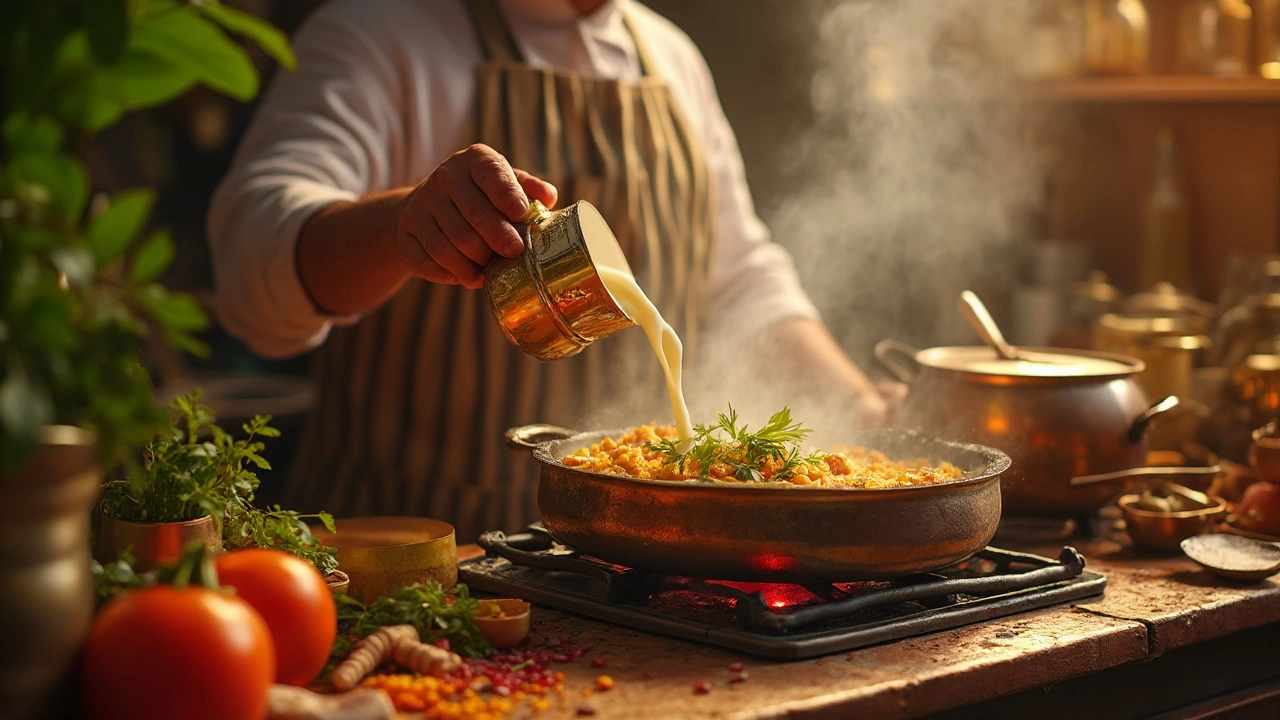
Best Liquids for Perfect Curry: Broth, Coconut Milk, and More
Find out which liquids to add to curry for perfect flavor and texture. Learn about coconut milk, broths, and secret tips to make your curry irresistible.
Read More