Khoya Sweets Sugar: The Heart of Every Indian Sweet
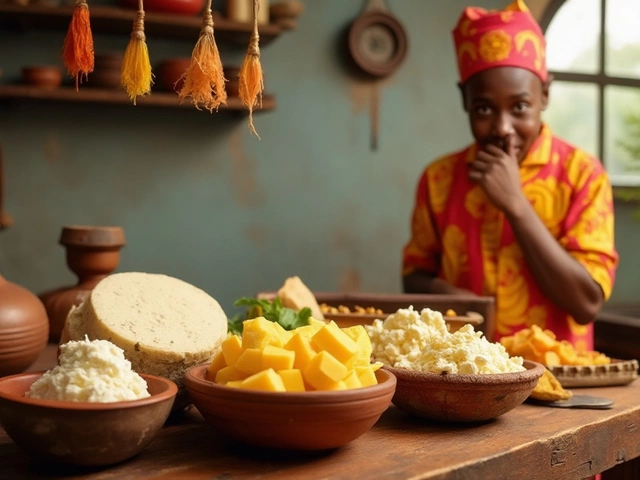
Khoya, a thick, solid milk product made by slowly simmering milk until most of the water evaporates. Also known as mawa, it's the secret base behind most traditional Indian sweets like peda, gulab jamun, and barfi. Without khoya, you don’t have authentic mithai—just sugar and flavor. And when you pair it with sugar, you get the rich, melt-in-your-mouth texture that defines Indian desserts. Khoya isn’t just a ingredient—it’s a process. It takes hours of stirring milk over low heat, watching it transform from liquid to dense, creamy solid. That’s why store-bought khoya often falls short. Homemade khoya has a deeper, nuttier taste, and it holds sugar better, giving sweets that perfect balance of sweetness and creaminess.
Khoya sweets sugar isn’t just about adding granules to the mix. It’s about how much, when, and how you add it. Too early, and the sugar burns. Too late, and it doesn’t dissolve. Many recipes use white sugar, but jaggery or powdered sugar can change the texture and flavor completely. Some families even skip sugar entirely and rely on the natural sweetness of caramelized khoya. You’ll find this in older recipes from Mathura and Lucknow, where peda is made with just khoya and a pinch of cardamom. The sugar? Just enough to hold it together, not to overpower it.
Related to khoya is the science of milk reduction. When you boil milk slowly, the lactose concentrates, proteins coagulate, and fats thicken. That’s what gives khoya its body. If you rush it with high heat, you get scorched milk and a bitter taste. That’s why most home cooks swear by the old clay pot method. Even modern pressure cookers can’t replicate the slow caramelization. And if you’re looking for a shortcut, you can buy khoya powder—but it won’t give you the same richness. Real khoya sweets sugar comes from patience, not packaging.
What you’ll find in the posts below are real recipes from kitchens across India—some using just milk and sugar, others adding nuts, cardamom, or rose water. You’ll see how one ingredient, khoya, can become peda in Uttar Pradesh, kalakand in Maharashtra, or rasmalai in Bengal. No fancy tools. No exotic spices. Just milk, heat, sugar, and time. These are the sweets that have been passed down for generations. If you’ve ever wondered why your gulab jamun didn’t soak up syrup the right way, or why your peda crumbled, the answers are here. No theory. No fluff. Just what works.
What Sweetener Is Used in Indian Sweets? Traditional Sugars and Alternatives Explained
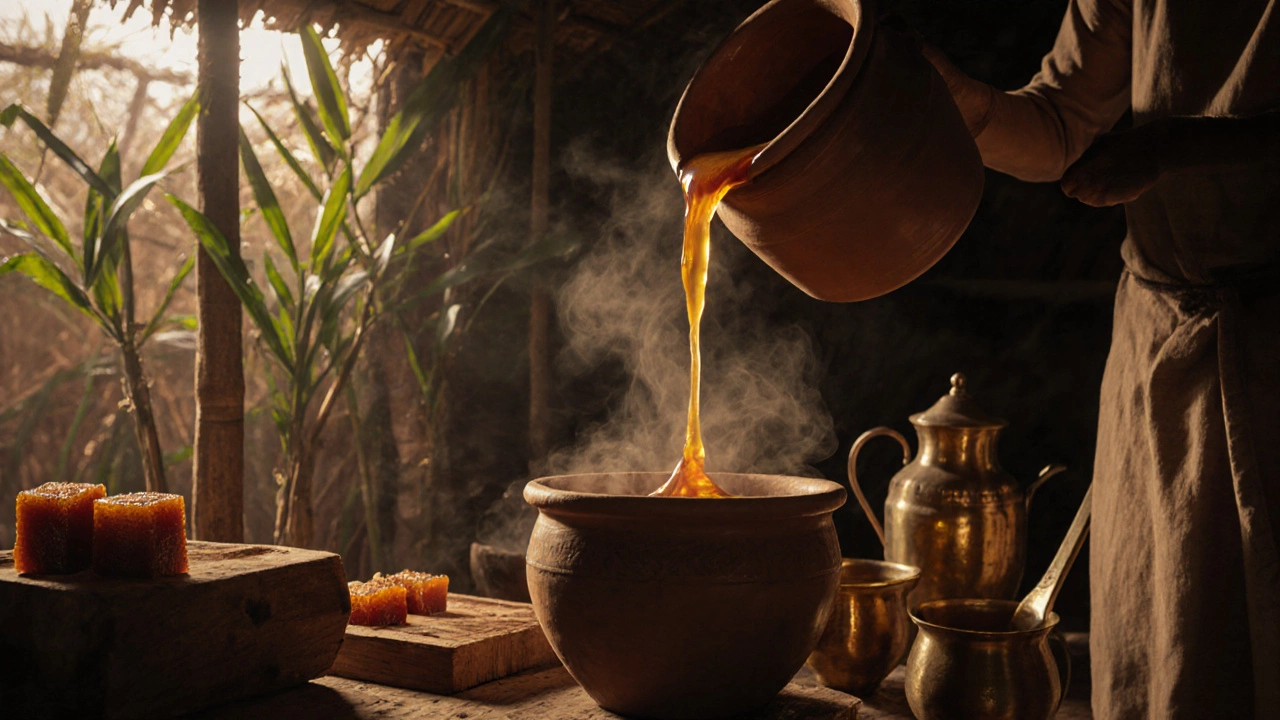
Indian sweets use more than just sugar-jaggery, khoya, and palm syrup are traditional sweeteners that give unique flavor and texture. Learn what's really in your favorite desserts.
Read More