Biryani Aroma Optimizer
Enter the amount of rice you are cooking to calculate the perfect ratios for Basmati, Ghee, Saffron, and Floral Waters, along with key technique tips.
Your Recipe Inputs
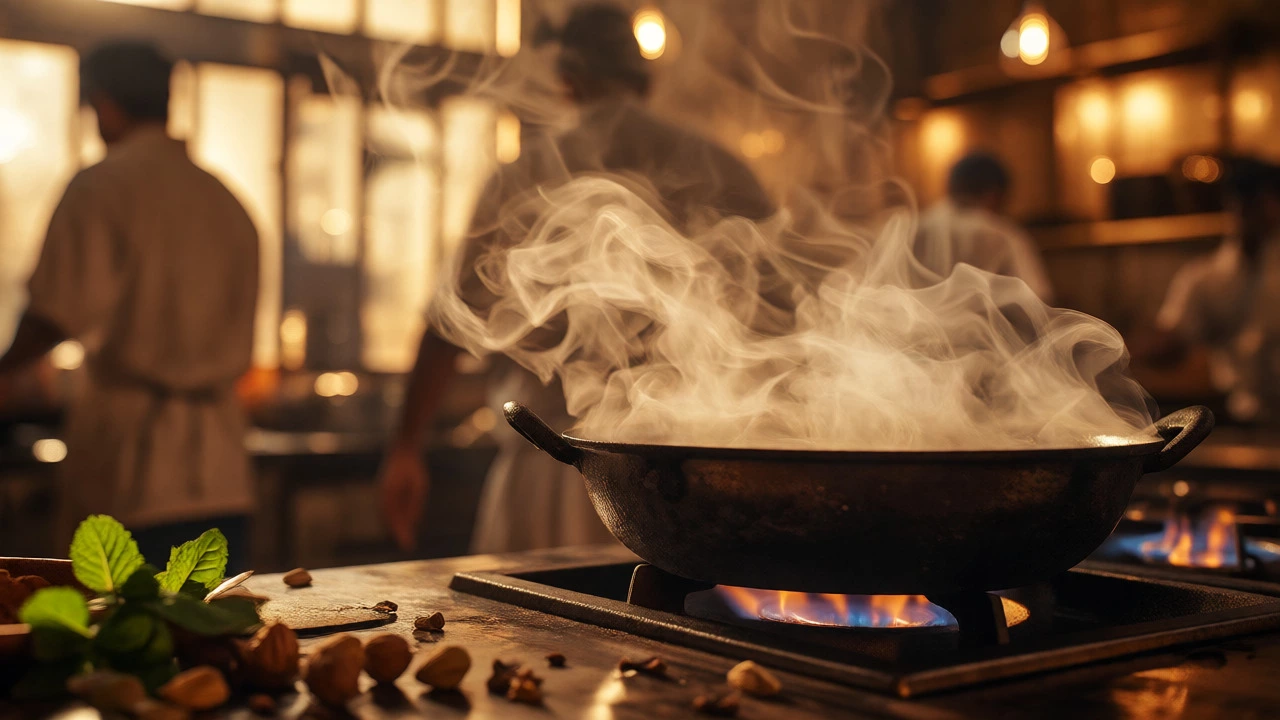
You know that moment. You walk past a kitchen in Hyderabad or Lucknow, and the smell hits you before you even see the pot. It’s not just "food"; it’s an experience. One whiff of biryani is enough to make your mouth water instantly. But have you ever stopped to wonder what exactly creates that intoxicating scent? Is it the meat? The rice? Or something else entirely?
Most home cooks think it’s just about throwing in a packet of "Biryani Masala." Spoiler alert: that’s rarely the secret. The true magic lies in a specific combination of volatile compounds released by certain ingredients at precise moments during cooking. If you want to recreate that restaurant-quality fragrance in your own kitchen, you need to understand the chemistry behind the flavor.
The Foundation: Basmati Rice and Its Hidden Notes
Let’s start with the grain itself. Not all rice smells like biryani. In fact, most do not. The distinct, nutty, almost popcorn-like aroma comes from Basmati rice, which contains high levels of 2-acetyl-1-pyrroline, the same compound responsible for the smell of freshly baked bread and pandan leaves.
This compound is fragile. If you overcook the rice, the aroma dissipates into the steam. If you wash it too aggressively, you might strip away some surface starches that help carry the scent. Here is how to preserve that natural perfume:
- Soak properly: Soaking for 30 minutes allows the grains to hydrate evenly, ensuring they release their internal aromatics when heated.
- Don’t boil to death: Par-boil the rice only until it is 70% cooked. The rest of the cooking happens in the sealed pot (dum), where the aroma gets trapped.
- Add whole spices to boiling water: Throwing bay leaves, cardamom pods, and cloves into the rice water infuses the grains with subtle top notes before they even meet the gravy.
If you use long-grain non-basmati rice, you will lose that signature scent immediately. No amount of spice powder can fake the chemical profile of genuine aged Basmati.
The Floral Heart: Kewra and Rose Water
Here is where many beginners go wrong. They skip the floral waters because they seem "extra." But if you ask any traditional chef in Lucknow, they will tell you that Kewra water (screwpine flower extract) is the soul of authentic Awadhi biryani.
Kewra has a complex, sweet, and slightly fruity aroma that cuts through the richness of ghee and meat. It doesn’t taste like flowers; it adds depth. Think of it like vanilla in a chocolate cake-you don’t taste vanilla, but the chocolate tastes richer without it.
| Aromatic Agent | Primary Note | When to Add | Effect on Aroma |
|---|---|---|---|
| Kewra Water | Sweet, Floral, Fruity | Last layer before sealing | Adds complexity and freshness |
| Rose Water | Pure Floral, Sweet | Mixed with saffron milk | Softens harsh spice edges |
| Garam Masala | Warm, Earthy, Spicy | Marination & Layering | Provides base warmth |
| Fried Onions (Birista) | Caramelized, Savory | Layered throughout | Adds deep umami sweetness |
Rose water plays a similar role but is more delicate. It pairs beautifully with saffron. Never boil these waters vigorously. Add them at the very end, right before you seal the pot for the final dum cooking. Heat destroys their volatile oils quickly.
The Golden Touch: Saffron and Milk
You cannot talk about biryani aroma without mentioning Saffron. Known as the world's most expensive spice, its value isn't just in color-it's in crocin and safranal, two compounds that create a hay-like, honeyed fragrance.
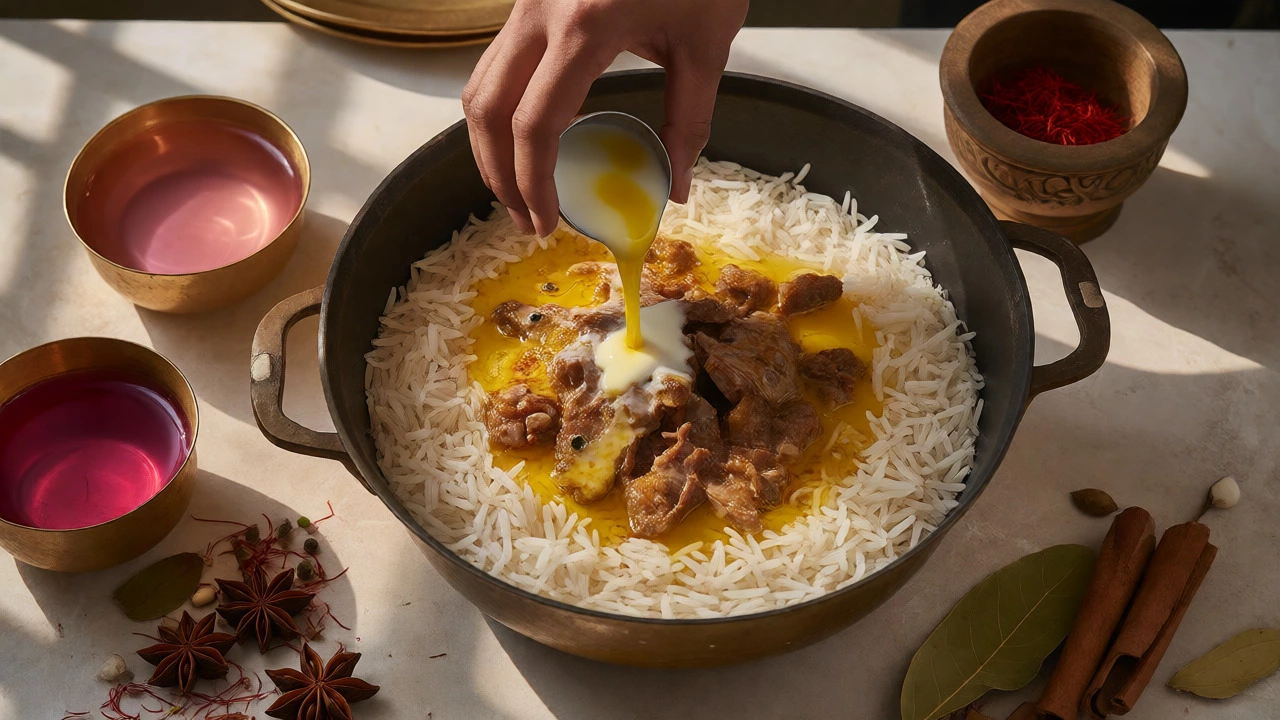
Many people dump dry saffron strands into the pot. This is a mistake. To unlock the full aromatic potential, you must bloom it. Crush a pinch of saffron threads into a powder using a mortar and pestle. Then, mix it with a tablespoon of warm milk. Let it sit for 15 minutes. The heat activates the safranal, turning the milk into a fragrant liquid gold.
Drizzle this mixture over the top layers of the rice just before covering the lid. As the steam circulates inside the sealed pot, it carries the saffron scent down through every grain of rice. Without this step, your biryani might look yellow, but it won’t smell like saffron.
The Fat Carrier: Ghee and Oil
Flavor molecules are often fat-soluble. This means they dissolve in oil or butter rather than water. If you cook biryani in lean vegetable oil, you lose a significant portion of the aroma because those scents evaporate instead of sticking to the food.
Ghee (clarified butter) is the preferred medium for traditionalists. It has a higher smoke point than regular butter and carries a rich, nutty scent of its own. When you heat ghee with whole spices-cinnamon sticks, star anise, green cardamom-the fat absorbs their essential oils.
This infused fat then coats the rice and meat. Every bite delivers a burst of spice aroma because the carrier (the fat) holds onto the scent longer than steam does. Pro tip: Don’t skimp on ghee. Two tablespoons per cup of rice is a good rule of thumb for home cooking. For restaurant style, it’s often double.
The Technique: Dum Cooking and Sealing
All the ingredients above mean nothing if you let the steam escape. The defining characteristic of biryani is Dum pukht, a slow-cooking method where the pot is sealed tight to trap steam and aroma.
Why does sealing matter so much? Because aroma is essentially gas. When you lift the lid halfway through cooking, you release hundreds of aromatic compounds into the air. You literally throw the smell away.
To master the aroma, follow these steps:
- Layer correctly: Alternate between meat/marinade and par-cooked rice. Sprinkle fried onions, mint, coriander, and kewra water between layers.
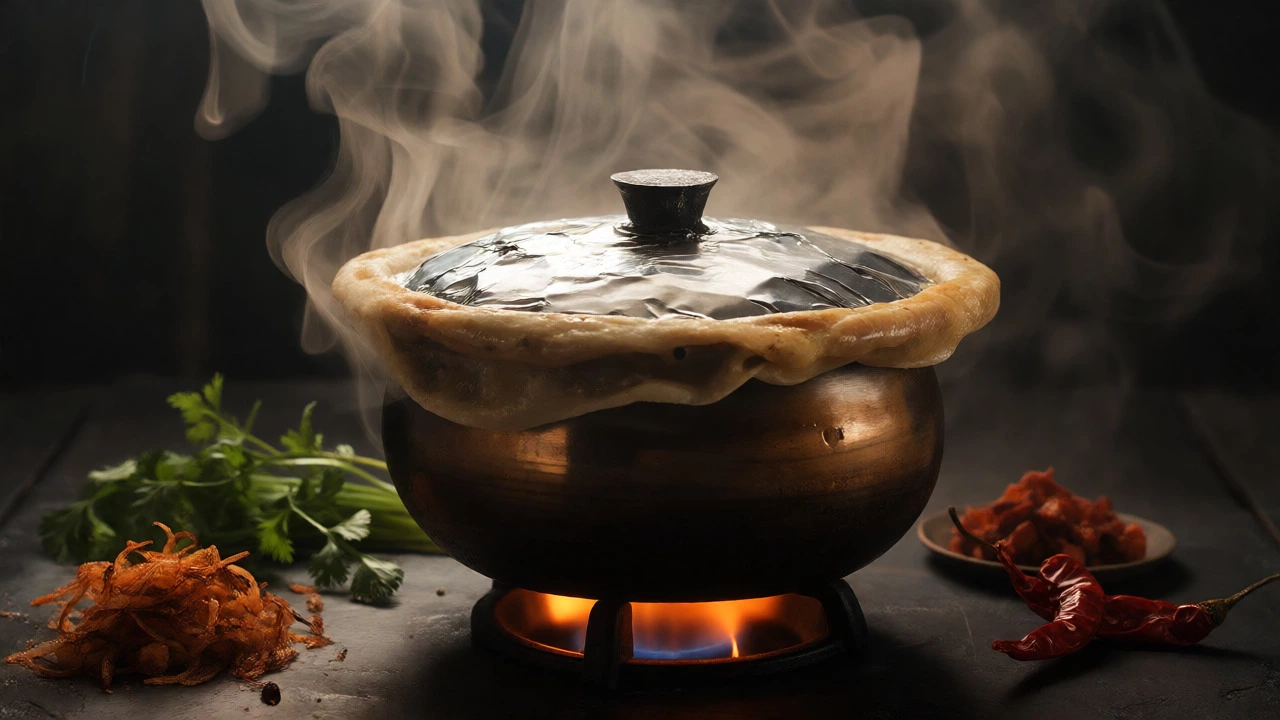
- Seal the pot: Use aluminum foil or wheat dough to seal the gap between the lid and the pot. This prevents any vapor from escaping.
- Low heat only: Cook on the lowest possible flame for 20-30 minutes. High heat burns the bottom and forces steam out violently, carrying aroma with it.
- Rest before opening: Once the time is up, turn off the heat and wait 10 minutes before breaking the seal. This allows the pressure to equalize and the aromas to settle into the grains.
If you open the lid too early, you’ll get wet, soggy rice with a weak smell. Patience is part of the recipe.
Common Mistakes That Kill the Smell
Even with good ingredients, you can ruin the aroma. Here are the usual suspects:
- Using old spices: Ground spices lose their potency within 6 months. Whole spices last longer but still fade. Always buy fresh.
- Burning the onions: Fried onions should be golden brown, not black. Burnt onions taste bitter and mask the delicate floral notes of kewra and rose.
- Overpowering with chili: Too much red chili powder adds heat, not aroma. Rely on whole dried chilies or mild Kashmiri chili powder for color without killing the nose.
- Skipping the marination time: Yogurt-based marinades tenderize meat and allow spices to penetrate. If you rush this, the spices stay on the surface and burn off during cooking.
Regional Variations in Aroma
Not all biryanis smell the same. The type of aroma depends on the region:
- Hyderabadi: Heavy on saffron, mint, and fried onions. The aroma is robust, spicy, and savory.
- Lucknowi/Awadhi: Lighter, focusing on kewra, rose, and subtle spices. The scent is floral and elegant.
- Kolkata: Often includes potatoes and eggs. Uses less spice but more yogurt and mustard oil, giving a pungent, tangy kick.
- Malabar: From Kerala, uses short-grain seeraga samba rice, coconut, and fennel. The aroma is tropical and distinct.
Understanding these differences helps you choose the right aromatic agents for the style you are trying to replicate.
Final Thoughts on Fragrance
A great biryani is judged first by the nose, then by the tongue. By focusing on high-quality Basmati, respecting the power of ghee, blooming your saffron, and using floral waters correctly, you elevate your dish from a simple meal to a sensory event. Don’t rely on pre-mixed powders. Build the aroma layer by layer, and you’ll never look back.
Can I substitute kewra water with rose water?
Yes, but they offer different profiles. Kewra is more earthy and fruity, while rose is purely floral. If you miss kewra, try mixing half rose water with a drop of almond essence to mimic the complexity, though it won't be identical.
Why does my biryani smell burnt?
This usually happens if the heat was too high during the dum phase or if there wasn't enough moisture/ghee at the bottom. Place a flat tawa (griddle) under the pot to diffuse the direct heat and prevent scorching the bottom layer of rice.
Does adding vinegar affect the aroma?
A splash of vinegar in the rice water helps keep the grains separate and white. It evaporates completely during cooking, so it does not contribute to the final aroma, but it ensures the texture supports the scent delivery.
Is it necessary to fry onions for aroma?
Absolutely. Raw onions provide sharpness, but fried onions (birista) provide sweetness and deep umami notes that define the savory aspect of biryani aroma. Skipping them results in a flatter, less inviting scent.
How much saffron should I use for one kg of rice?
For a strong aroma, use about 1/4 teaspoon of crushed saffron threads bloomed in milk. Using too little makes the scent invisible; using too much can make it taste metallic or medicinal. Quality matters more than quantity here.